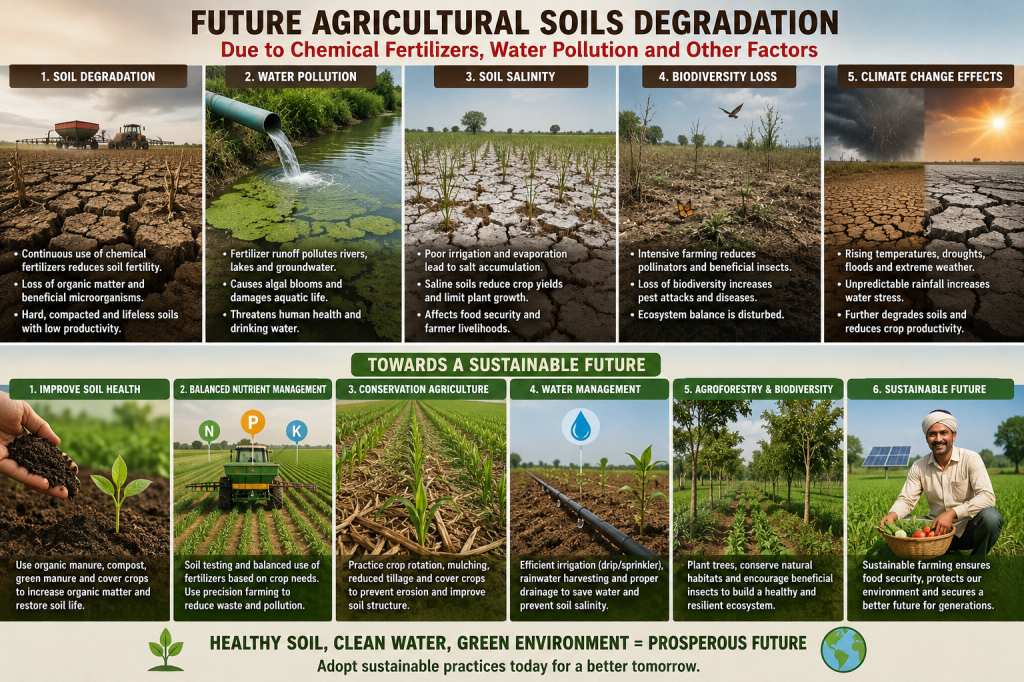
Future agricultural productivity can be threatened by soil degradation, excessive use of chemical fertilizers, water pollution, and other environmental pressures. Key concerns include:
Climate Change Effects
Higher temperatures, droughts, floods, and extreme weather can further degrade soils and reduce crop productivity.
Changing rainfall patterns can increase water stress in many farming regions.
Possible Solutions
Use of organic manure, compost, and green manure.
Precision fertilizer application to reduce waste.
Conservation agriculture and reduced tillage.
Agroforestry and tree planting on farms.
Rainwater harvesting and efficient irrigation systems.
Soil testing and balanced nutrient management.
Soil Degradation
Continuous use of synthetic fertilizers without replenishing organic matter can reduce soil health.
Soil erosion by wind and water removes nutrient-rich topsoil.
Loss of soil microorganisms can weaken natural nutrient cycling.
Water Pollution
Excess fertilizer runoff can pollute rivers, lakes, and groundwater.
High levels of nitrogen and phosphorus can cause algal blooms and harm aquatic ecosystems.
Contaminated water can affect human health and agricultural sustainability.
Soil Salinity
Poor irrigation practices can lead to salt accumulation in soils.
Saline soils reduce crop yields and limit plant growth.
Biodiversity Loss
Intensive farming may reduce populations of pollinators and beneficial insects.
Reduced biodiversity can make agriculture more vulnerable to pests and diseases.
India’s Future
For countries such as India, improving soil health and water management will be critical for food security as the population grows and climate risks increase. Sustainable farming practices can help maintain productivity while reducing environmental damage.The challenge is not fertilizers themselves, but overuse and improper management. Combining modern technology with sustainable farming practices offers the best path to protecting future agricultural soils and water resources.

Leave a comment