Introduction
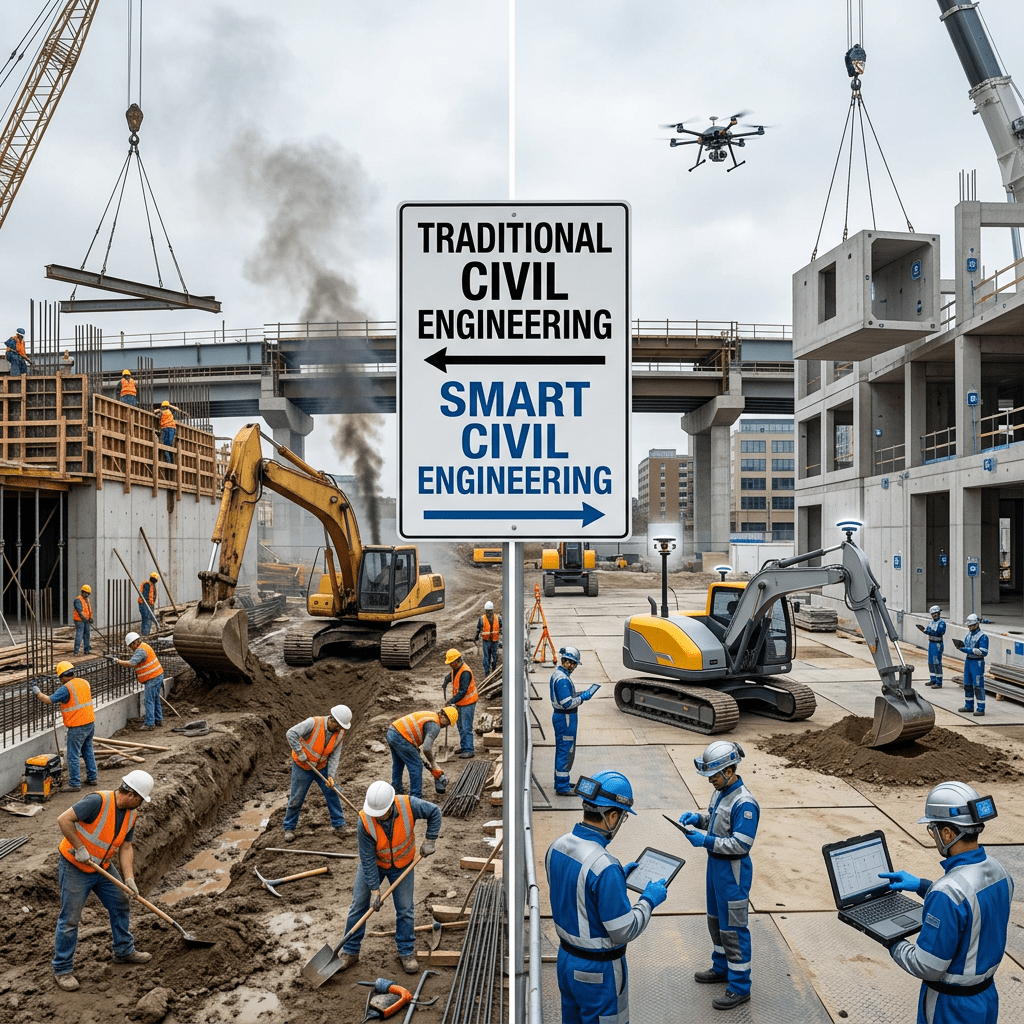
The evolution of technology has significantly impacted various industries, including civil engineering. Smart civil engineering, characterized by the integration of advanced technologies such as Artificial Intelligence (AI), the Internet of Things (IoT), and Building Information Modeling (BIM), offers innovative approaches to design and construction. This raises the question: can smart civil engineering truly replace traditional engineering practices?
Advantages of Smart Civil Engineering
1. Enhanced Efficiency
Smart civil engineering tools streamline processes, reducing the time required for design and construction. Automation of repetitive tasks allows engineers to focus on critical decision-making.
2. Improved Accuracy
Technologies like BIM provide detailed 3D models that enhance accuracy in planning and execution, minimizing errors that can occur in traditional 2D designs.
3. Real-time Data Analysis
IoT devices enable real-time monitoring of construction sites, allowing engineers to analyze data as it comes in and make informed decisions that can prevent costly delays.
4. Sustainability
Smart engineering practices can lead to more sustainable construction methods. By optimizing resource use and reducing waste, projects can be less harmful to the environment.
Challenges of Replacing Traditional Engineering
1. High Initial Costs
Adopting smart technologies often involves significant upfront investment, which can be a barrier for smaller firms or projects with tight budgets.
2. Skill Gap
There is a need for engineers who are skilled in using new technologies. Training existing staff and hiring new talent can be a challenging and lengthy process.
3. Resistance to Change
Many professionals in the field may be resistant to adopting new technologies, favoring established methods they are comfortable with.
Conclusion
While smart civil engineering offers numerous advantages that could revolutionize the field, it is unlikely to entirely replace traditional engineering in the near future. Instead, a hybrid approach that combines the strengths of both smart and traditional methods may provide the best outcomes. Industry stakeholders must embrace innovation while retaining valuable conventional practices to balance efficiency, accuracy, and sustainability in civil design and construction.

Leave a comment