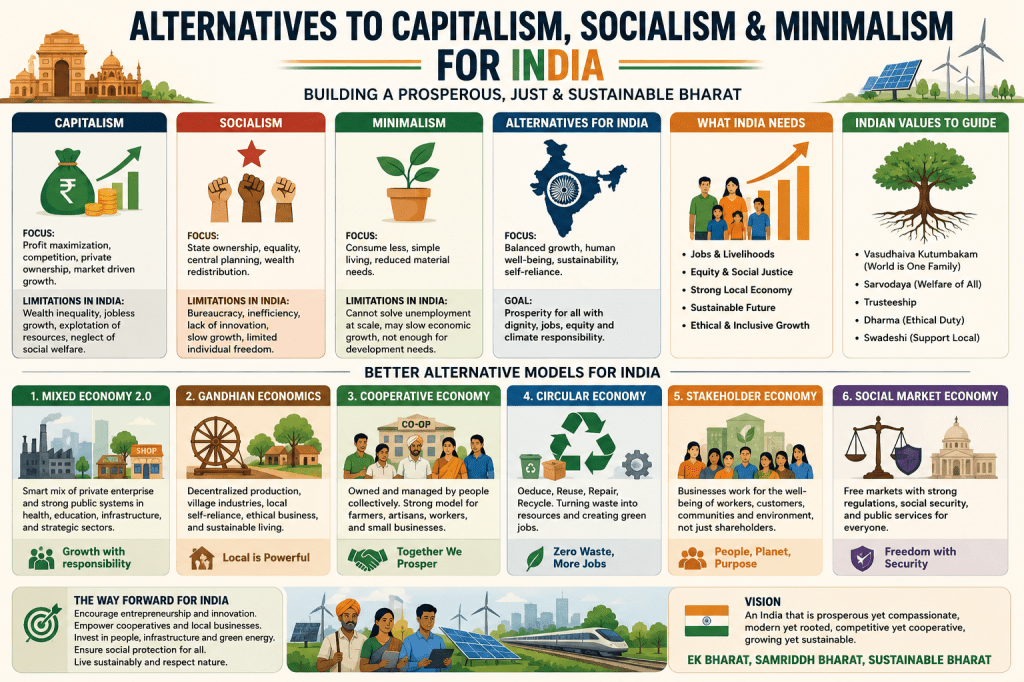
Alternatives to Capitalism: Exploring Economic Models Beyond Socialism and Minimalism in India
The Indian economy has long been influenced by capitalism, characterized by private ownership, market-driven mechanisms, and competition. However, as socio-economic disparities widen and environmental challenges mount, there is an emerging discourse on exploring alternatives to capitalism, beyond traditional socialism and minimalism. This article delves into several economic models and philosophies that could serve as viable alternatives for India, fostering a more equitable and sustainable future.
1. Cooperative Economics
One of the most promising alternative models is cooperative economics, which emphasizes collective ownership and democratic management of businesses. Cooperatives are associations owned and managed by the people who use their services or work there. In India, this model can take root in the following ways:
- Agricultural Cooperatives: India has a strong tradition of agricultural cooperatives that empower farmers by providing them with better access to markets, credit, and resources. By pooling their efforts, farmers can negotiate better prices, reduce costs, and enhance productivity.
- Worker Cooperatives: These are enterprises owned and governed by workers, ensuring that profits are distributed fairly. Worker cooperatives can provide job security and fair wages, promoting a sense of ownership and community among employees.
- Credit Cooperatives: These organizations can help circumvent the exploitative practices of traditional banking by providing affordable credit to low-income families, encouraging entrepreneurship and self-sufficiency.
2. Social Entrepreneurship
Social entrepreneurship blends profit-making with social purpose. It focuses on developing innovative solutions to social problems while ensuring economic sustainability. This model is especially relevant in the Indian context:
- Impact-Driven Ventures: Entrepreneurs are increasingly starting businesses that target social and environmental challenges, such as waste management, education, and health care. For example, companies like SELCO India provide solar energy solutions to underserved communities, balancing profit with positive social impact.
- Education and Training: Social enterprises often prioritize education and skill development, equipping individuals, especially from marginalized backgrounds, to contribute to the economy while fostering self-reliance.
- Local Innovations: Social entrepreneurs leverage local knowledge and resources to create solutions that are culturally relevant, promoting sustainable development that resonates with community needs.
3. Circular Economy
The circular economy is a regenerative economic model that contrasts with the linear “take-make-dispose” model of capitalism. It emphasizes sustainability and resource efficiency, crucial for India as it grapples with environmental degradation and resource scarcity:
- Waste Management: By rethinking product life cycles, waste can be minimized, and resources can be reused. Initiatives that promote recycling and upcycling can reduce the burden on landfills and lower environmental footprints.
- Sustainable Production: This model encourages businesses to design products that last longer, can be easily repaired, or are made from biodegradable materials. This shift can help reduce the overconsumption of resources and lower pollution levels.
- Community Involvement: Engaging communities in circular practices not only empowers them but also fosters a sense of responsibility towards environmental management. Local workshops and initiatives can promote this awareness.
4. Participatory Economics
Participatory economics (or “parecon”) presents a model where economic decisions are made collectively through participatory methods. In India, this model could empower citizens and ensure that economic planning reflects the needs and desires of the populace:
- Decentralized Decision-Making: Local councils could be established, allowing communities to participate directly in economic decision-making processes, from budgeting to project planning.
- Balanced Job Allocation: In participatory economics, job roles are designed to ensure balance in responsibilities and rewards, making work more fulfilling and equitable.
- Integrated Resource Distribution: Resources would be allocated based on need and democratic decisions rather than market forces, aiming to eliminate inequalities that arise in the traditional capitalist framework.
5. Degrowth
Degrowth is an economic ideology that advocates for reducing production and consumption for the sake of environmental sustainability and social equity. This alternative model raises important questions about the relationship between economic growth, human well-being, and ecological health:
- Quality of Life Over GDP: Degrowth prioritizes the quality of life and well-being over economic growth indicators like GDP. In this context, India could focus on enhancing access to health, education, and leisure, rather than solely pursuing economic output.
- Reducing Consumerism: By promoting the idea of sufficiency, the degrowth movement encourages individuals to reconsider their lifestyles and consumption habits. Initiatives that support local markets and sustainable practices can flourish in such an environment.
- Cultural Shifts: A focus on degrowth necessitates cultural transformation, encouraging communities to value relationships, local traditions, and environmental stewardship over material possessions and consumer culture.
6. Gift Economy
The gift economy is a model based on the idea of giving without the expectation of receiving a monetary return. In a nation like India, with deep-rooted traditions of hospitality and community, the gift economy can reshape economic interactions:
- Community Sharing: Platforms that facilitate sharing goods, services, and knowledge can foster stronger community bonds and reduce reliance on consumer-centric markets. This encourages cooperative behavior and cultivates a sense of belonging.
- Volunteering and Collective Action: Fostering a culture of volunteering and mutual aid can help address social issues without the constraints of traditional market transactions. Ushers of this model can support community-led initiatives aimed at uplifting marginalized populations.
- Skill Exchange Networks: Creating networks where individuals can exchange skills and services empowers communities while fostering economic resilience and reducing financial burdens.
Conclusion
As India navigates the complexities of the modern economic landscape, exploring alternatives to capitalism, socialism, and minimalism can provide pathways to a more equitable and sustainable society. Models such as cooperative economics, social entrepreneurship, circular economy, participatory economics, degrowth, and gift economy emphasize collaboration, sustainability, and social welfare.
The transition to these alternatives requires a collective effort from individuals, communities, businesses, and policymakers alike. By embracing these models, India can work towards a future that balances economic viability with the well-being of its citizens and the health of the planet, paving the way for a more just and sustainable world.

Leave a comment