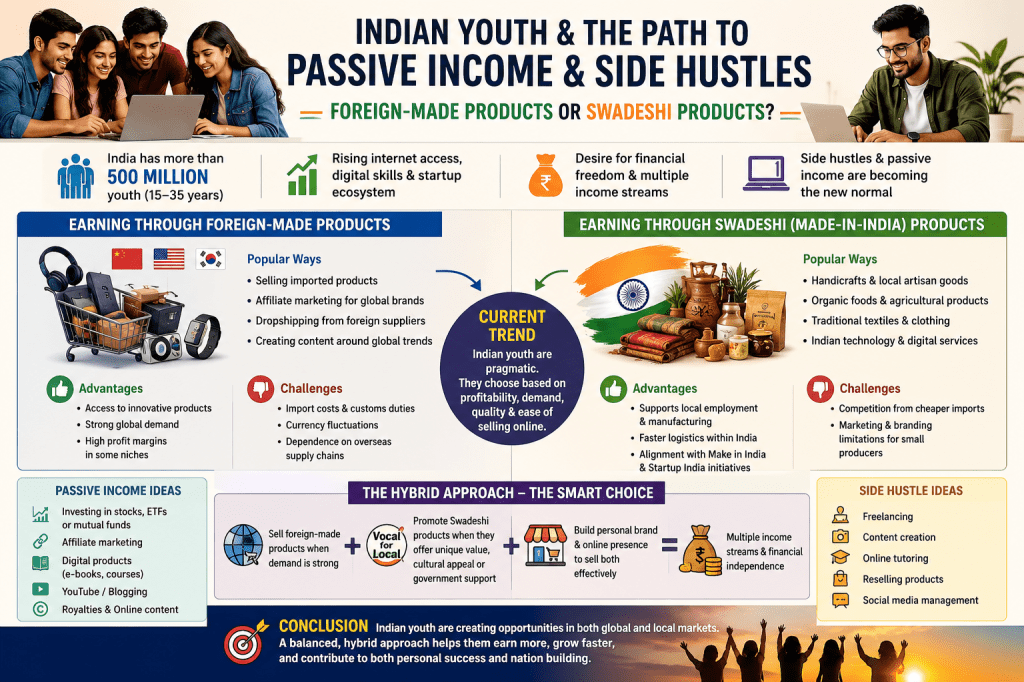
Analysis of Indian Youths Earning Passive Income through Foreign and Swadeshi Products
In today’s rapidly evolving economic landscape, the concept of passive income has gained significant traction, particularly among Indian youths. With the rise of the gig economy and increasing entrepreneurial spirit, many young Indians are exploring opportunities to earn passive income through various means, including foreign and Swadeshi products. This analysis delves into the motivations, avenues, and implications of earning passive income for Indian youths in both global and local contexts.
Understanding Passive Income
Passive income refers to the earnings derived from investments or business ventures in which an individual is not actively involved on a daily basis. This can include income from rental properties, dividends from stocks, royalties from creative works, or income generated through online businesses. For the youth in India, establishing streams of passive income can be a way to achieve financial independence and foster entrepreneurial growth.
Motivations Behind Seeking Passive Income
- Financial Security: The traditional job market in India is becoming increasingly competitive, with many graduates facing challenges in securing stable employment. Passive income provides an alternative route to financial stability.
- Entrepreneurial Spirit: Indian youths are increasingly inclined towards entrepreneurship. The growing trend of startups and innovation has inspired many to create products or services that can generate income with minimal upkeep.
- Technological Advancements: With the proliferation of the internet and digital platforms, young Indians have unprecedented access to global markets. This connectivity allows them to sell both foreign and Swadeshi products more efficiently.
- Lifestyle Enhancements: Passive income provides opportunities for a better lifestyle, allowing individuals to travel, invest more time in personal interests, or even pursue further education.
Earning Passive Income through Foreign Products
The globalization of markets has opened the door for Indian youths to engage in dropshipping, affiliate marketing, and e-commerce ventures focused on foreign products. Here are some strategies:
- E-commerce Platforms: Many young Indians utilize platforms like Amazon, eBay, and Etsy to sell foreign products. Dropshipping allows them to sell items without holding inventory, which minimizes risk and upfront costs.
- Affiliate Marketing: By promoting foreign brands through social media or websites, youths can earn commissions on sales generated through their referrals. This model requires minimal investment and can yield substantial returns with the right audience.
- Digital Products and Courses: The global market for online courses and digital products is booming. Indian entrepreneurs can create and sell courses on platforms like Udemy or Teachable, tapping into international audiences.
- Influencer Collaborations: Many youths leverage social media to partner with foreign brands, creating content that promotes products while earning passive income through sponsorships and affiliate links.
Earning Passive Income through Swadeshi Products
The resurgence of the Swadeshi movement has encouraged youths to support local economies while generating income. The following methods exemplify ways to earn passive income with local products:
- Handcrafted Goods: Indian artisans and craftspeople create unique products that can be marketed online. Young entrepreneurs can collaborate with these artisans, helping them reach broader audiences through e-commerce platforms.
- Cultural Products: Products that highlight India’s rich cultural heritage, from textile crafts to traditional art forms, attract both national and international buyers. Selling these items not only supports local economies but also leads to sustainable income.
- Online Marketplaces: Platforms like Amazon Karigar and Flipkart’s ‘Made In India’ section focus on promoting Swadeshi products, making it easier for young entrepreneurs to market and sell local items.
- Subscription Boxes: Curating subscription boxes filled with Swadeshi products allows for recurring revenue. This not only offers convenience for consumers but also helps promote local artisans and businesses.
Challenges and Considerations
While the potential for earning passive income is attractive, it is essential to recognize the challenges involved:
- Market Saturation: Both foreign and Swadeshi markets can be saturated, making it difficult for new entrants to establish a foothold.
- Quality Control: Ensuring the quality of products, especially when dealing with artisans or dropshipping, is crucial for maintaining customer satisfaction and loyalty.
- Regulatory Hurdles: Navigating tax regulations and compliance requirements for e-commerce can be complex for new entrepreneurs.
- Marketing Efforts: Building a brand presence in a crowded market requires efficient marketing strategies and a robust online presence.
Conclusion
In conclusion, the avenues available for Indian youths to earn passive income through foreign and Swadeshi products are vast and varied. With globalization facilitating greater accessibility to international markets, young entrepreneurs can leverage digital platforms and marketing strategies to cultivate streams of income. Simultaneously, promoting local artisans and businesses by investing in Swadeshi products aligns with the ethos of self-reliance, encouraging sustainable economic growth.
As India continues to embrace entrepreneurship, the potential for financial independence has never been greater. With the right insights, tools, and determination, the youth of India can navigate the opportunities presented in both foreign and local markets, enhancing their earning potential and contributing to the country’s diverse economic landscape.

Leave a comment