Introduction
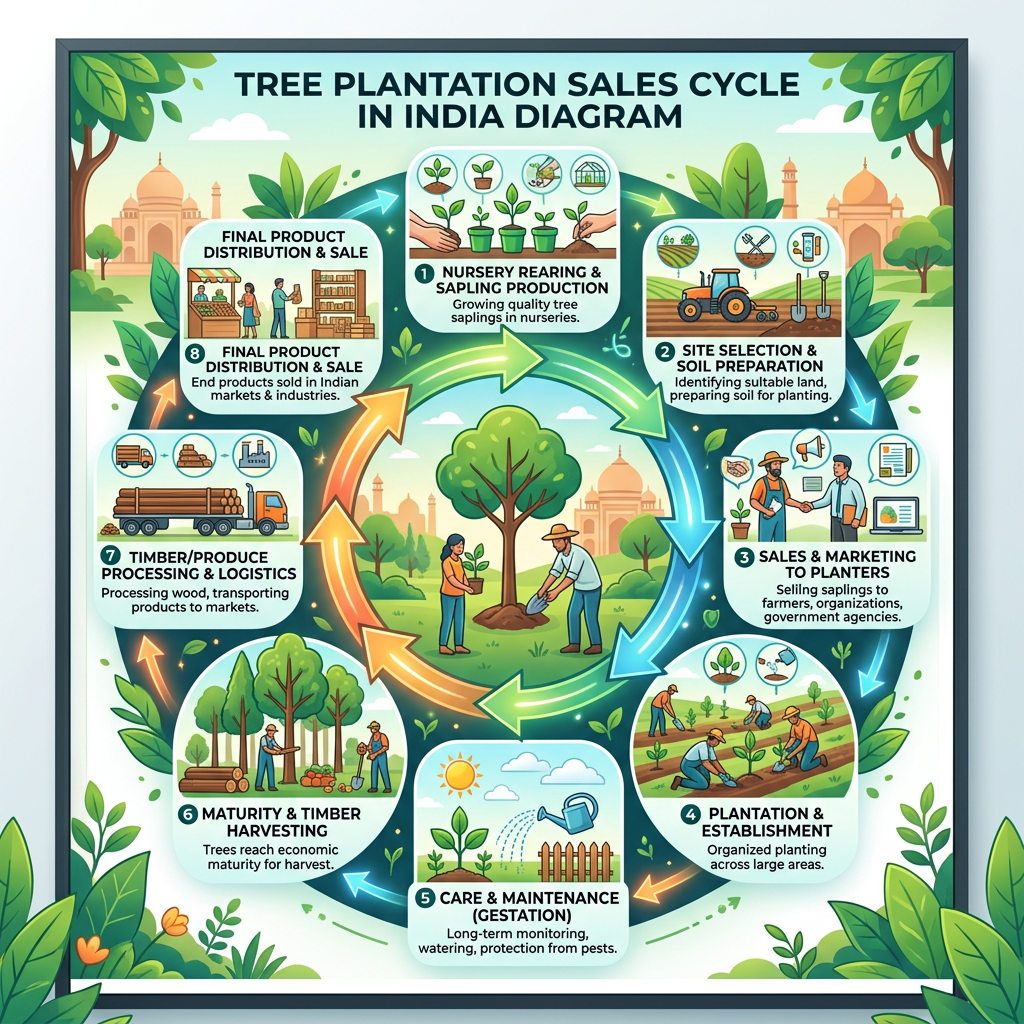
Tree plantation not only contributes to environmental conservation but also provides economic benefits. In India, a country rich in biodiversity and natural resources, the tree plantation sales cycle plays a significant role in sustainable development. This cycle encompasses various stages, from planning and execution to marketing and post-sales activities. Understanding these stages can help stakeholders effectively navigate the complex landscape of tree plantation and contribute to achieving environmental goals.
1. Planning
The first stage of the tree plantation sales cycle is planning. Successful planning involves determining the types of trees to be planted, the location, and the target market. Stakeholders must consider factors such as soil type, climate, water availability, and local biodiversity. Additionally, planning should include a feasibility study to assess the project’s potential profitability and sustainability. Engaging with local communities and expert foresters can provide invaluable insights during this stage.
2. Sourcing Seeds or Saplings
Once the planning phase is complete, the next step is sourcing high-quality seeds or saplings. Choosing the right species is crucial, as it affects growth rates, maintenance requirements, and market demand. Nurseries or seed banks that follow local and international standards should be identified. Ensuring that the seeds or saplings are native to the region can enhance the ecological balance and increase the success rate of the plantation.
3. Preparation of Land
Land preparation involves cultivating the site and making it conducive for planting. This may include clearing the area, testing the soil, and adding any necessary nutrients. Proper land preparation ensures that the saplings have the best chance of thriving. In addition to physical preparation, this stage may also involve community consultations to minimize potential conflicts over land use.
4. Planting
The actual planting is a critical phase in the sales cycle. Timing is essential; planting should align with the local rainy season to ensure sufficient water availability. During this stage, labor management is necessary, as skilled laborers are often required to plant the saplings correctly. Implementing suitable planting techniques and spacing is vital for future growth, allowing trees to mature without competing for resources.
5. Care and Maintenance
After planting, the trees require ongoing care and maintenance to ensure their healthy growth. This includes watering, mulching, weeding, and protecting the saplings from pests and diseases. In regions where wildlife could damage young trees, protective measures, such as fencing or repellents, may be necessary. Regular monitoring of the plantation is essential to identify any issues early and address them effectively.
6. Harvesting
The harvesting stage depends on the purpose of the plantation. Whether for timber, fuel, fruits, or other products, understanding the optimal harvesting timeline is essential. Proper harvesting techniques enhance the products’ quality and ensure sustainability. For timber, thinning might be necessary before the final harvest to promote healthier growth among the remaining trees.
7. Marketing
Marketing is integral to the tree plantation sales cycle, ensuring the products reach the right consumers. Effective marketing strategies could involve direct sales to consumers, partnerships with businesses, or participation in agricultural fairs. Understanding market trends and customer preferences can lead to better positioning of products. Use of online platforms for marketing can broaden reach and improve sales.
8. Post-Sales Activities
The cycle does not end with the sale. Post-sales activities include customer follow-up, feedback collection, and addressing any customer concerns. This stage is crucial for building long-term relationships with customers. Additionally, educating clients on maintenance and sustainability practices can increase customer satisfaction and encourage repeat business.
Challenges in the Tree Plantation Sales Cycle
While the tree plantation sales cycle has various stages, it is not without challenges. Some common issues include:
- Climate Change: Changing weather patterns can impact growth and yield.
- Regulatory Compliance: Navigating legal requirements for land use and forestry can be complex.
- Market Fluctuations: Price variability can affect profit margins.
- Pest Infestation: Protecting young plants from pests remains a constant concern.
Conclusion
The tree plantation sales cycle in India is a multi-faceted process that can lead to significant environmental and economic benefits. Each stage, from planning to post-sales activities, requires careful consideration and execution. By understanding these stages and addressing potential challenges, stakeholders can effectively contribute to sustainable tree plantation initiatives and foster a greener future for India. Engaging local communities, preserving biodiversity, and incorporating technological advancements are vital for maximizing the potential of tree plantations in the country.

Leave a comment