Introduction
India, with its vast expanse and diverse climatic conditions, is increasingly facing the threats posed by climate change. The nation is witnessing erratic weather patterns, rising temperatures, and extreme rainfall events. The impact of these climatic changes on infrastructure is profound, and roads, being the lifeline of transportation, are particularly vulnerable. In this scenario, the need for climate-resilient concrete roads emerges as a crucial step toward ensuring sustainable development and infrastructure resilience.
The Impact of Climate Change on Roads
Highways and road networks are essential for economic growth, connecting rural and urban areas, facilitating trade, and ensuring mobility. However, conventional road surfaces often deteriorate rapidly under changing climatic conditions. For instance, excessive rainfall can lead to flooding, which damages the road structure and can cause erosion. Similarly, increased temperatures can result in pavement cracking and deformation. Therefore, it is imperative to address these challenges through innovative infrastructure solutions.
The Concept of Climate Resilient Concrete Roads
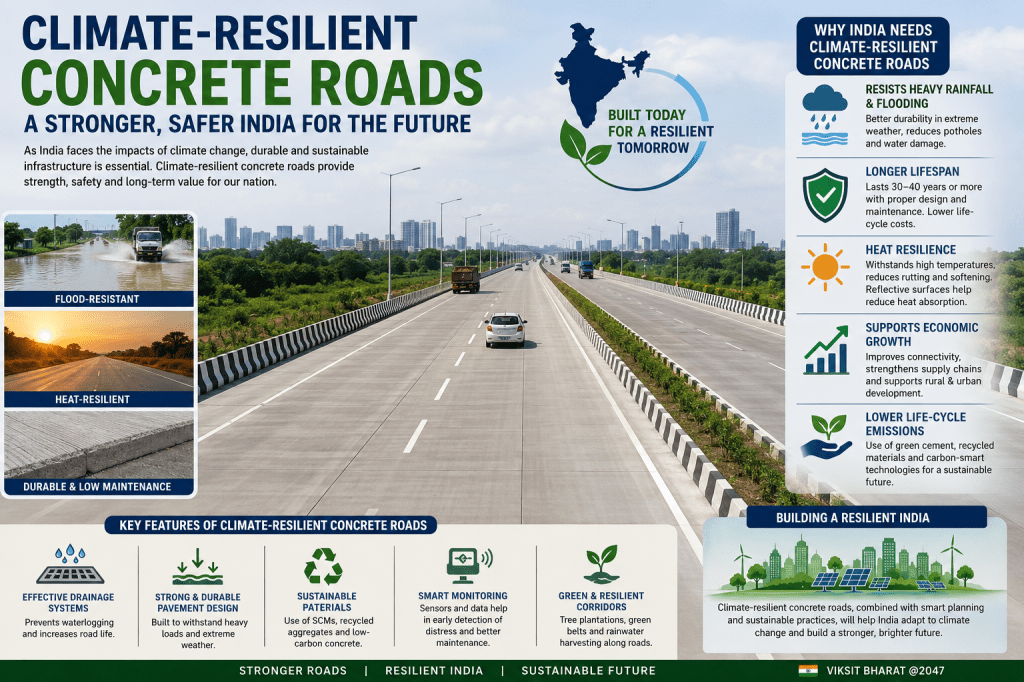
Climate-resilient concrete roads incorporate advanced materials and design techniques that enhance durability and longevity. These roads are specifically engineered to withstand extreme weather conditions, including heavy rainfall, fluctuating temperatures, and increased humidity. Key components of climate-resilient concrete roads include:
- Use of High-Performance Concrete: Incorporating additives like fly ash, slag, and silica fume enhances the strength and durability of concrete, making it less susceptible to weather damages.
- Better Drainage Systems: Innovative drainage solutions can prevent water accumulation on roads, reducing the risk of flooding and subsequent damage.
- Temperature-Resistant Materials: The use of materials that can withstand extreme temperatures helps in maintaining the integrity of the road surface without deformation.
- Permeable Pavements: These types of pavements allow water to infiltrate through their surface, thereby reducing surface runoff and minimizing erosion.
- Sustainable Practices: Utilizing recycled materials in road construction not only enhances sustainability but also reduces the carbon footprint associated with road building.
Importance of Climate Resilient Concrete Roads in India
- Enhanced Durability: Climate-resilient roads can significantly extend the lifespan of road infrastructure, reducing the frequency and cost of repairs. This is particularly important in India, where maintenance budgets are often limited.
- Economic Benefits: By ensuring a reliable and resilient transportation network, these roads facilitate trade and improve access to markets, contributing to economic growth.
- Disaster Mitigation: Resilient infrastructure plays a critical role in disaster management by minimizing the impact of climate-related events on transportation networks. This capability is vital in ensuring timely responses during emergencies.
- Environmental Sustainability: Implementing eco-friendly materials and practices in the construction of roads aligns with India’s commitment to sustainable development and climate action.
- Social Equity: Well-maintained and accessible road networks are essential for providing equitable access to services and opportunities, especially in rural and underserved areas.
Case Studies and Examples
Several initiatives in India demonstrate the potential of climate-resilient concrete roads. For instance, in regions prone to flooding, the National Highways Authority of India (NHAI) has started integrating advanced drainage technologies to safeguard roads against heavy rains. Similarly, projects using recycled aggregates and industrial by-products have been successful in mitigating environmental impacts while ensuring road performance.
Challenges and Considerations
While the benefits of climate-resilient concrete roads are substantial, there are challenges to their widespread adoption. Limited awareness and understanding of advanced materials and techniques among local contractors can hinder implementation. Moreover, the initial costs of deploying advanced technologies may be higher, although they can lead to savings through reduced maintenance and longer lifespans.
Furthermore, it is essential to establish robust standards and guidelines to ensure that climate-resilient road construction adheres to best practices. Government incentives and training programs can also play a vital role in promoting the adoption of such technologies.
Conclusion
As India confronts the realities of climate change, the importance of building climate-resilient concrete roads cannot be overstated. These roads not only provide a solution to the immediate challenges posed by extreme weather but also pave the way for sustainable and inclusive development. By investing in innovative road technologies and practices, India can create a transportation infrastructure that meets the demands of the future while safeguarding its economy, environment, and communities. The transition to climate-resilient roads is not just a necessity; it is an opportunity to lead in sustainable infrastructure development globally.

Leave a comment