Introduction
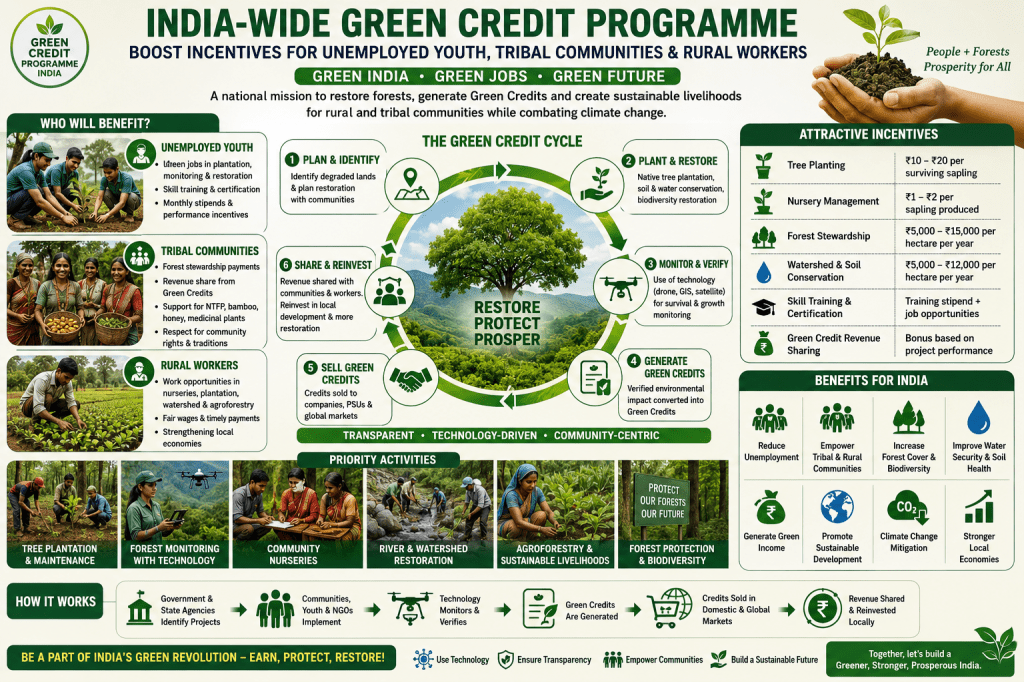
The Green Credit Programme (GCP) is a groundbreaking initiative in India, aimed at creating a sustainable environment while providing economic opportunities for some of the most marginalized groups in the country, including unemployed youth, tribal communities, and rural workers. As India grapples with issues of unemployment and environmental degradation, this program seeks to establish a synergy between ecological conservation and socioeconomic development, creating pathways for sustainable livelihoods and community empowerment.
Overview of the Green Credit Programme
Launched as part of a broader commitment to sustainability, the Green Credit Programme is designed to promote eco-friendly practices through financial incentives. The core objective of this program is to encourage individuals and communities to engage in activities that contribute to environmental preservation, ultimately leading to a greener economy.
Key Objectives
- Empower Unemployed Youth: One of the main goals is to provide job opportunities for young people who are currently unemployed. By integrating them into green initiatives, the program seeks to not only create jobs but also develop a workforce skilled in sustainable practices.
- Support for Tribal Communities: Recognizing the unique relationship tribal communities have with nature, the GCP aims to empower these groups through programs that respect and leverage their traditional knowledge and practices in environmental management.
- Enhancing Livelihoods for Rural Workers: Rural workers often face economic hardships due to lack of opportunities. The GCP seeks to enhance their livelihoods by providing them with incentives to engage in sustainable agricultural practices and other green projects.
Features of the Green Credit Programme
Incentive Structure
The foundation of the Green Credit Programme lies in its incentive structure. Participants have the potential to earn Green Credits for their contributions to environmental conservation, which can be redeemed for financial assistance or other benefits. This creates a tangible connection between individual efforts and positive environmental impact, encouraging broader participation.
- Criteria for Earning Credits: Participants can earn credits through various activities such as:
- Planting trees and participating in afforestation projects
- Engaging in sustainable agricultural practices
- Implementing waste management systems in their communities
- Utilizing renewable energy sources like solar and wind power
Skill Development Programs
To maximize the potential of participants, the GCP includes specialized skill development programs. These initiatives are crucial to ensure that participants can successfully engage in green activities and make the most of the opportunities presented by the program.
- Training Workshops: Offering workshops and training sessions focusing on sustainable practices, management of natural resources, and green technologies equips individuals with the knowledge and skills needed to succeed in their ventures.
- Collaborations with Educational Institutions: Partnering with vocational training centers and universities ensures access to specialized education and support for community members seeking to start their green enterprises.
Community Engagement and Collaboration
The success of the Green Credit Programme hinges on robust community engagement. By fostering collaborative relationships, the GCP encourages various stakeholders to work together towards common goals.
- Local Partnerships: The program actively engages local organizations, governmental bodies, and NGOs to identify the unique needs and capabilities of communities. This collective approach not only amplifies the program’s impact but also ensures that measures are tailored to local contexts.
- Awareness Campaigns: Raising awareness about the importance of environmental conservation and the benefits of participating in the programme is vital. This can be achieved through outreach programs, community meetings, and social media campaigns.
Impact on Unemployed Youth
The empowerment of unemployed youth is a critical dimension of the Green Credit Programme. With a significant portion of India’s population under the age of 25, addressing youth unemployment is essential for the nation’s socioeconomic stability.
Job Creation
Through the GCP, numerous job opportunities are created in sectors like sustainable agriculture, green technology installation, and conservation projects. This not only helps to alleviate unemployment rates but also contributes to the overall economic growth of communities.
Empowerment and Education
The program fosters a sense of empowerment among youth by giving them agency in addressing environmental challenges. Through education and active participation, young people can become advocates for sustainability, influencing their peers and communities.
Building Future Leaders
By providing training and incentives, the GCP enables youth to acquire skills that are crucial for future employment in emerging green sectors. This positions them as potential leaders in advocating for environmental sustainability in India.
Support for Tribal Communities
Tribal communities often face challenges such as socioeconomic marginalization and loss of traditional lands. The Green Credit Programme aims to address these issues by recognizing and valuing their contributions to environmental conservation.
Cultural Relevance
The GCP respects the cultural practices of tribal communities, integrating traditional ecological knowledge into the program’s framework. This not only honors their heritage but also promotes sustainable practices that are often inherently connected to their way of life.
Economic Resilience
By participating in the Green Credit Programme, tribal communities can enhance their economic resilience. Incentives for engaging in conservation efforts can provide supplementary income, helping to improve their quality of life.
Enhancing Livelihoods for Rural Workers
Rural workers often depend on agriculture and local resources for their livelihoods; however, they are also among the most vulnerable to economic instability. The GCP seeks to strengthen their livelihoods through sustainable practices.
Sustainable Agriculture
By promoting sustainable agricultural methods, the program can help rural workers increase their productivity while preserving the environment. Practices such as organic farming, agroforestry, and soil conservation are emphasized.
Diversification of Income Sources
The GCP encourages rural workers to diversify their income sources by engaging in green initiatives beyond agriculture, such as eco-tourism, artisanship, and renewable energy projects. This diversification can safeguard against economic shocks and enhance financial stability.
Conclusion
The India-wide Green Credit Programme represents a vital step towards achieving environmental sustainability while addressing unemployment among the youth, tribal communities, and rural workers. By creating a structure that rewards participation in eco-friendly practices, the program not only provides economic opportunities but also fosters a culture of environmental stewardship. As this initiative gains momentum, it holds the potential to transform the lives of millions, contributing to a greener and more equitable future for all.

Leave a comment