Analysis of Income Disparity Among Indian Youth on Social Media Platforms
In recent years, social media has emerged as a prominent avenue for youth to engage, express creativity, and, importantly, generate income. Indian youth, in particular, have seized the opportunity presented by platforms like Instagram, YouTube, and emerging Indian apps to cultivate their personal brands and monetize their content. However, a stark divide exists in the income potential of these young creators. While some thrive with substantial earnings, others struggle to generate any revenue from their online activities. Understanding the factors influencing this disparity can shed light on the economic landscape of social media in India.
The Landscape of Social Media Income
Social media platforms have revolutionized the way individuals can earn a living. Unlike traditional careers, young creators can leverage their digital presence to attract brand partnerships, sponsorships, and ad revenue. The factors that enable high earners to achieve significant income typically include follower count, engagement rates, originality of content, and established personal branding.
High Earners: The Advantages
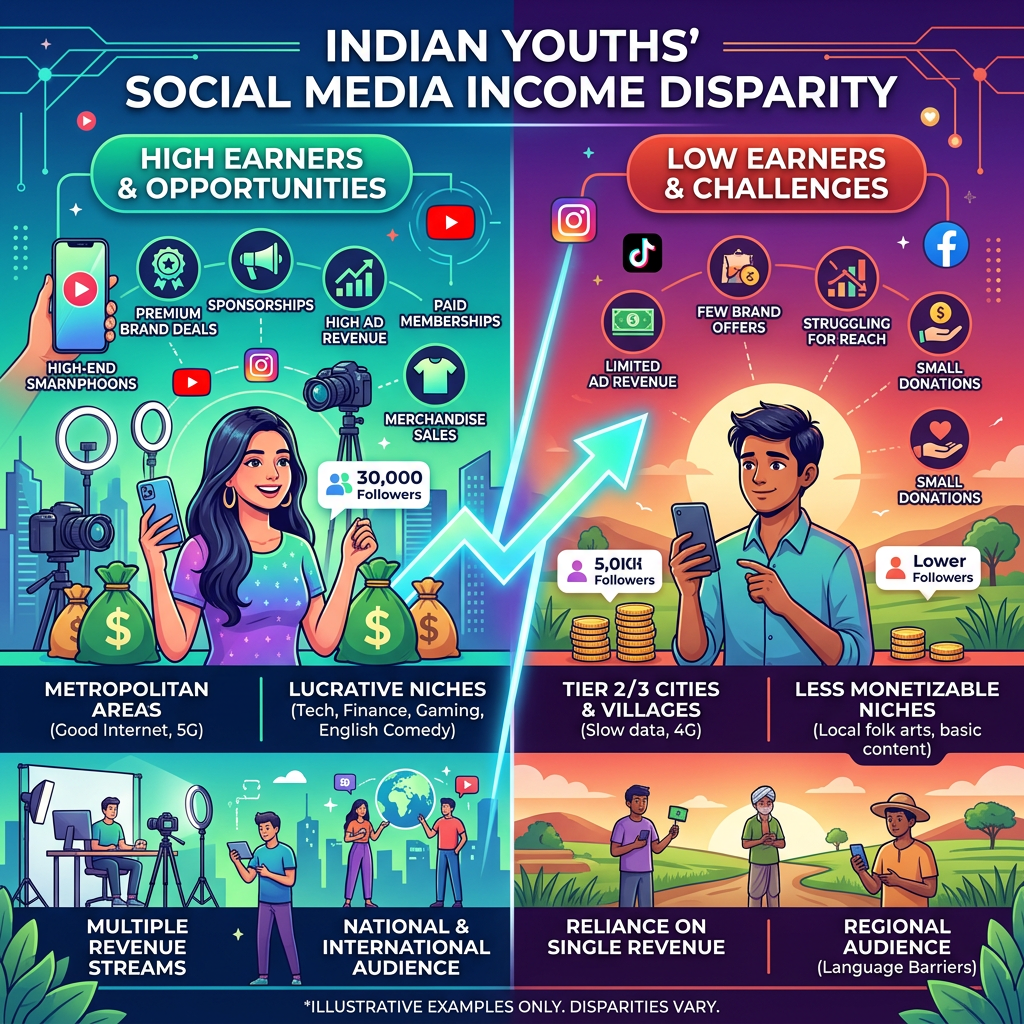
High-earning social media creators often have a strategic approach towards content creation. With follower counts reaching upwards of 30,000, these influencers are more likely to attract premium deals from brands. Verification on platforms like Instagram enhances credibility, allowing verified users to negotiate better financial terms. Moreover, many high earners reside in metropolitan areas, enabling them to network more effectively with brands and collaborators. These urban advantages provide access to resources, events, and opportunities that rural or less-connected creators may never encounter.
The infographic presented highlights these contrasts effectively, showcasing the differences in income sources between high and low earners. The successful creators often boast a diverse income stream, generating revenue not only from brand collaborations but also through affiliate marketing, merchandise sales, and paid subscriptions. Their sustained engagement with followers and content quality fosters loyalty, leading to consistent income flow.
Challenges Faced by Low Earners
Conversely, a significant segment of Indian youth on social media operates in the low-income bracket. Many creators with follower counts around 5,000 face substantial obstacles that hinder their ability to monetize their efforts. A primary challenge is the limited reach and engagement they experience. With fewer followers, brands are less inclined to partner with them, resulting in minimal advertising income.
Moreover, the barriers to entry are amplified for creators in regions outside of metropolitan hubs. These individuals often lack access to high-speed internet, professional equipment, and learning opportunities that can enhance their content quality. The disparity in educational resources further exacerbates the problem, limiting their ability to understand the intricacies of content monetization and digital marketing. Furthermore, regional content may not attract advertisers, who often prefer targeting larger, urbanized audiences.
The Role of Compliance and Verification
Verification and authorization play critical roles in a creator’s ability to earn income. Being verified not only boosts credibility but also enhances discoverability. For youth who manage to attain verification, there is often an immediate spike in follower count, leading to higher engagement and lucrative brand collaborations. However, verification requirements can be stringent, causing many aspiring creators without verified status to be overlooked entirely.
The Impact of Algorithm Changes
Another pivotal factor influencing earnings is the constant evolution of platform algorithms. As social media companies regularly update their algorithms, the visibility of posts can fluctuate dramatically, affecting the reach of content. For low-earning creators, these changes can mean the difference between breaking through to new audiences or remaining invisible. With algorithms often favoring high engagement, the disparity widens, making it increasingly difficult for those at the lower end to gain traction.
Strategies for Improvement
To bridge the income gap, several strategies can be implemented. First, building a community around content is essential. Creators can foster engagement by responding to comments, collaborating with others, and creating content that resonates with their audience. Additionally, leveraging local culture can help lower earners attract a niche audience, ultimately increasing their marketability to brands targeting that demographic.
Networking is another critical component. Initiatives such as workshops, online courses, and social media boot camps can empower aspiring creators with the necessary skills and knowledge to navigate their platforms more effectively. Such opportunities not only enhance skill sets but also provide networking avenues that may lead to collaborative partnerships with established creators or brands.
Conclusion
The income disparity among Indian youth on social media platforms is a multifaceted issue shaped by various factors, including follower count, urban advantages, verification status, and algorithm dynamics. While some youth have successfully carved out lucrative income streams, many continue to face barriers that inhibit their potential. Addressing these disparities requires a collective effort to provide education, resources, and a supportive community for aspiring creators. By empowering all youth to explore the economic opportunities within social media, the industry can become more inclusive, ultimately benefiting both creators and brands in the long run.

Leave a comment