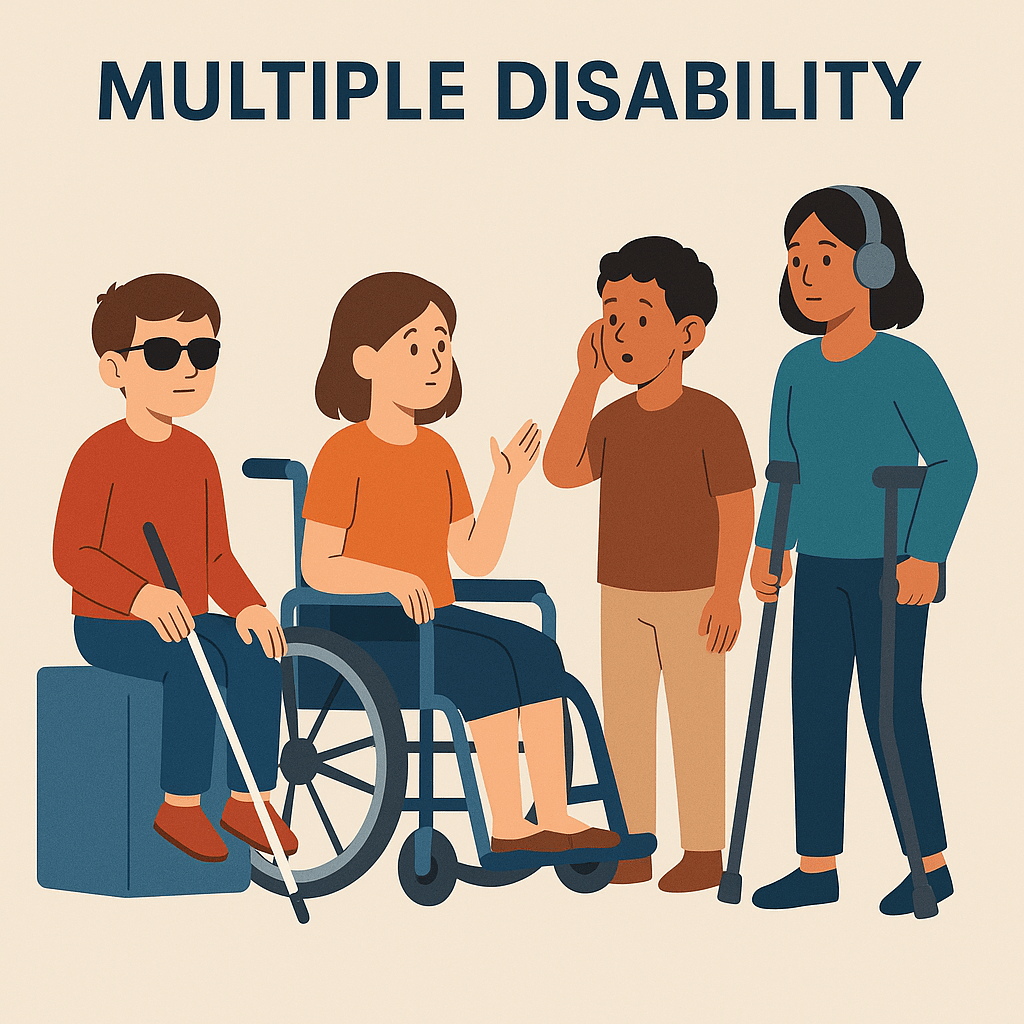
Multiple Disability: Definition and Overview
Definition: Multiple disability refers to a condition in which an individual has two or more impairments that may be physical, intellectual, sensory (like vision or hearing), or a combination of these. These impairments together cause severe educational and functional challenges, making independent living and learning more difficult.
Common Examples of Multiple Disabilities:
- Blindness + Intellectual Disability
- Deafness + Cerebral Palsy
- Autism + Physical Disability
- Hearing Impairment + Learning Disability
Causes of Multiple Disabilities:
- Genetic conditions (e.g., Down syndrome)
- Complications during birth (e.g., oxygen deprivation)
- Infections during pregnancy (e.g., rubella)
- Accidents or injuries (e.g., brain damage)
- Poor prenatal care or malnutrition
Challenges Faced:
- Difficulty in communication
- Limited mobility
- Learning difficulties
- Social isolation
- Dependence on caregivers for daily needs
Support and Management:
- Special education programs
- Physiotherapy and occupational therapy
- Speech and language therapy
- Assistive devices (wheelchairs, hearing aids, etc.)
- Inclusive environments in schools and communities
Would you like an image that symbolically represents multiple disability or information in Hindi as well?


Leave a comment