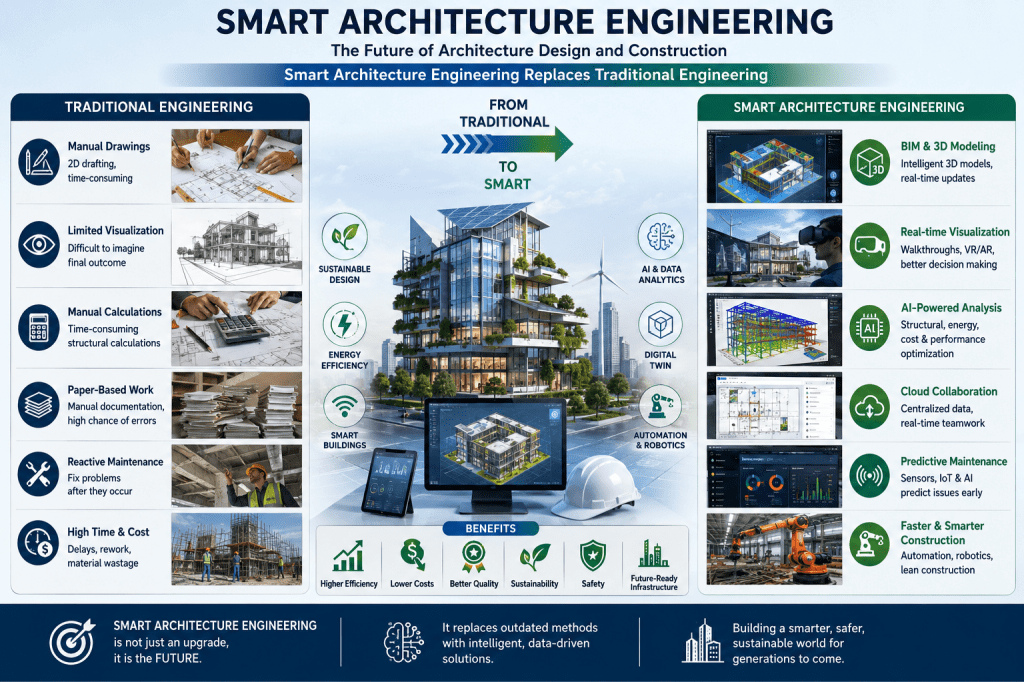
In the rapidly evolving world of architecture, the integration of technology and innovative design methodologies is becoming increasingly prominent. Smart architecture engineering, utilizing advanced technologies and principles of sustainability, presents a compelling alternative to traditional engineering approaches in architecture design and construction. This article explores the potential of smart architecture engineering, comparing its benefits against traditional engineering practices, the challenges it faces, and its future in the industry.
Understanding Smart Architecture Engineering
Smart architecture engineering refers to the application of intelligent systems, data analytics, and advanced materials in the design and construction of buildings. It emphasizes the use of technology to enhance functionality, improve sustainability, and optimize performance throughout the building’s lifecycle. Key components of smart architecture include:
- Building Information Modeling (BIM): A digital representation of physical and functional characteristics of a facility that supports decision-making across the project lifecycle.
- Internet of Things (IoT): Connected devices and systems that monitor and manage building performance and user interactions.
- Sustainable Design: Integration of renewable energy sources, energy-efficient systems, and environmentally friendly materials.
- Automation and Smart Systems: Use of automated systems for lighting, climate control, and security to create responsive and adaptable environments.
Benefits of Smart Architecture Engineering
1. Enhanced Efficiency and Productivity
Smart architecture engineering enables greater efficiency through automation and data analysis. Traditional engineering methods often involve manual processes that can be time-consuming and prone to errors. In contrast, technology enables the precise calculation of costs, resources, and timelines, leading to more streamlined project delivery.
2. Improved Sustainability
With growing concerns over climate change and resource depletion, sustainable practices have become paramount in architecture. Smart architecture engineering incorporates energy-efficient designs and renewable systems that reduce the environmental impact of buildings. This is not only beneficial for the planet but can also lead to cost savings in energy use over time.
3. Increased Flexibility and Adaptability
Buildings designed with smart architecture principles are often more flexible and adaptable. They can be easily modified to meet changing needs or environmental conditions, which is crucial in today’s dynamic world. For instance, smart systems can adjust to optimize energy use based on occupancy, weather conditions, or time of day.
4. Improved User Experience
Smart architecture heavily focuses on user experience. By employing responsive designs and integrated technologies, buildings can offer greater comfort and convenience. Smart systems can control lighting, temperature, and other factors based on the preferences of the occupants, leading to higher satisfaction levels.
Comparing with Traditional Engineering
Limitations of Traditional Engineering
Traditional engineering practices, while foundational to architectural design, often rely on established methods that may not efficiently address modern challenges. These limitations include:
- Inflexibility: Traditional buildings can be rigid in design, making it challenging to adapt to new technologies or changing user needs.
- Resource Intensive: Conventional construction often wastes materials and energy, leading to higher costs and environmental impacts.
- Longer Project Timelines: Manual processes and a lack of integrated technology can prolong project durations, affecting overall productivity.
Where Smart Architecture Shines
Smart architecture seeks to overcome these limitations. By integrating technology at every stage of the design and construction process, it promotes a more fluid and efficient approach. For example, with BIM, all stakeholders can visualize the project in a 3D environment, allowing for real-time collaboration and problem-solving.
Challenges to Adoption
Despite its advantages, the transition to smart architecture engineering faces several challenges:
- High Initial Costs: Implementing smart technologies can require significant upfront investment, which may deter some firms from making the switch.
- Need for Skilled Workforce: The integration of advanced technologies necessitates a workforce skilled in both engineering and technology, a requirement that can be challenging to meet.
- Data Privacy and Security: The use of IoT devices raises concerns regarding data security and privacy. Mitigating these risks is essential to foster trust in smart systems.
Future of Smart Architecture Engineering
The future of architecture design and construction appears to be leaning towards smart architecture engineering, driven by technological advancements and societal demands for sustainability. As the industry grapples with issues such as climate change, urbanization, and population growth, the need for innovative solutions becomes more pressing.
Integration with Construction Practices
As construction practices evolve, smart architecture will increasingly integrate with prefabrication and modular construction techniques. This synergy promises to enhance efficiency, reduce waste, and shorten timelines while maintaining quality and sustainability.
Role of Policy and Regulation
To support the transition towards smart architecture engineering, governments and regulatory bodies must introduce policies that promote the adoption of green technologies and smart systems. Incentives such as tax breaks or subsidies could encourage architects and builders to invest in innovative solutions.
Educational Reforms
Educating the next generation of architects and engineers about smart technologies is crucial. Schools and universities must adapt their curricula to include training in smart architecture principles and technologies, ensuring that nik professionals are well-equipped to meet the demands of the industry.
Conclusion
Smart architecture engineering has the potential to transform the landscape of architecture design and construction. While it presents numerous advantages over traditional engineering practices, especially concerning sustainability, efficiency, and user experience, it also faces challenges that need to be addressed. As the industry continues to evolve, embracing smart architecture could lead to a more sustainable, efficient, and adaptable built environment, ultimately redefining how we design and construct our world.

Leave a comment