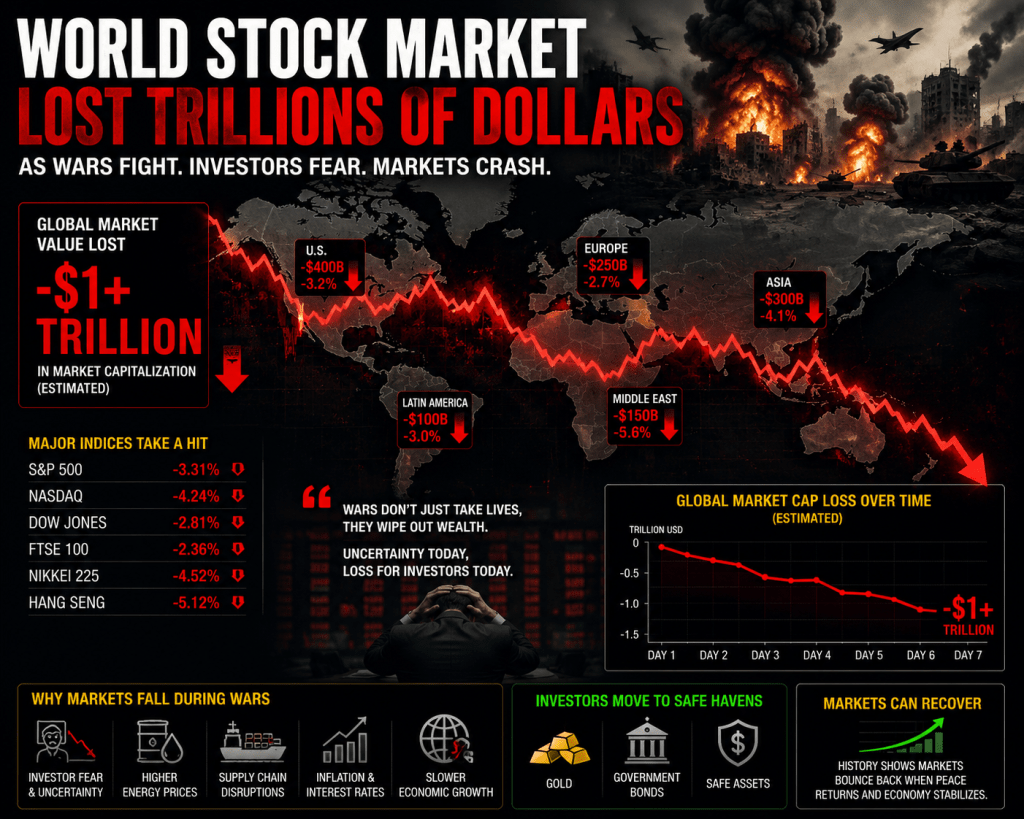
In recent times, the global stock market has encountered a significant downturn, leading to an estimated loss of trillions of dollars for investors. This unprecedented decline is largely attributed to ongoing and escalating global conflicts that have rattled investors’ confidence and caused widespread economic uncertainty. Various factors contribute to this situation, including geopolitical tensions, supply chain disruptions, and inflationary pressures driven by these wars. This article will delve into the causes and implications of this financial turmoil.
1. The Geopolitical Landscape
The geopolitical climate has a profound effect on market stability. Conflicts in regions such as Eastern Europe, the Middle East, and parts of Asia have caused ripples throughout the global economy. For instance, the ongoing war in Ukraine not only affects European markets but has a domino effect worldwide. The imposition of sanctions on aggressive nations leads to a reduction in trade, ultimately causing supply shortages and increased prices for consumers.
Moreover, heightened military spending in conflict-prone areas diverts funds from productive economic activity, negatively impacting growth prospects. Investors are acutely aware of these trends, prompting them to react with caution, often leading to sell-offs that exacerbate market declines.
2. Supply Chain Disruptions
Wars significantly disrupt supply chains, which are responsible for the smooth operation of global trade. Natural disasters, pandemics, and wars can all halt production and shipping processes. For example, fighting in key shipping regions can lead to blockades, while factory closures can limit the availability of raw materials.
The COVID-19 pandemic already strained supply chains, and the recent escalation of conflicts has further compounded these challenges. With inflation rates reaching historically high levels, coupled with supply chain issues, the cost of goods has soared, further squeezing consumer spending power. As a result, companies have witnessed diminished sales, leading to declining stock prices.
3. Inflation and Monetary Policy
Inflation, which has surged in many parts of the world, can often be linked to the ripple effects of warfare. Rising energy prices due to conflict, increased transportation costs, and the impact on agricultural commodities have all contributed to escalating inflation rates. Central banks, in response, have been increasing interest rates to combat inflation. Higher interest rates tend to discourage borrowing and spending; thus, consumer and business confidence may wane, leading to sluggish economic growth.
Consequently, market analysts have observed that sectors such as technology and consumer goods have faced particularly severe repercussions as investors fear lower earnings in the midst of rising costs.
4. Investor Sentiment
The financial markets operate not only on traditional economic indicators but also heavily on investor sentiment. The uncertainty caused by wars tends to evoke fear among investors, prompting them to re-evaluate their portfolios. This flight to safety often results in the movement of capital into traditionally stable assets like gold or government bonds, rather than equities, further leading to sharp declines in stock prices.
Moreover, the rise of social media and instantaneous news feeds can amplify the effects of fear and panic. Negative news stories related to wars travel quickly, and market participants may react impulsively, thereby accelerating a downward spiral.
5. Sectoral Impacts
Various sectors have been impacted differently by the losses in the stock market related to war. Energy companies may see a spike in stock prices due to rising oil prices caused by instability in oil-producing regions. Conversely, sectors like travel, hospitality, and retail may experience sharp declines as consumer confidence falters and discretionary spending diminishes.
Tech companies may also feel the strain as supply chain issues hinder production and drive up costs. The overall decline in market capitalization is especially evident in companies reliant on global supply chains that are now fraught with uncertainty due to conflict.
6. Global Cooperation and Recovery
Despite the challenges, there remains hope for recovery through enhanced global cooperation. Economic analysts suggest that through strategic agreements and trade deals, nations can foster environments conducive to peace and stability. Additionally, international organizations can play a crucial role in mediating conflicts and promoting economic integration.
Governments can also step up by implementing policies that stimulate economic growth, prioritize diplomatic solutions, and invest in infrastructure improvements. Sustainable investment in green technology and renewable energy may create new job opportunities and drive economic recovery, paving the way towards a more resilient future.
Conclusion
The loss of trillions in the stock market amid wars signals a profound shift in the global economic landscape. Investors are wary as conflicts persist, leading to heightened volatility and uncertainty. However, the challenges posed by geopolitical tensions, supply chain disruptions, and inflation may also present opportunities for resilience and innovation. By focusing on cooperation, policy reform, and proactive investment strategies, the world can work together towards ensuring a more stable and prosperous economic environment in the long run.
In conclusion, while the fallout from global conflicts is undeniably severe, it is essential for investors, policymakers, and nations to navigate these turbulent waters with strategic foresight and a commitment to restoring stability.

Leave a comment