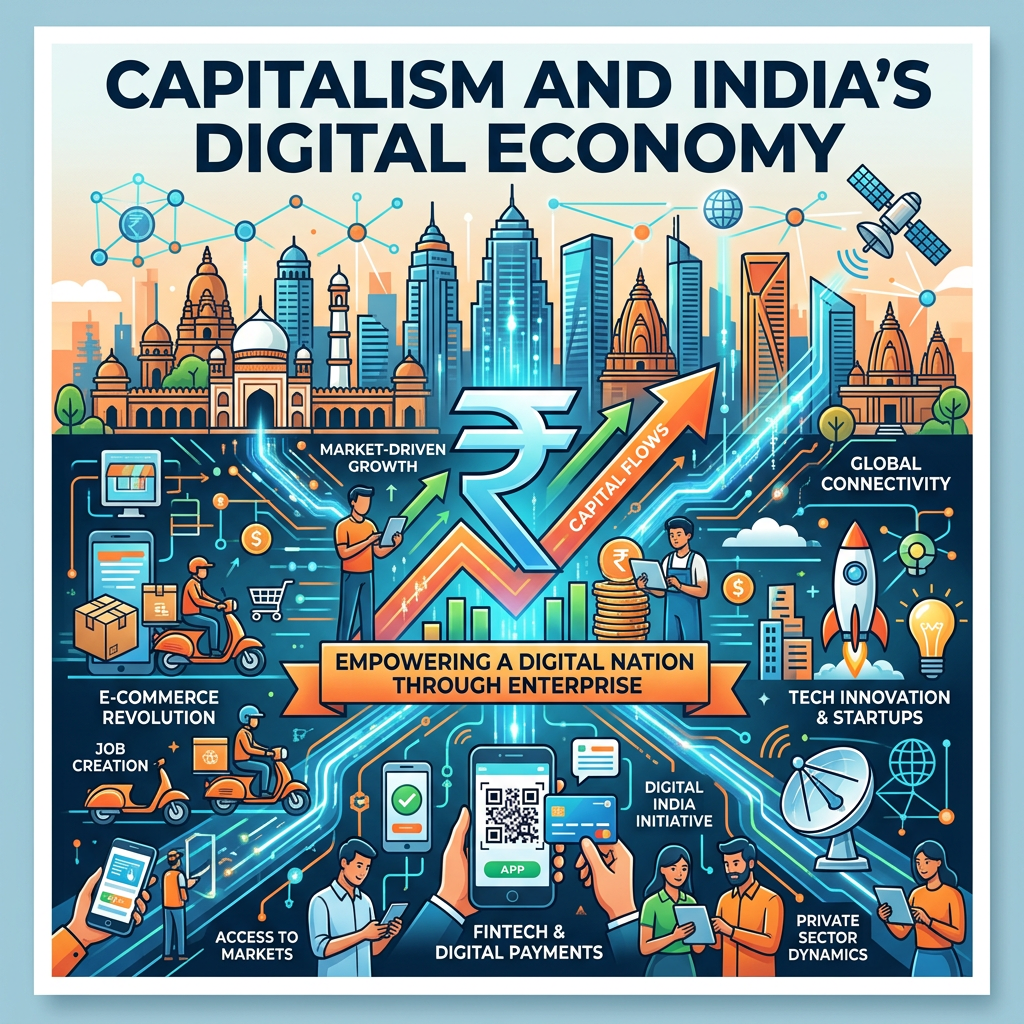
The digital economy in India is a multifaceted entity that has become increasingly influential over the past decade. Characterized by rapid growth in sectors such as e-commerce, fintech, and global connectivity, it presents a paradox inherent in capitalism itself. While the benefits of the digital economy are prominently showcased—internet accessibility, economic opportunities, and innovation—its adverse effects raise critical questions about its long-term sustainability and implications for society at large.
The Rise of India’s Digital Economy
In recent years, India has witnessed a significant transformation in its economic landscape, driven primarily by technological advancements. E-commerce giants like Flipkart and Amazon have not only altered consumer behavior but have also pushed traditional businesses to adapt quickly or risk obsolescence. By 2025, India’s digital economy is projected to reach $1 trillion, constituting a substantial share of the overall GDP.
This growth has undeniably created a myriad of opportunities for job creation and entrepreneurship, especially in urban areas. Startups in the fintech sector have capitalized on this momentum, providing innovative financial solutions to millions who were previously excluded from the formal banking system. As a result, digital payment platforms such as Paytm and PhonePe have flourished, contributing to a cashless economy and improving financial inclusion.
The Dark Side of Capitalism
However, the flourishing digital economy is not without its pitfalls. The very foundation of capitalism—competition for profit—can lead to practices that exacerbate social inequality and economic disparities. In a bid to capture market share, many tech companies prioritize growth over ethical considerations, resulting in labor exploitation, data privacy issues, and monopolistic behavior.
The concentration of wealth within a small number of corporations has also led to systemic inequalities. While upper-middle-class individuals may reap the benefits of seamless online services and innovations, a significant portion of the population remains digitally marginalized. In rural areas, limited internet connectivity and digital literacy barriers restrict access to the benefits of the burgeoning digital economy, perpetuating socio-economic divides.
Environmental Concerns
Another often-overlooked implication of the digital economy is its environmental impact. The proliferation of data centers, server farms, and electronic waste poses significant ecological threats. This rapid growth in technology has not only increased energy consumption but also contributed to e-waste, which is a growing concern in India. The capitalist drive for continuous innovation and consumption inherently prioritizes profit over environmental health, creating a precarious balance that risks long-term sustainability.
Impact on Traditional Industries
The digital economy has also disrupted traditional sectors, with significant ramifications for employment and livelihoods. While innovation leads to efficiency, it often comes at the cost of jobs in industries unable to cope with digital transformation. Traditional artisans, retail stores, and even small-scale manufacturers find it increasingly difficult to compete with larger, tech-savvy corporations that benefit from economies of scale and extensive digital marketing resources.
As a result, local economies that once thrived due to traditional practices are now at risk of collapse. This trend raises critical questions about the future of work and the socio-economic fabric of communities, highlighting the need for adaptive approaches to workforce development and retraining.
Navigating the Future
To mitigate the adverse effects of capitalism within India’s digital economy, a holistic approach is vital. Policymakers must advocate for regulations that foster equitable growth and protect the rights of workers, consumers, and the environment. Emphasizing digital literacy programs, encouraging sustainable practices, and promoting fair competition are steps in the right direction.
Public-private partnerships can also play a key role in bridging the digital divide, providing infrastructure and resources to ensure that rural and marginalized communities are not left behind. By fostering an inclusive digital ecosystem, India can harness the potential of its digital economy while addressing the inequities that accompany rapid technological advancement.
Conclusion
As India navigates its digital future, it must confront the inherent contradictions of capitalism. The digital economy possesses the power to drive growth and innovation, yet it also poses significant challenges that threaten social cohesion and environmental sustainability. To transform opportunities into lasting benefits, India must remain vigilant and proactive in ensuring that the digital revolution serves all citizens fairly and justly. Only by addressing these core issues can the nation pave the way for a truly inclusive and prosperous future in its digital economy.


Leave a comment