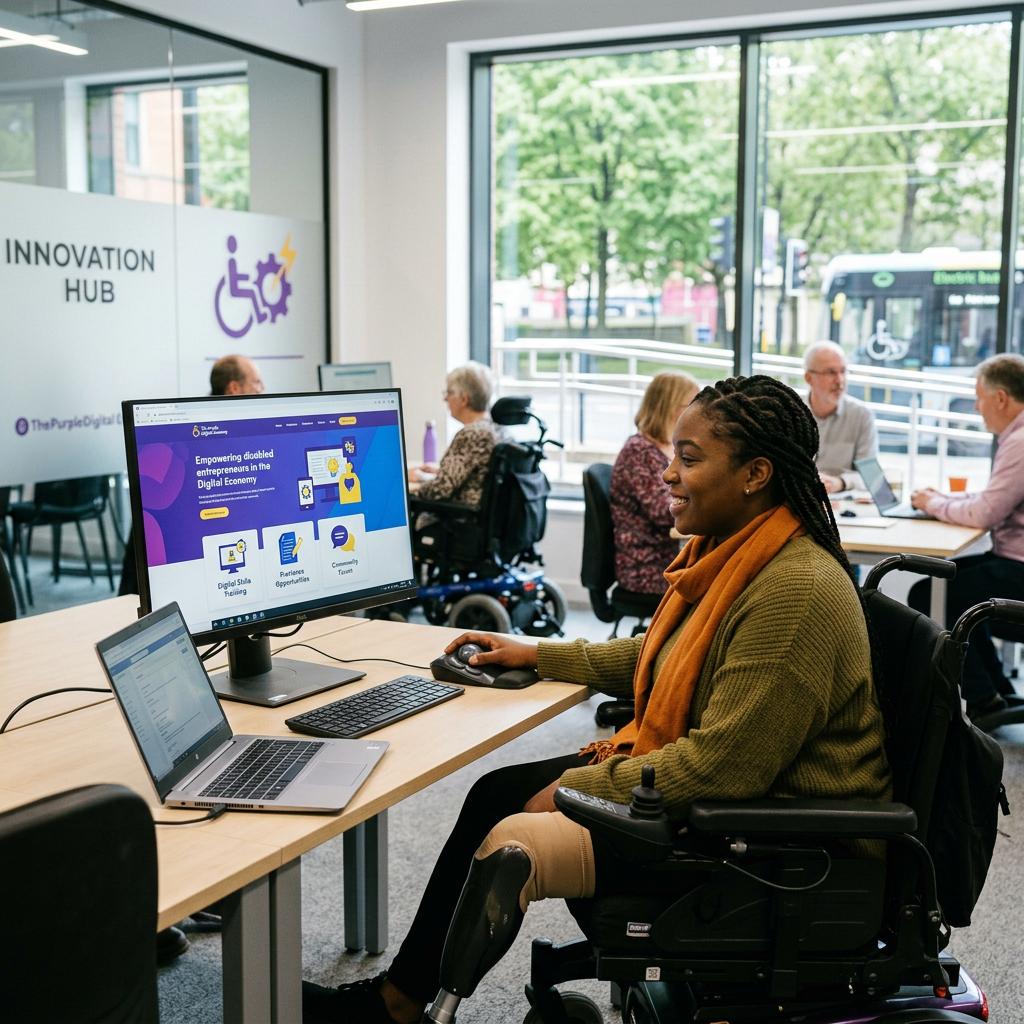
The digital economy represents a critical frontier in today’s fast-paced world, providing unprecedented opportunities for innovation, employment, and financial growth. However, individuals with disabilities often find themselves at the margins of this economic transformation. The National Centre for Promotion of Employment for Disabled People (NCPEDP) has pointed out that various government schemes aimed at supporting people with disabilities tend to be limited and challenging. Bridging the digital divide for persons with disabilities is not just a matter of inclusivity; it is essential for fostering a robust purple economy—an economy that is inclusive, equitable, and accessible for all.
Understanding the Purple Economy
The term “purple economy” refers to the economic activities that create opportunities for marginalized communities, including individuals with disabilities. It emphasizes inclusivity in employment, ensuring that all individuals can participate in economic activities regardless of their physical or mental capacities. The purple economy advocates for the removal of barriers that hinder equal access to various sectors of the economy, including technology and the digital sphere.
The Intersection of the Digital Economy and Purple Economy
As the world continues to transition into an increasingly digital landscape, the need for persons with disabilities to engage in this economy becomes ever more pressing. Digital technology has the potential to provide significant benefits for persons with disabilities through:
- Flexible Work Opportunities: Remote work facilitated by digital platforms can offer individuals with disabilities the flexibility to work from home, thus eliminating issues related to commuting or navigating traditional workplaces.
- Skill Development: Online training programs and resources enable people with disabilities to learn new skills that are relevant in the digital economy. These skills can include programming, digital marketing, content creation, and data analysis.
- Entrepreneurship: E-commerce platforms provide an avenue for individuals with disabilities to start their own businesses without the need for a physical storefront, increasing their chances of economic independence.
- Networking and Collaboration: Digital platforms foster communities where persons with disabilities can connect, collaborate, and innovate. This networking is crucial for sharing resources and skills, ultimately leading to greater economic participation.
Financial Economy: A Key Element
The financial economy plays a vital role in enabling access to the digital economy. Persons with disabilities often face economic hardships due to systemic barriers, unemployment, and limited access to financial services. To address these challenges, we need to consider several strategies:
- Microfinance and Credit Facilities: Implementing targeted microfinance initiatives can help individuals with disabilities access the funding they need to engage in entrepreneurship or skill development.
- Subsidies for Technology: Government schemes should include financial assistance for purchasing technology that aids accessibility, such as adaptive devices, ensuring that all individuals can benefit from the digital economy.
- Incentives for Employers: Offering tax benefits or subsidies to employers who hire individuals with disabilities can motivate organizations to create more inclusive workplaces.
- Financial Literacy Programs: Building capacity through financial literacy programs tailored for persons with disabilities can enhance their financial decision-making skills, helping them to become more economically independent.
Policy Recommendations
To effectively enable persons with disabilities to access the digital economy, a comprehensive policy framework that combines the interests of the purple economy and the financial economy is essential. Here are some key recommendations:
- Inclusive Legislative Framework: Governments must enact and enforce laws that mandate inclusive practices in the employment sector, focusing on technology companies in particular, to ensure they hire diversely.
- Robust Access to Technology: Ensure that public spaces, schools, and workplaces have the necessary technology and infrastructure to support individuals with disabilities, facilitating equal participation in the digital economy.
- Create Public-Private Partnerships: Collaboration between government bodies, private organizations, and non-profits can create a support system that fosters innovation and entrepreneurship among persons with disabilities.
- Awareness Campaigns: Launching campaigns to raise awareness about the capabilities and potential of individuals with disabilities can challenge stereotypes and promote an inclusive mindset among employers and society.
- Monitor and Evaluate Programs: Establish mechanisms for monitoring and evaluating the effectiveness of government schemes and initiatives aimed at integrating persons with disabilities into the digital economy to ensure continuous improvement.
Conclusion
Enabling persons with disabilities to thrive in the digital economy is not merely a social obligation; it’s a strategic necessity for building a more resilient and inclusive economy. By intertwining the principles of the purple economy with the financial economy, we can create a robust ecosystem that supports individuals with disabilities in accessing the myriad opportunities offered by the digital transformation. As we move forward, it is imperative that we remove barriers, empower individuals, and foster an economic environment where everyone can harness their potential, contributing to a richer, more vibrant economy.

Leave a comment