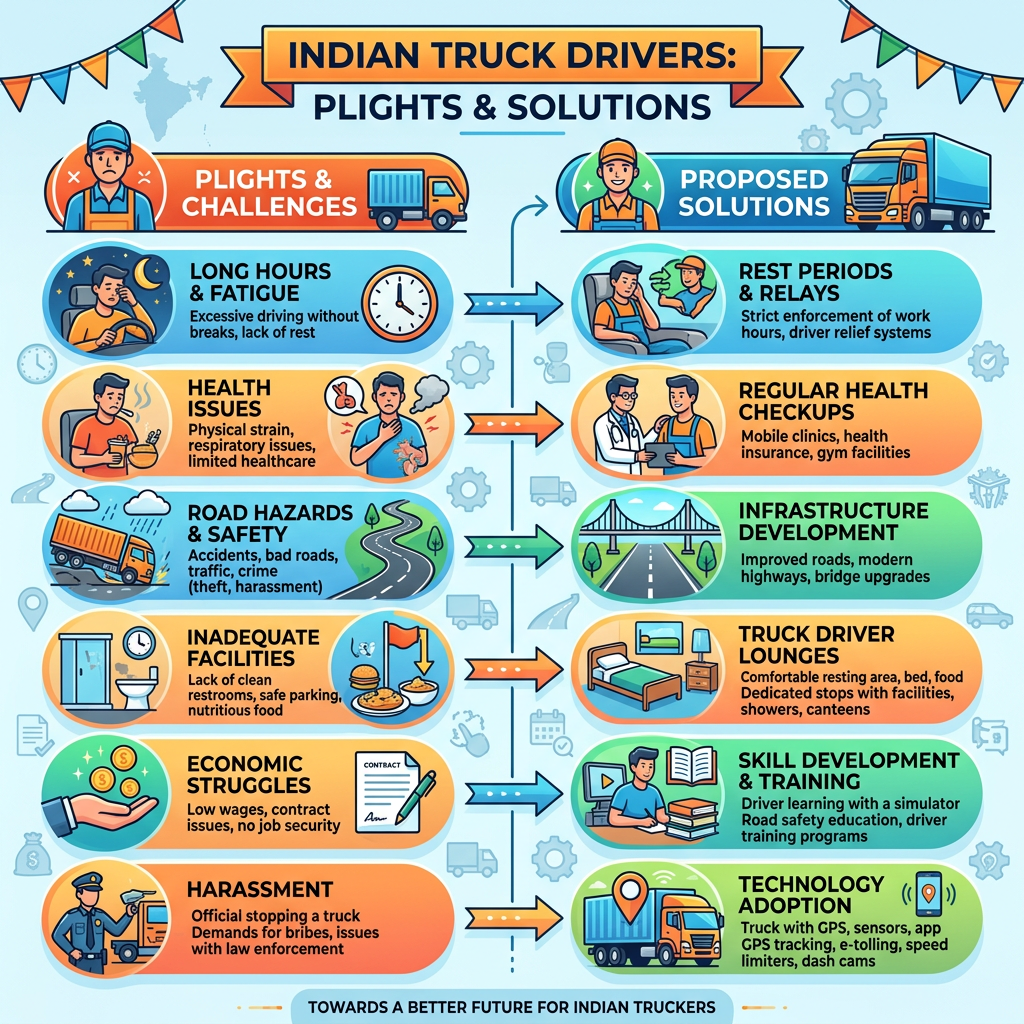
Indian truck drivers play a crucial role in the transportation of goods across the vast and diverse country. However, they face several significant challenges that affect their well-being, productivity, and the overall efficiency of the logistics industry. Understanding these plights and finding solutions is essential for improving their conditions.
Key Challenges
1. Long Working Hours and Poor Working Conditions
Truck drivers in India often face long working hours, sometimes exceeding 14 hours a day. This not only leads to fatigue but also contributes to a higher risk of accidents. Additionally, the lack of adequate rest areas with essential facilities such as clean restrooms, food, and sleeping areas further exacerbates their problems.
2. Low Wages and Financial Instability
Many truck drivers receive low wages that do not match the demanding nature of their work. Often, earnings are not sufficient to support their families, leading to financial instability. This issue is compounded by the lack of job security and the prevalence of middlemen who exploit drivers.
3. Health Issues
Health problems are common among truck drivers due to sedentary lifestyles, irregular eating habits, and limited access to healthcare. Many drivers suffer from hypertension, diabetes, and other lifestyle-related diseases, which further complicates their ability to work efficiently.
4. Lack of Training and Skill Development
Many truck drivers lack formal training, which can lead to unsafe driving practices and poor vehicle maintenance. The absence of skill development programs contributes to a cycle of low wages and limited career advancement opportunities.
5. Safety Concerns
Road safety is a significant concern, with countless accidents occurring annually involving heavy vehicles. Factors like poor road conditions, lack of traffic enforcement, and the reckless behavior of other drivers increase the dangers faced by truck drivers.
6. Social Isolation
The nature of their job often leaves truck drivers isolated from their families and communities. Long periods away from home can lead to mental health issues such as depression and anxiety.
7. Regulatory Hurdles
The truck operating environment in India is often characterized by complicated regulations and paperwork, causing delays and added stress for drivers who must navigate these bureaucratic challenges.
Proposed Solutions
1. Improving Working Conditions
Investing in better rest areas along highways is essential. These facilities should include clean restrooms, food outlets, and comfortable sleeping accommodations. Additionally, enforcing regulations that limit driving hours will help reduce fatigue and enhance safety.
2. Enhancing Wage Structures
Moving toward a wage structure that better compensates truck drivers for their hard work is critical. Creating transparent payment systems that eliminate middlemen would ensure that drivers receive fair compensation directly.
3. Health Initiatives and Medical Support
Employers should provide regular health check-ups and promote wellness programs that encourage healthy eating habits and physical fitness. Collaborating with healthcare providers to offer accessible medical services for drivers can significantly improve their overall health.
4. Training and Skill Development Programs
Implementing mandatory training programs for truck drivers can improve driving skills and vehicle maintenance knowledge. Partnerships with educational institutions can create structured training modules tailored for drivers to enhance their skills and employability.
5. Investing in Safety Measures
Road safety can be improved through enhanced traffic enforcement and better infrastructure. Ensuring proper road conditions and instituting strict penalties for traffic violations can create a safer driving environment. Additionally, promoting the use of technology, such as fleet management systems and GPS, can enhance route planning and reduce risks.
6. Mental Health Support
To address the issue of social isolation, companies could implement support programs, including mental health resources accessible through mobile apps or hotlines. Encouraging regular communication with family members can help mitigate feelings of isolation.
7. Simplifying Regulatory Processes
Streamlining the regulatory framework and digitizing paperwork can reduce the burden on truck drivers. Creating a single-window clearance system for permits and licenses would save time and reduce stress, allowing drivers to focus on their work.
Conclusion
Addressing the plights of Indian truck drivers requires a multifaceted approach that includes improving working conditions, enhancing wages, providing health support, and investing in training. Collaborative efforts involving government authorities, logistics companies, and the drivers themselves are essential to implement these solutions effectively. By improving their work environment, we can not only uplift the lives of truck drivers but also enhance the efficiency and safety of the entire logistics sector in India.

Leave a comment