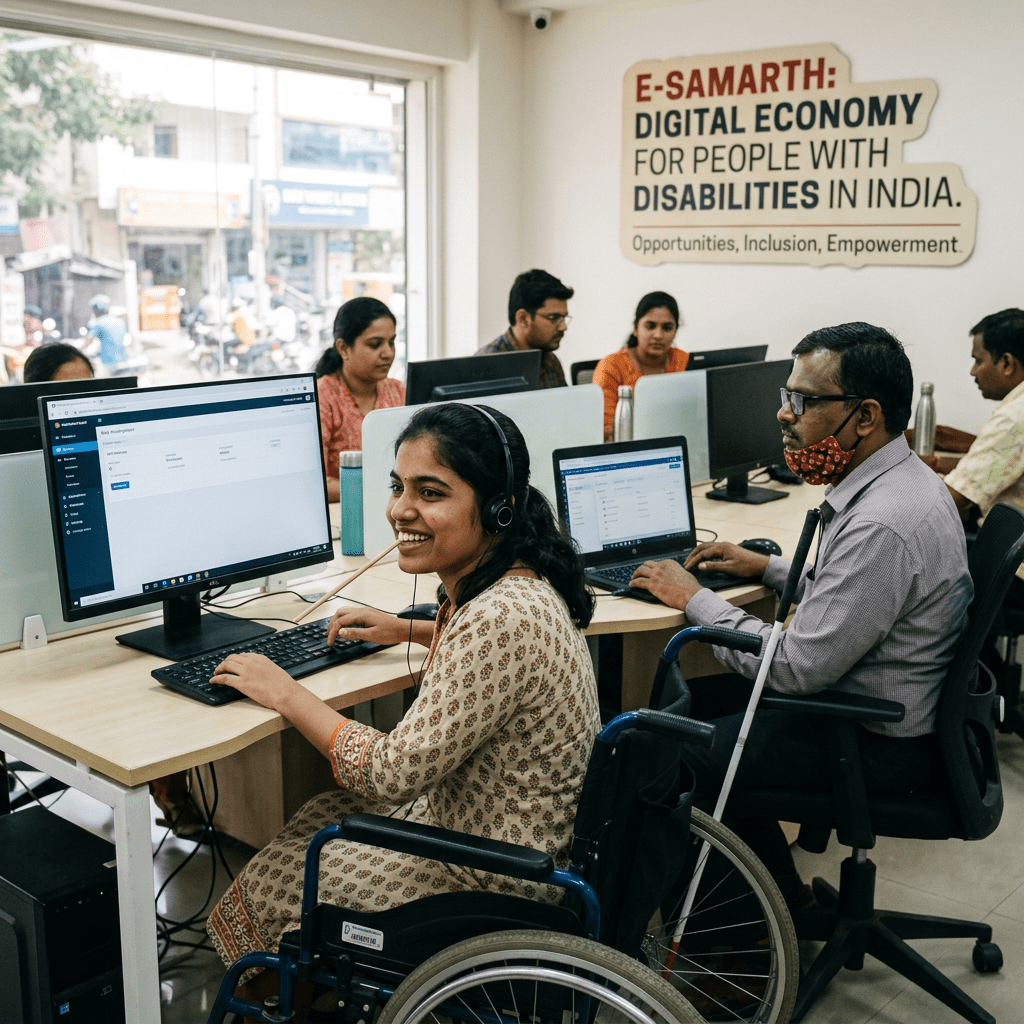
The digital economy represents a significant opportunity for all individuals to participate in a rapidly evolving economic landscape. In India, a country marked by its diverse population, the integration of individuals with disabilities into this digital framework is essential for fostering inclusivity and driving economic growth. This essay explores the vital role of the digital economy in enhancing opportunities for people with disabilities in India, examining the challenges they face, the initiatives undertaken, and the potential for creating a more inclusive society.
The Current Landscape
India is home to approximately 70 million individuals with disabilities, a demographic often marginalized in terms of employment and socio-economic opportunities. Historically, societal attitudes, lack of accessibility, and educational barriers have contributed to their exclusion from mainstream economic activities. However, the advent of technology and digital platforms has opened up new avenues for engagement, skill development, and employment for these individuals.
Opportunities in the Digital Economy
The digital economy encompasses a broad range of sectors, including e-commerce, online services, and the gig economy. For people with disabilities, these sectors offer unique opportunities to participate in the workforce without the constraints often encountered in traditional jobs.
- Remote Work: One of the primary advantages of the digital economy is the prevalence of remote work opportunities. Individuals with disabilities can engage in various roles such as data entry, customer service, digital marketing, and software development from the comfort of their homes. This shift not only eliminates the need for commuting but also provides a flexible work environment that can be tailored to individual needs.
- Skill Development: Digital platforms provide access to online educational resources and vocational training. Various organizations offer courses specifically designed for people with disabilities, focusing on in-demand skills like coding, graphic design, and digital marketing. By acquiring these skills, individuals can improve their employability and contribute meaningfully to the economy.
- Entrepreneurship: The digital economy also fosters entrepreneurship among individuals with disabilities. With the rise of e-commerce platforms, there is an opportunity for these individuals to start their own businesses. Whether it’s selling handmade crafts, providing consulting services, or creating digital content, entrepreneurship empowers people with disabilities to carve out their own paths and achieve financial independence.
Challenges to Overcome
Despite the potential that the digital economy holds, several challenges persist that hinder the full participation of individuals with disabilities.
- Accessibility: Many digital platforms are not designed with accessibility in mind. Websites and apps may not accommodate assistive technologies, making it difficult for individuals with visual or hearing impairments to access online opportunities. It is crucial for companies and developers to prioritize inclusive design to ensure that all users can benefit from digital services.
- Digital Divide: Access to technology and reliable internet connections remains a significant barrier, especially in rural areas of India. Many individuals with disabilities come from low-income backgrounds, where affording devices and internet access can be a challenge. Bridging this digital divide is essential to ensure that everyone can participate in the digital economy.
- Employment Bias: Discrimination and bias against people with disabilities continue to exist in the job market. Even when opportunities arise, employers may harbor misconceptions about the capabilities of individuals with disabilities. Increasing awareness and training for employers on disability inclusion is vital to foster a more accepting work environment.
Government Initiatives
The Indian government has recognized the importance of promoting inclusive economic growth. Various initiatives have been launched to support individuals with disabilities in the digital economy:
- Skill Development Programs: Programs aimed at enhancing digital skills among individuals with disabilities have been established. The Ministry of Social Justice and Empowerment, along with organizations like the National Institute for Empowerment of Persons with Multiple Disabilities (NIEPMD), offers training to develop relevant digital skills.
- Start-Up Initiatives: The government has also encouraged start-ups that focus on disability inclusion through funding and mentorship programs. These initiatives aim to empower aspiring entrepreneurs, providing the necessary support to navigate the challenges of starting a business.
- Policy Frameworks: Policies such as the Rights of Persons with Disabilities Act have laid the groundwork for enhancing the rights of individuals with disabilities, mandating inclusion in education, employment, and social welfare systems.
A Vision for the Future
As India navigates its digital transformation, there is a pressing need to embrace a future that is inclusive of all its citizens, including individuals with disabilities. Stakeholders—government, private sector, and civil society—must work collaboratively to remove barriers and create an accessible digital landscape.
- Inclusive Design: By advocating for and implementing inclusive design practices, companies can ensure that their platforms cater to diverse needs, enhancing accessibility for all users.
- Community Engagement: Engaging with individuals with disabilities when developing policies or technologies can lead to better outcomes, as they are best positioned to articulate their needs and preferences.
- Awareness Campaigns: Heightening awareness around the capabilities of individuals with disabilities can alter perceptions and combat stereotypes, leading to greater acceptance and integration in the workplace.
In conclusion, the digital economy has the potential to be a powerful tool for inclusion, offering unprecedented opportunities for individuals with disabilities in India. By addressing existing challenges and fostering an inclusive environment, India can pave the way for a more equitable society where everyone, regardless of their abilities, can thrive.

Leave a comment