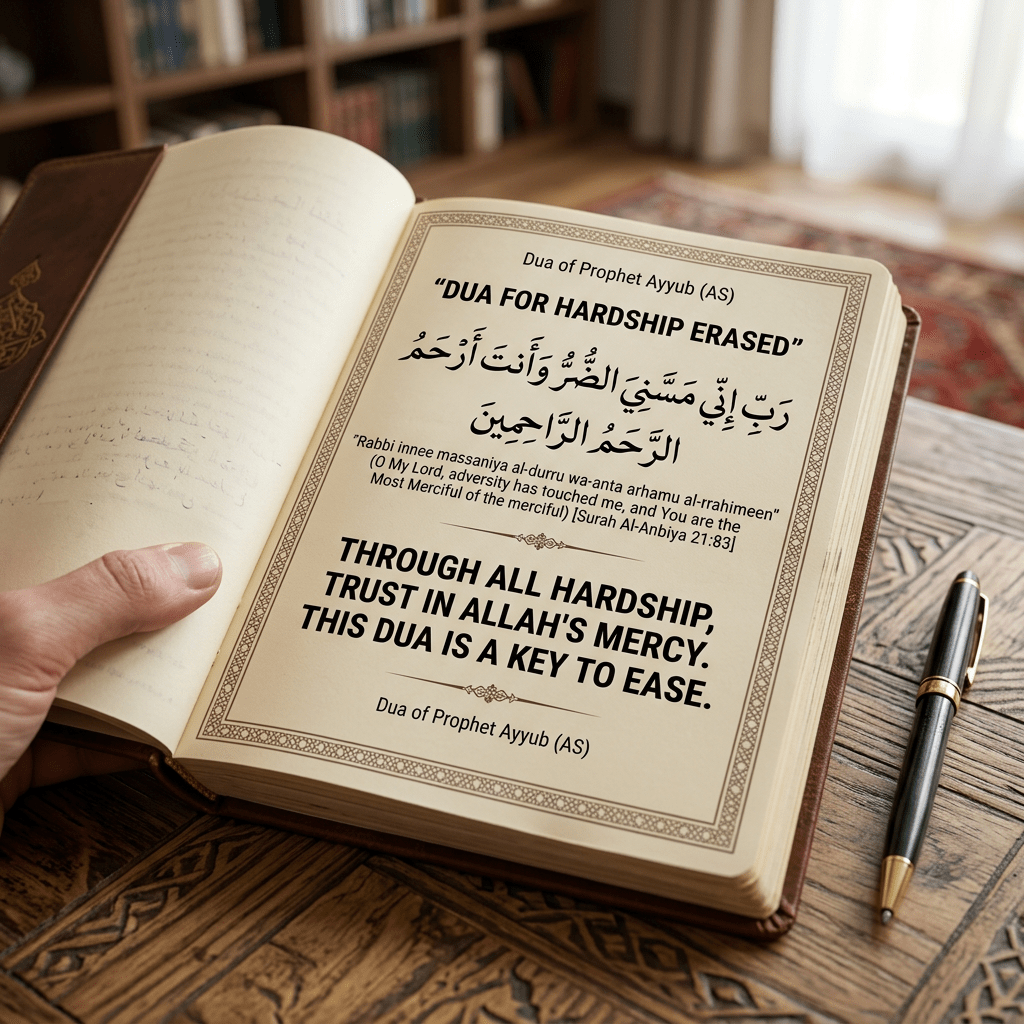
Dua for Hardship: A Message of Hope and Strength
In times of hardship and adversity, many turn to prayer as a source of comfort and strength. One of the most poignant examples in Islamic tradition is the dua made by Prophet Ayyub (AS), renowned for his unwavering patience amid suffering. His story is one of resilience, faith, and the power of dua, offering solace to those who find themselves in difficult circumstances.
Understanding Hardship in Faith
Islam teaches that hardship is a part of life, a test from Allah to strengthen one’s faith and character. The Qur’an states, “Do not lose hope, nor be sad” (Qur’an 3:139). This depiction of hope in the face of adversity is central to Islamic belief. Difficulties serve a purpose: they challenge us to seek closeness to Allah, develop patience, and cultivate gratitude for our blessings.
The Power of Dua
Dua is a powerful form of supplication wherein believers communicate their needs and desires to Allah. It is an intimate and personal conversation filled with vulnerability and hope. Prophet Ayyub (AS), despite his immense suffering, turned to Allah in sincere prayer and eloquently expressed his plight. His famous dua is a reminder that turning to Allah in times of trouble can bring peace and reassurance.
The dua of Prophet Ayyub (AS) reflects his deep faith and reliance on Allah’s mercy. According to the Qur’an, he prayed:
“Indeed, adversity has touched me, and You are the Most Merciful of the merciful.” (Qur’an 21:83)
This simple yet profound invocation encapsulates the essence of faith: acknowledging one’s struggles while recognizing Allah’s boundless mercy.
Finding Solace Through Prayer
When facing challenges, it is essential to turn to specific duas and prayers that provide comfort. In addition to the supplication of Prophet Ayyub (AS), there are various duas from the Sunnah that believers can recite, such as:
- “Oh Allah, I ask You for relief from my troubles.”
- “Oh Allah, grant me strength and patience.”
Reciting these duas can help remind us of Allah’s presence in our lives, crystallizing the belief that we are never alone, even in our darkest hours.
The Role of Community and Support
Islam also emphasizes the significance of community support during hardships. Believers are encouraged to assist one another—providing emotional, spiritual, and practical help to those in need. The companionship of others can offer comfort, reminding individuals that they share their burdens with their community.
In sharing one’s struggles, there is the potential to cultivate compassion and understanding. Therefore, reaching out to loved ones or engaging in communal prayers can strengthen bonds and provide a sense of belonging and hope.
Conclusion
In closing, the dua for hardship embodies a profound connection between the believer and Allah. The story of Prophet Ayyub (AS) serves as a timeless reminder of the importance of patience, faith, and resilience. By embracing our challenges and turning to Allah through dua, we can navigate the storms of life with hope and positivity.
Let us use these moments of difficulty not only to pray for ourselves but also to extend our support to others in need. By doing so, we create a cycle of compassion and strength within our communities, echoing the lessons learned from the trials of the prophets.

Leave a comment