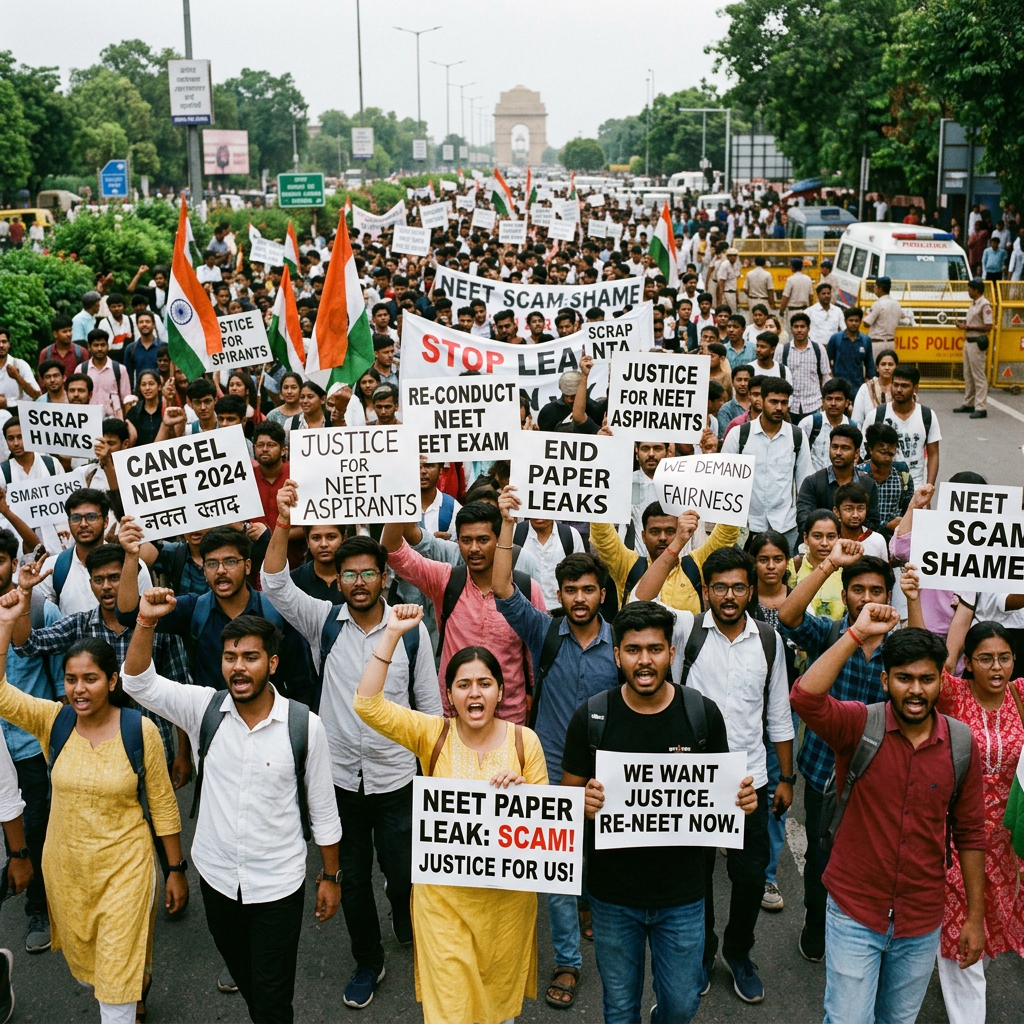
In recent months, a wave of protests has swept across various states in India as nextgen students rally against the cancellation of the NEET (National Eligibility cum Entrance Test) exams for 2024 and 2026. The protests are primarily rooted in the distress caused by the leak of examination papers, an event that has raised significant concerns over the integrity of the examination process and the future of countless aspiring medical students.
The Context of the Protests
NEET serves as a crucial gateway for students seeking admission to medical colleges across India. The exam is highly competitive, with millions of candidates vying for a limited number of seats. Given its importance, any disruption to the exam process is met with intense emotions, especially when that disruption results from unethical practices such as paper leaks. The recent leaks not only jeopardized the credibility of the examination but also left many students anxious about their hopes and aspirations for a future in medicine.
Reasons Behind the Protests
- Frustration Over Uncertainty: Students who had been preparing tirelessly for these exams found themselves abruptly thrown into uncertainty. The cancellation of NEET 2024 and 2026 has led to confusion about their educational futures. Many students worry about the loss of crucial study time, potentially impacting their performance when the exams are finally rescheduled.
- Demand for Accountability: The protests also reflect a broader demand for accountability from educational authorities. Students and their supporters are calling for a thorough investigation into the leaks and transparent measures to prevent future occurrences. They believe that the integrity of the examination process is paramount and that authorities must be held responsible for ensuring it.
- Inequity in Opportunities: The cancellation disproportionately affects students from underprivileged backgrounds who may not have access to resources that help them cope with changes in their educational trajectory. This inequity is a central theme in the protests, as students emphasize the need for a fair chance for everyone, regardless of their financial situation.
The Protests in Action
Throughout the protests, students have taken to the streets with banners and placards voicing their demands. Slogans such as “Justice for NEET” and “Stop the Leaks, Save Our Dreams” resonate loudly amongst the crowd. Social media platforms are also abuzz, with students sharing their experiences, organizing rallies, and using hashtags to amplify their voices and ensure that their message reaches a wider audience.
University campuses and coaching centers have become hotbeds of activism, with student organizations leading discussions on strategies and action plans. Many students have shared personal stories illustrating the sacrifices they have made in pursuit of their medical aspirations, emphasizing that they won’t stand silently by while their futures are jeopardized.
Government Response and Future Implications
In response to the protests, governmental authorities have acknowledged the severity of the situation. Educational boards have initiated investigations into the paper leak and are discussing potential measures to rectify the problem. However, students express skepticism regarding the effectiveness of these responses, questioning whether authorities will take the necessary actions to safeguard the integrity of future examinations.
The fallout from the NEET paper leaks suggests that significant changes may be needed in the administration of these competitive examinations. As students continue to advocate for better systems, there is potential for lasting reforms that might reshape the way examinations are conducted in India.
Moreover, these protests are igniting conversations about broader issues within the educational system, including the role of technology, security measures for examinations, and the need for a more supportive environment for students undergoing unprecedented pressures.
Conclusion
As the protests continue to gain momentum, it is clear that nextgen students are determined to fight for their right to a fair examination process. Their collective voice reflects the hopes and dreams of millions who aspire to enter the medical field, and they are unwilling to let a paper leak define their futures. The recent events serve as a powerful reminder of the importance of integrity in education and the resilience of young minds advocating for change. Whether the government will heed their calls remains to be seen, but one thing is certain: the fight for transparency and fairness in India’s educational landscape is far from over.

Leave a comment