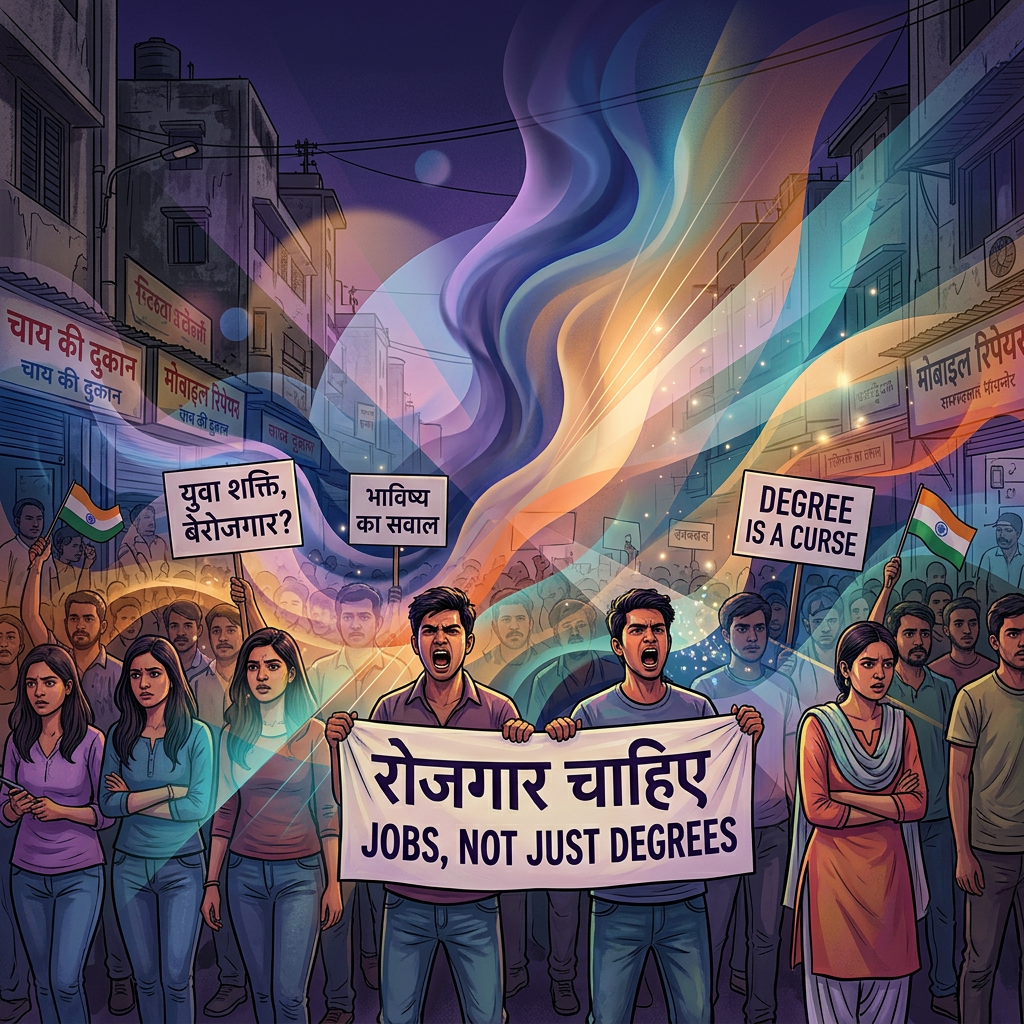
In recent years, India has witnessed a growing concern regarding unemployment among its youth, alongside discontent among private-sector employees regarding their wages. This situation has not only eroded public trust in the economic infrastructure but has also shifted the narrative around the government’s role in addressing these pressing issues. The roots of this discontent are deeply ingrained in the current economic climate, where the aspiration for higher education and better job prospects often clash with a reality marked by stagnation and dissatisfaction.
The Landscape of Youth Unemployment
India is home to one of the largest populations of young people in the world. However, the hope that education would lead to better job opportunities has been marred by a dismal job market. According to various reports, unemployment rates among the youth have remained stubbornly high, with many well-educated young individuals struggling to find jobs that match their qualifications.
Protesters, as seen in urban areas across India, have taken to the streets to voice their frustrations. These demonstrations are not merely expressions of discontent but are also calls for systemic change. Young people are demanding jobs that go beyond mere certificates and degrees, emphasizing the need for real employment opportunities that contribute to their development and the economy as a whole.
Private Sector Discontent
In parallel to the unrest among young job seekers, there is notable dissatisfaction among private-sector employees regarding their salaries. Many individuals in the workforce feel undercompensated despite working long hours and being pressured to perform. This discontent is exacerbated by the rising cost of living, which makes it increasingly difficult for employees to make ends meet.
The growing disparity between the cost of education and the salaries offered by employers has led to a sense of betrayal among those who invested in their education under the assumption that a degree would guarantee a decent livelihood. Consequently, a wave of skepticism has emerged regarding the government’s ability to foster an environment conducive to meaningful economic growth.
Perception of Regulatory Failures
Adding to the frustration are the repeated scams that have plagued various sectors within the Indian economy. Scandals involving corruption and mishandling of public funds have raised questions about the competence and integrity of regulatory bodies. Citizens are increasingly disillusioned with a system that appears to fail them repeatedly, creating an atmosphere where trust in both private and public institutions is at an all-time low.
These scandals have significant ramifications for the government’s image. A public that witnesses ongoing malpractice with no accountability is likely to grow impatient and dissatisfied. This sentiment can serve as a catalyst for further protests and unrest, amplifying calls for reform and increased transparency.
Government’s Response and the Role of Public Sympathy
The rising public sympathy for the government amid rampant dissatisfaction may stem from several factors. Firstly, while criticisms abound, the government has made efforts to address unemployment through various schemes meant to enhance job creation and vocational training. Initiatives aimed at promoting entrepreneurship, such as the ‘Startup India’ campaign, demonstrate a commitment to modernizing the economy and fostering new job opportunities.
Moreover, the government has recognized the importance of increasing investments in education and skills development. As the workforce evolves, so too must the training and qualifications of workers, making it critical for policymakers to align educational outcomes with industry demands.
At the same time, public sympathy towards the government can sometimes be a double-edged sword. While citizens may rally behind certain policies, there remains a collective demand for accountability and transparency. Failure to address the deep-seated issues can lead to a backlash against the perceived inaction or ineffectiveness of governing bodies.
The Path Forward
Recognizing the complexities of the current socio-economic landscape is essential for the government if it is to transform public sympathy into genuine support. This requires not only implementing policies that address immediate concerns but also fostering long-term economic sustainability.
Key to this transformation will be improving the regulatory framework to rebuild trust among citizens. By promoting policies that crack down on corruption and malpractice, the government can reassure the populace that their voices are heard and that there is a commitment to change.
Furthermore, engaging with the young populace through dialogue and addressing their concerns directly can also help ameliorate feelings of disconnect. Providing platforms for young people to express their ideas and actively participate in policy discussions can bridge the gap between the government and its citizens, creating a more cohesive approach to addressing unemployment and economic discontent.
Conclusion
The increasing public sympathy for the Indian government in light of economic challenges represented by youth unemployment and private sector dissatisfaction reflects a complex interplay of hope, frustration, and the quest for reform. As the nation grapples with these difficulties, it is essential for the government to take meaningful steps that not only alleviate immediate concerns but also lay the foundation for a more prosperous future for all citizens.

Leave a comment