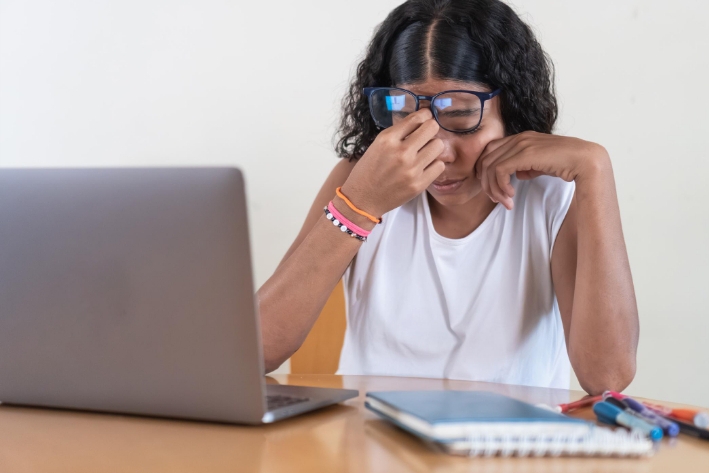
Eye problems are rising rapidly in cities because of three major factors: excessive screen exposure, pollution, and modern lifestyle habits. These factors together increase conditions like dry eye, myopia (short-sightedness), eye strain, and allergies.
- Excessive Screen Time (Digital Eye Strain)
Urban populations spend many hours daily on smartphones, laptops, and TVs.
What happens:
People blink less often when looking at screens (normal ~15–20 blinks/min → drops to ~5–7).
Reduced blinking causes dry eyes and irritation.
Blue light exposure can cause eye fatigue and headaches.
Children using screens too early increases myopia (near-sightedness).
Common symptoms:
Burning or dry eyes
Blurred vision
Headaches
Difficulty focusing
This condition is often called Computer Vision Syndrome. - Urban Pollution
Cities have high levels of dust, smoke, vehicle emissions, and industrial pollutants.
Effects on eyes:
Irritation and redness
Allergic conjunctivitis
Increased tear evaporation
Long-term inflammation of the eye surface
Fine particles (PM2.5) can enter the eye and cause chronic irritation. - Indoor Lifestyle & Less Sunlight
Urban lifestyle means more time indoors and less outdoor activity.
Why this affects vision:
Outdoor sunlight helps control eye growth in children.
Lack of outdoor time increases myopia risk.
Artificial lighting and long reading hours strain the eyes.
Studies show children who spend less than 1–2 hours outdoors daily have a higher risk of developing myopia. - Poor Lifestyle Habits
Other urban lifestyle factors also affect eye health:
Lack of sleep → eye fatigue
Poor diet → deficiency of Vitamin A, Omega-3
Air-conditioned rooms → dry eyes
Constant focus at close distance (phones/books)
✅ Summary
Eye problems in cities are increasing mainly because:
Long screen exposure
Air pollution and dust
Less outdoor activity
Poor sleep and diet
Continuous close-distance work
💡 Simple prevention tips
Follow the 20-20-20 rule: every 20 minutes look 20 feet away for 20 seconds
Blink more and use artificial tears if needed
Spend at least 1–2 hours outdoors daily (especially for children)
Reduce phone use before sleep
Eat eye-healthy foods (carrots, spinach, fish)

Leave a comment