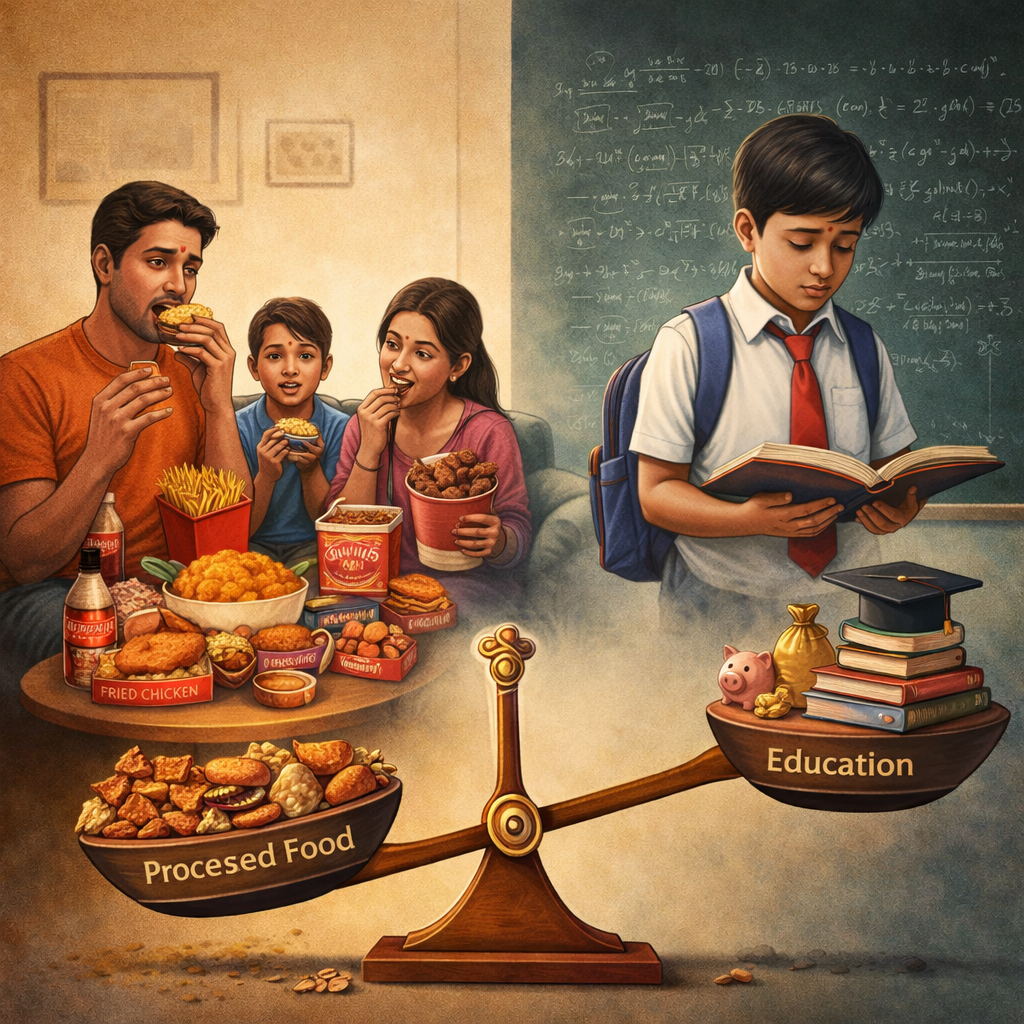
The statement “Indians are spending more on processed/unhealthy food than on education” reflects a change in household consumption patterns in India.
What the Data Shows
From the 2023–24 Household Consumer Expenditure Survey:
Processed food & beverages
Urban households: ~11% of monthly spending
Rural households: ~10%
Education
Urban households: ~6%
Rural households: ~3%
👉 This means families allocate almost double the share of spending to processed food compared to education.
What Counts as Processed / Unhealthy Food
Examples include:
Packaged snacks (chips, biscuits)
Sugary drinks
Fast food
Instant noodles
Ready-to-eat meals
These are often cheap, convenient, and heavily marketed.
Why This Is Happening
Several economic and social factors explain it:
1️⃣ Urban lifestyle changes
Busy schedules lead families to buy ready-made food.
2️⃣ Cheap packaged food availability
Processed food is often cheaper than healthy alternatives.
3️⃣ Aggressive marketing
Food companies advertise strongly, especially to children.
4️⃣ Education payments are periodic
School fees may be paid annually or quarterly, not every month, so the monthly share appears lower.
Possible Consequences
📉 Health risks
Obesity
Diabetes
Heart disease
📉 Lower human capital investment If families underinvest in education, it may affect future productivity and income levels.
Economic Insight
Economists view this as a consumption shift toward convenience goods rather than long-term investment goods like education.
✅ In simple terms:
Indian households today are spending more on convenience food than on learning and skill development, which raises concerns for both public health and long-term economic growth.
.

Leave a comment