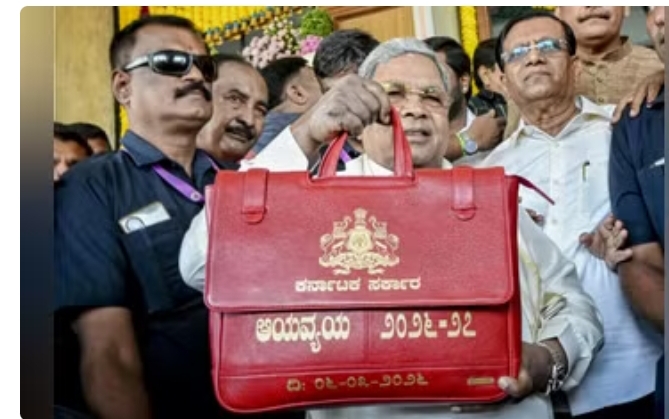
The Karnataka Budget 2026–27 was presented on 6 March 2026 by Chief Minister Siddaramaiah in the state assembly. The budget focuses on technology, infrastructure, welfare schemes, and education. The total budget size is about ₹4.48 lakh crore, one of the largest budgets in the state’s history. �
Below are the major highlights.
- Total Budget Size
Total Outlay: ₹4.48 lakh crore
Revenue expenditure: about ₹3.38 lakh crore
Strong focus on welfare schemes, infrastructure and technology sectors. �
South First - Technology & AI Initiatives
7 new initiatives for Artificial Intelligence sector.
AI-based attendance systems in Anganwadis, schools and colleges.
Plans to strengthen the AI ecosystem and tech startups. � - Major Infrastructure Projects
₹7,000 crore for Bengaluru infrastructure.
41 km metro expansion in Bengaluru.
Development of 1,800+ km roads across the state.
Plans for a second airport for Bengaluru.
Mysuru to be developed as the second IT hub of Karnataka. � - Education & Youth
15,000 vacant teacher posts to be filled.
₹2,500 crore to upgrade 40 government colleges and polytechnics.
800 schools to be upgraded into Karnataka Public Schools.
31 women PU colleges under Waqf institutions to become degree colleges. � - Social Welfare & Health
Free insulin pens for children with Type-1 diabetes.
Indira Food Kit (tur dal, sugar, salt, oil) for poor families.
Continued funding for guarantee schemes like Gruha Lakshmi (₹28,608 crore allocation). - Agriculture & Rural Development
Financial assistance for 1.3 lakh farmers (₹5,000 annually).
Electricity subsidy for farm pumps.
Funding for irrigation projects like Mekedatu and Upper Bhadra.
₹10,433 crore for Jal Jeevan Mission rural water supply. � - New Policies & Interesting Announcements
Proposed ban on social media for children under 16 years to protect mental health. �
Plan to end alcohol price controls and introduce a new excise system. �
Construction of an 80,000-seat international cricket stadium near Bengaluru. �
✅ Overall focus:
Technology & AI
Infrastructure growth
Welfare schemes
Education and rural development


Leave a comment