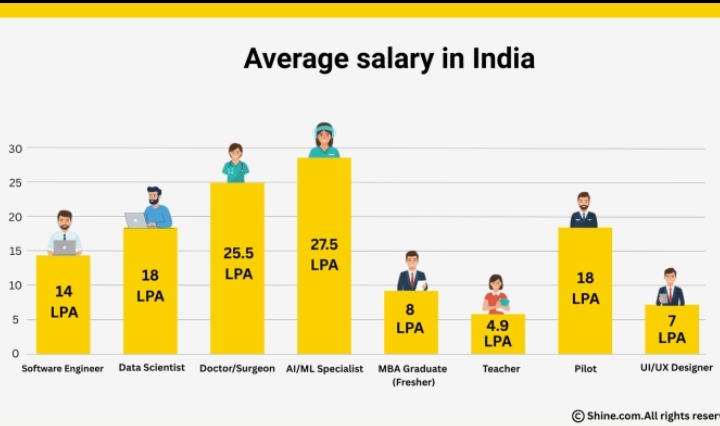
Here’s a clear, no-nonsense comparison of salary quality and income levels across India, China, and the USA — focusing on real earning power, not just GDP numbers.
🇮🇳 India – Low Income, High Competition
Average salaries: Low for most workers
Fresh graduates: ₹10,000–25,000/month common
Skilled professionals: Limited high-pay roles; only top IT/management earn well
Job market reality:
Huge population → intense competition
Many degrees, fewer quality jobs
Purchasing power: Weak due to inflation, rent, education, healthcare costs
Result:
➡️ Majority remain low-income despite working full-time
➡️ Salary growth is slow and uneven
🇨🇳 China – High Income Growth
Average salaries: Significantly higher than India
Manufacturing & tech jobs: Well-paid and scalable
Urban wages: Strong middle-income class
Job market reality:
Massive industrial + export economy
More productivity-linked pay
Result:
➡️ Large population earning stable middle to high incomes
➡️ Faster salary progression than India
🇺🇸 United States – Highest Income
Average salaries: Among the highest globally
Minimum wages: Often higher than skilled salaries in India
Professional roles: Engineers, doctors, managers earn very high incomes
Job market reality:
Innovation-driven economy
Pay linked to skills, output, and experience
Result:
➡️ Strong purchasing power & savings potential
➡️ Even average workers live at a higher income level
📌 Bottom Line
India: Low salaries due to population pressure & limited high-value jobs
China: Better income because of manufacturing + exports
USA: Highest income due to innovation, productivity & global dominance

Leave a comment