Quick comparison — India vs China vs United States
Short answer: India’s agricultural export volume is growing fast but remains concentrated in bulk/commodity items and lower value-added goods; China shows higher progress in moving up the value chain with more processed and branded food exports; the United States remains the most advanced overall — largest export value, very high quality/traceability systems, and strong value-added processing and global market reach. �
Press Information Bureau +2
1) Size & recent trend (most load-bearing facts)
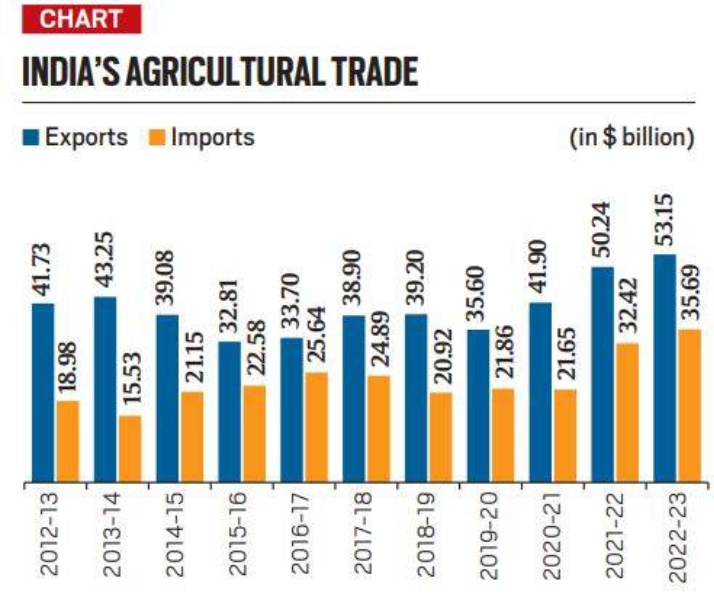
India: agricultural exports rose to about US$48.15 billion in 2023–24 (strong growth from a decade earlier). �
Press Information Bureau
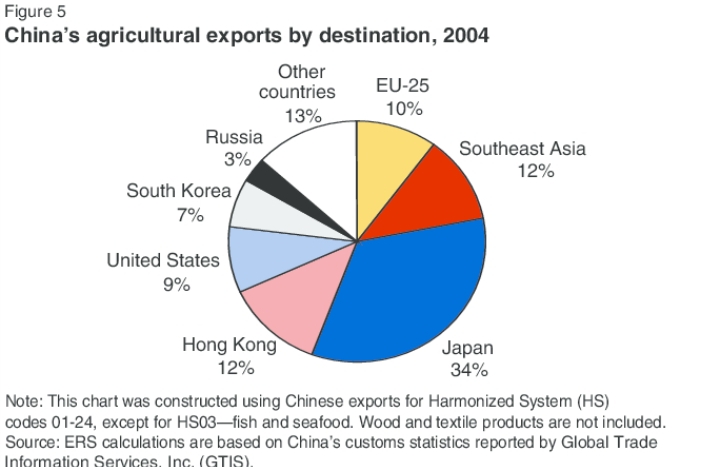
China: exports of agricultural products show very large monthly swings and reached record monthly highs in 2024; China’s exports are sizeable and increasingly include processed foods and higher-value items. �
Trading Economics +1
United States: U.S. agricultural exports totaled roughly US$175–176 billion (calendar 2023–2024 range) — the U.S. is the largest exporter by value and remained near record levels recently. �
Foreign Agricultural Service +1
2) What “quality of agricultural exports” means here
By “quality” I’m using: product safety & SPS compliance, traceability, processing/value-addition (e.g., branded/processed foods vs raw bulk), logistics/cold-chain, and certifications (organic, FSSC/HACCP, GMP).
3) Strengths & weaknesses — quick bullets
India (strengths)
Strengths: large volumes of staples and commodities (rice, spices, marine products, sugar, oilmeals); cost competitiveness; growing export infrastructure programs (APEDA, trade fairs). �
Mcommerce +1
Weaknesses: high share of low value-added shipments, limited cold chain and processing capacity in many segments, uneven SPS compliance across regions, variable farm-level traceability.
China (strengths)
Strengths: rapid scaling of processed food, industrial food processing capacity, improving branding for some categories, strong government coordination on standards/registration for exporters. �
Trading Economics +1
Weaknesses: export mix still includes many intermediates; some geopolitical/trade frictions and non-tariff barriers with importing markets can complicate access.
United States (strengths)
Strengths: largest export value by far, highly mechanized agriculture, deep value-added industry (food processing, ingredients, branded goods), world-class sanitary/traceability frameworks, strong R&D and logistics networks. �
Foreign Agricultural Service +1
Weaknesses: exposure to commodity price swings and currency effects; some markets impose trade barriers on certain U.S. products.
4) Why the U.S. is typically rated “most progressed”
Scale + value: much larger export value (hundreds of billions vs tens of billions). �
Foreign Agricultural Service +1
Value-addition: bigger share of exports are processed/ingredient goods, specialty crops, meat and dairy with brand/traceability. �
Foreign Agricultural Service
Institutional systems: stringent SPS rules, farm-to-fork traceability solutions, and export promotion with private sector capacity. �
Economic Research Service
5) Concrete recommendations for improving India’s quality and progress (practical, high-impact)
Raise value-addition capacity — invest in food processing clusters (packaging, ready-to-cook, frozen and preserved foods) near production hubs to capture more value.
Scale cold-chain & logistics — targeted public-private cold-chain corridors for fruits, vegetables, dairy and seafood to reduce post-harvest loss and improve shelf life.
Strengthen farm→export traceability — subsidize traceability tech for exporters (QR codes, block-backed records, lab testing networks) to meet EU/US buyer requirements.
SPS & certification push — a national push to expand HACCP/FSSC/organic certification among cooperative aggregators and mid-sized processors (cheaper group certification models).
Market diversification + branding — move from commodity selling to branded “India origin” value chains (e.g., spices, specialty rice, ethnic ready-meals), and target high-growth markets with differentiated products.
Finance & risk instruments — trade finance, export credit, and crop insurance tailored to exporters to stabilise supply and quality investments.
6) One-line summary
India is improving fast in agricultural exports (volume growth and policy attention), China is further along in upgrading to processed/higher-value items, and the United States remains the most advanced because of scale, traceability, and very large value-added export industries. �
?

Leave a comment