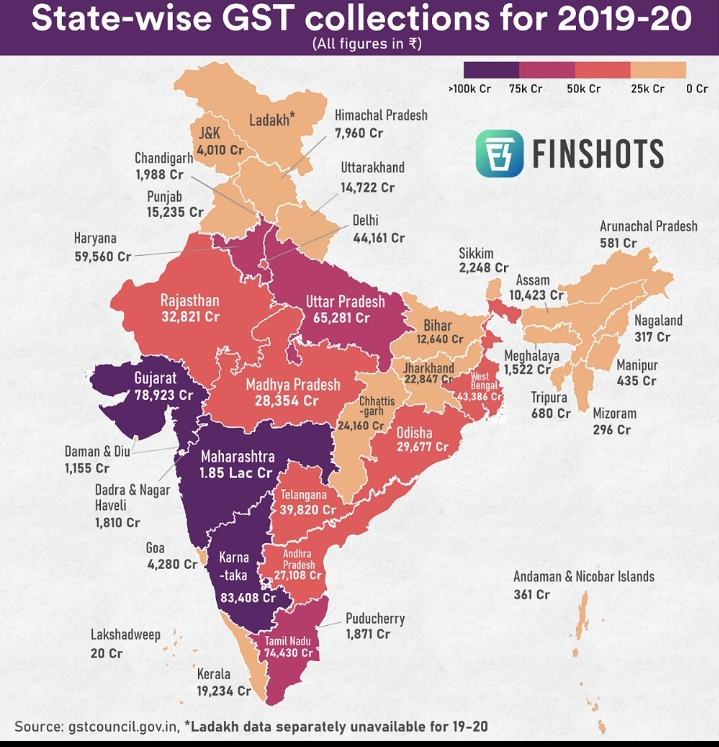
Summary: Indian States’ GST Tax Revenue Contribution to the Indian Government
- GST (Goods and Services Tax) is one of India’s largest sources of tax revenue, shared between the Central Government (CGST & IGST) and State Governments (SGST).
- GST revenue is highly concentrated in a few economically strong states due to higher industrial activity, services, trade, and consumption.
Top GST-Contributing States
- Maharashtra – largest contributor, driven by Mumbai’s financial services, manufacturing, and imports.
- Karnataka – strong IT, startups, and services sector.
- Gujarat – major manufacturing, ports, and exports hub.
- Tamil Nadu – automobile, electronics, and industrial base.
- Haryana – automobile, logistics, and corporate hubs.
- Uttar Pradesh – large population and rising consumption base.
Together, these states contribute over 65–70% of India’s total GST revenue.
Medium Contributors
- Delhi, Telangana, West Bengal, Rajasthan, Andhra Pradesh, Odisha
- These states benefit from services, mining, trade, and urban consumption.
Lower GST Contributors
- Bihar, Jharkhand, Chhattisgarh, North-Eastern states, hill states
- Lower industrialization, smaller markets, and higher dependence on central transfers.
Key Observations
- Western and Southern India dominate GST collections.
- States with formal economies, ports, IT hubs, and manufacturing clusters generate higher GST.
- Consumption-based tax nature benefits populous and urbanized states.
- Many poorer states receive more GST compensation and central transfers than they contribute.
Overall Conclusion
India’s GST revenue reflects economic inequality between states. While developed states fund a major share of national GST, redistribution through GST settlement and Finance Commission transfers helps support less-developed states, maintaining cooperative federalism.

Leave a comment