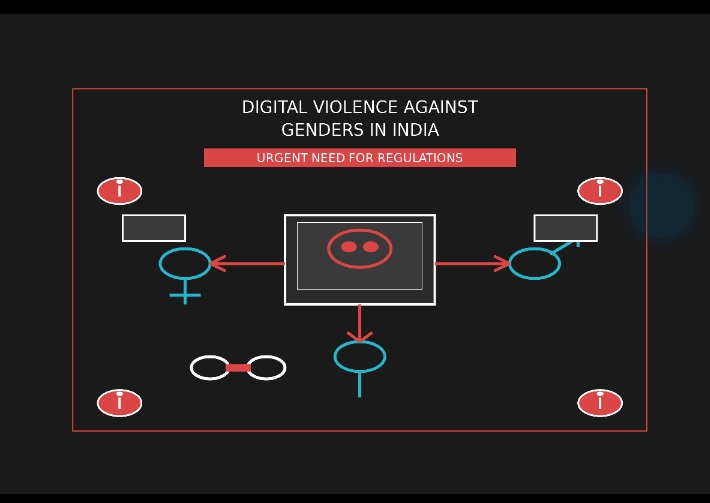
Digital violence against all genders in India is a serious and growing problem, and existing laws only partly address it, creating a clear need for stronger, gender-inclusive and rights-based regulations. ���
What digital gender violence looks like Common forms include cyberstalking, doxxing, non-consensual sharing of intimate images, deepfake pornography, abusive trolling, rape/death threats, impersonation, and blackmail over social media and messaging apps. ��
Women, girls, LGBTQ+ and other marginalized groups face higher levels of online abuse, which often continues or amplifies violence and discrimination they already experience offline. ���
Current Indian legal framework
Key provisions are scattered across the Information Technology Act 2000 (for example sections 66E, 67, 67B, 72) and the Indian Penal Code (for example sections 354A, 354D, 499, 500, 506, 509) and are used to tackle privacy violations, obscene content, stalking, criminal intimidation and defamation online. ����
There is still no single, comprehensive law that explicitly defines and addresses technology-facilitated gender-based violence across all genders, devices, and platforms, which makes enforcement inconsistent and reporting confusing for victims. ���
Why stronger regulations are needed Experts and rights groups highlight gaps such as weak recognition of psychological harms, limited protection for LGBTQ+ and non-binary persons, low digital literacy among police, slow takedown of harmful content, and poor survivor-friendly reporting mechanisms. ���
Stronger regulations are needed to clearly define online gender-based violence, ensure platform accountability, mandate faster content removal, strengthen data protection and privacy, and guarantee accessible, gender-sensitive support and remedies for all survivors. ���
Key directions for reform
Enact a comprehensive, gender-inclusive law on technology-facilitated violence that harmonizes IPC, IT Act and data-protection rules, with clear definitions, penalties and due-process safeguards. ��
Combine legal reform with non-legal measures:
digital safety education, training of police and judiciary, transparent platform policies, independent oversight, and community-based support so that everyone can exercise their rights and expression online without fear of abuse. ���

Leave a comment