Here is a clear and concise summary of wildlife–human conflict in India:
Summary: Wild Animals–Humans Conflict in India
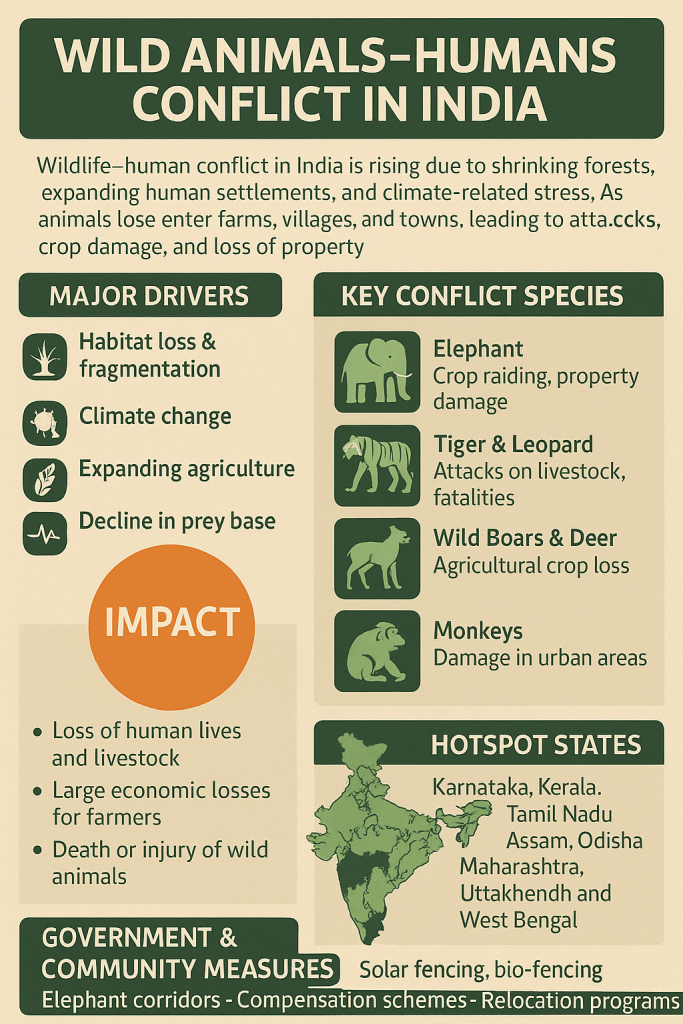
Wildlife–human conflict in India has been rising due to shrinking forests, expanding human settlements, and climate-related stress. As animals lose habitat and food sources, they increasingly enter farms, villages, and towns, leading to attacks, crop damage, and loss of property.
Major Drivers
- Habitat loss & fragmentation: Rapid urbanization, road projects, mining, and agriculture reduce continuous forest cover.
- Climate change: Droughts and heat stress push animals like elephants, tigers, and leopards closer to human areas in search of water and food.
- Expanding agriculture: Cash crops near forests attract elephants, wild boars, monkeys, and deer.
- Decline in prey base: Predators venture into human spaces when natural prey becomes scarce.
Key Conflict Species
- Elephants: Crop raiding, property damage, and accidental deaths due to rail/road collisions.
- Tigers & Leopards: Attacks on livestock and occasional human fatalities near forest edges.
- Wild Boars & Deer: Major agricultural crop loss in many states.
- Monkeys: Damage in urban and hill regions, especially in North India.
Hotspot States
Karnataka, Kerala, Tamil Nadu, Assam, Odisha, Maharashtra, Uttarakhand, and West Bengal experience the highest conflict incidents.
Impact
- Loss of human lives and livestock
- Large economic losses for farmers
- Death or injury of wild animals through retaliation, accidents, or electrocution
- Increased pressure on conservation efforts
Government & Community Measures
- Solar fencing, bio-fencing, and early-warning systems
- Elephant corridors and underpasses/overpasses on highways
- Compensation schemes for crop and livestock loss
- Relocation of villages from core forest areas
- Awareness programs and community-based conservation

Leave a comment