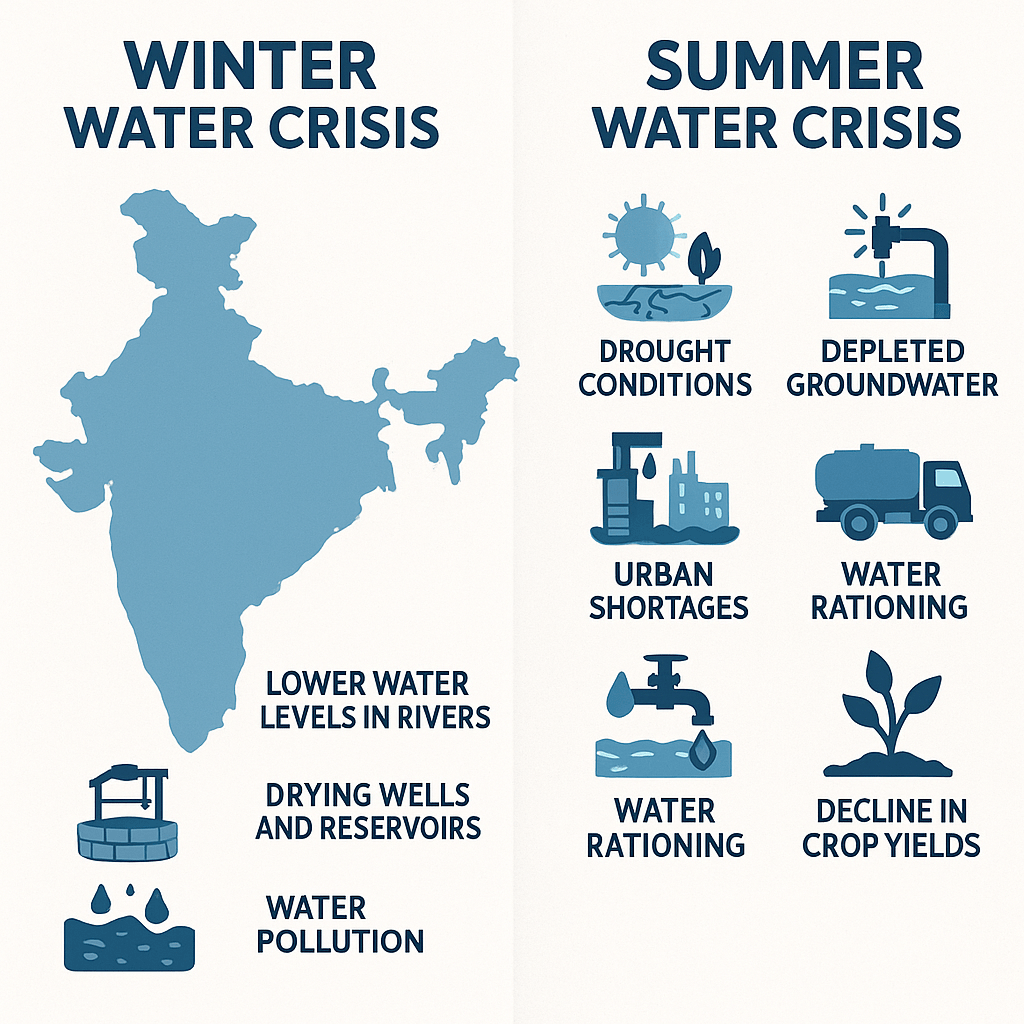
Here is a clear, concise summary of the Indian water crisis during winter and summer:—
Summary: Indian Water Crisis in Winter and Summer
1. Winter Water Crisis (November–February)
Reduced river flow: Himalayan rivers get less meltwater in winter, lowering water levels in Ganga, Yamuna, and their tributaries.
Groundwater stress: Less rainfall and low recharge cause wells and borewells to dry or yield less.
Agricultural demand: Rabi crops (wheat, mustard, pulses) increase irrigation needs, pressuring reservoirs
Urban shortages: Cities like Delhi, Bengaluru, Chennai, and Jaipur face supply cuts due to low reservoir storage.
Cold-wave pollution impact: High pollution increases water treatment load for municipal bodies.—
2. Summer Water Crisis (March–June)
Highest demand + lowest supply: Heat waves sharply raise water usage while rivers and lakes shrink.
Severe groundwater depletion: Overuse of borewells leads to rapid decline, especially in north and central India.
Drought-like conditions: States such as Maharashtra, Karnataka, Telangana, Rajasthan, and Gujarat face extreme shortages.
Urban water rationing: Tanker dependency rises in major cities; some areas get water only every 2–3 days.
Agriculture hit: Kharif sowing suffers when pre-monsoon rains are delayed, increasing farmer distress.—
3. Core Reasons Behind the Crisis. Over-extraction of groundwater Growing population and urbanization. Inefficient irrigation (flood irrigation)Polluted rivers and lakes. Climate change causing erratic rainfall and heatwaves—

Leave a comment