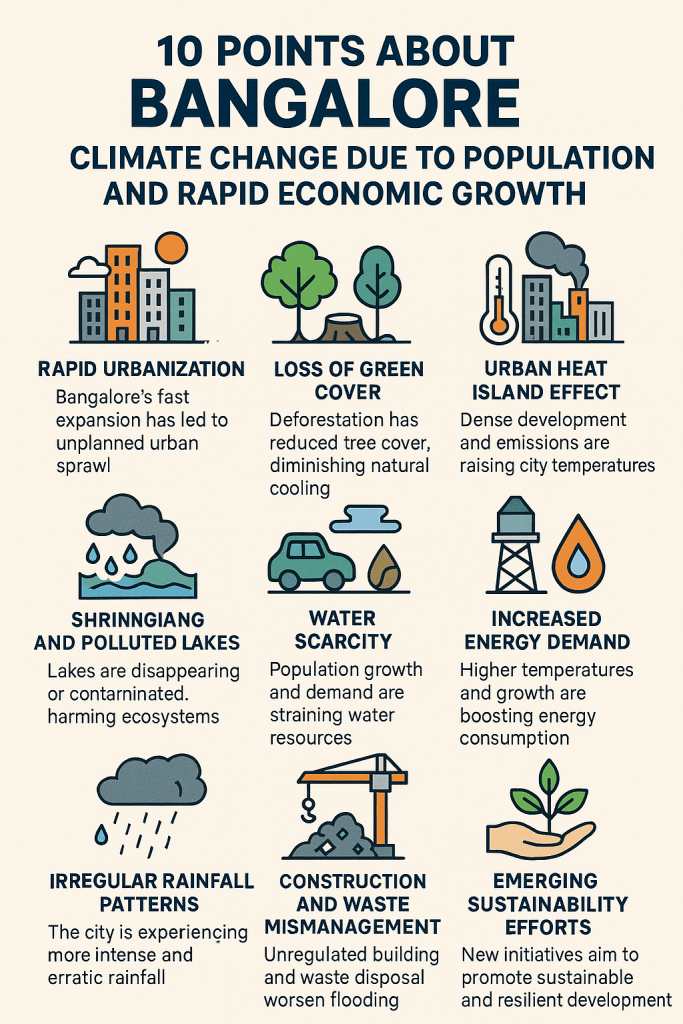
Here are 10 key points about how Bangalore (Bengaluru) is experiencing climate change impacts due to population growth and rapid economic development:—
🌆 1. Rapid Urbanization Bangalore’s fast expansion as India’s tech hub has led to unplanned urban sprawl — with green spaces, lakes, and open land being replaced by concrete buildings and roads.—
🌳 2. Loss of Green Cover Once known as the “Garden City”, Bangalore has lost over 60% of its tree cover in the past few decades due to infrastructure and real estate projects, reducing natural cooling and carbon absorption.—
💧 3. Shrinking and Polluted Lakes Over 80% of the city’s lakes are now polluted or encroached. This affects groundwater recharge, worsens flooding, and contributes to rising temperatures.—
🌡️ 4. Urban Heat Island Effect Dense construction and heavy vehicle use trap heat, making Bangalore’s core areas 3–5°C warmer than its outskirts — a clear sign of local climate alteration.—
🚗 5. Air Pollution Surge Vehicle emissions and construction dust have caused severe air quality issues. PM2.5 levels often exceed WHO limits, especially during dry seasons.—
💦 6. Water Scarcity With population growth and over-extraction of groundwater, the city faces acute water shortages, especially in summer. Dependence on Cauvery River water strains regional resources.—
⚡ 7. Increased Energy Demand Economic growth and rising temperatures have increased electricity use for cooling, leading to higher carbon emissions and pressure on the energy grid.—
☔ 8. Irregular Rainfall Patterns Bangalore now experiences more intense but shorter rainfall bursts, leading to flash floods instead of steady rain — a pattern linked to climate change and poor drainage systems.—
🏗️ 9. Construction and Waste Mismanagement Unregulated construction, improper waste disposal, and lack of sustainable urban planning worsen flooding, pollution, and ecosystem degradation.—
🌱 10. Emerging Sustainability Efforts Despite challenges, new initiatives — like rainwater harvesting, rooftop solar panels, lake restoration, and electric vehicles — show growing environmental awareness and adaptation efforts.—

Leave a comment