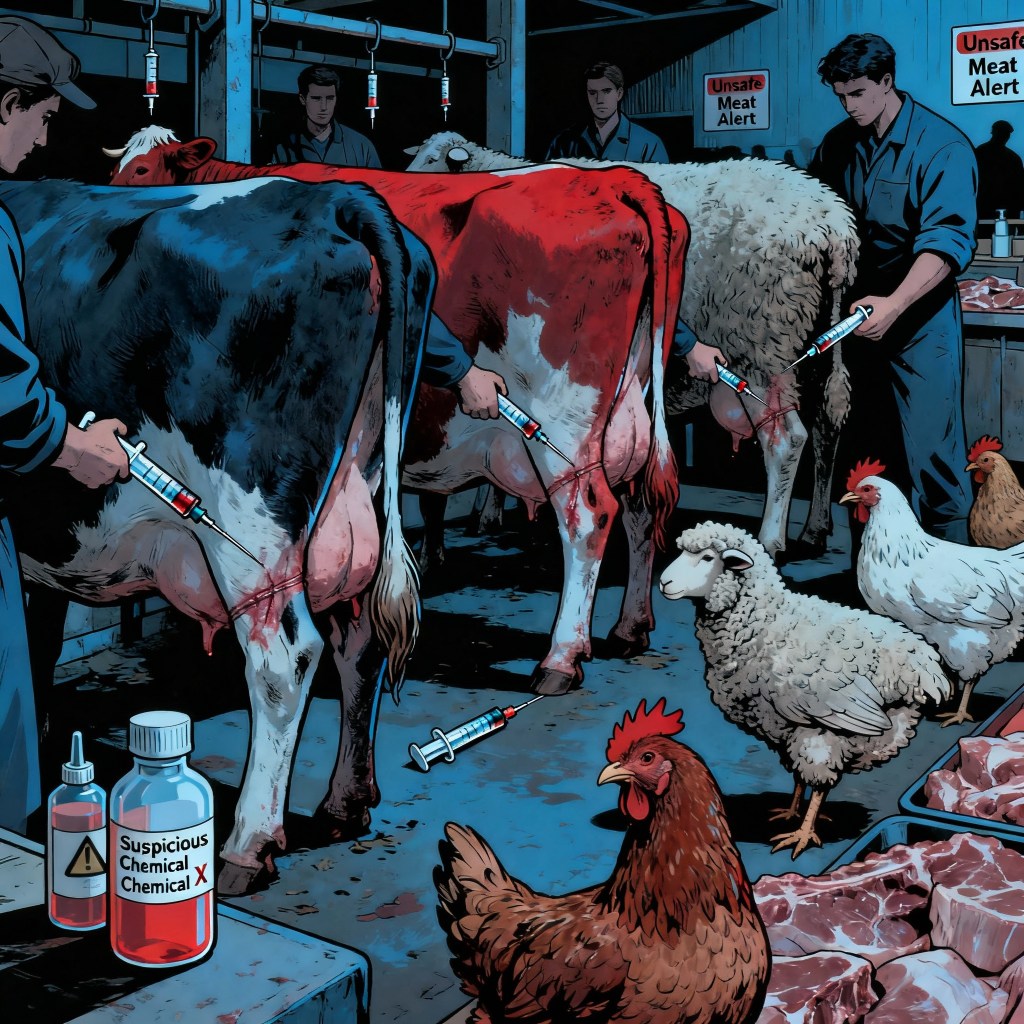
The meat market can be considered unhealthy due to the injection of domestic animals with various substances such as growth hormones, chemicals, and veterinary drugs. These injections are used to increase the animals’ weight, enhance growth, or treat diseases but can leave harmful residues in the meat. Some chemicals, like sodium nitrate, used to make meat look fresher and bigger, have been linked to serious health risks, including hypertension, heart disease, cancers, and other chronic diseases. Injection site lesions can also affect meat quality and animal welfare.
Farmers and vets often inject animals to maintain health or growth, but improper injection practices damage meat and pose risks. There is also concern about the use of growth hormones and antibiotics, which may accumulate in meat and impact human health. Proper injection techniques and regulatory monitoring are advised to reduce these harms, but consumers remain at risk if exposed to residues of these substances in meat products.
Key points include:
Chemicals injected into meat can cause health issues like cancer and heart disease.Growth hormones and antibiotics in meat animals may leave harmful residues.Injection site damage reduces meat quality and is a welfare concern.
Regulatory and farm practices aim to minimize risks but do not eliminate them completely.
Consumer preference for bright red meat leads to chemical use for appearance enhancement.These factors make meat from injected domestic animals potentially unhealthy for consumers if safety standards and practices are not strictly followed �����.

Leave a comment