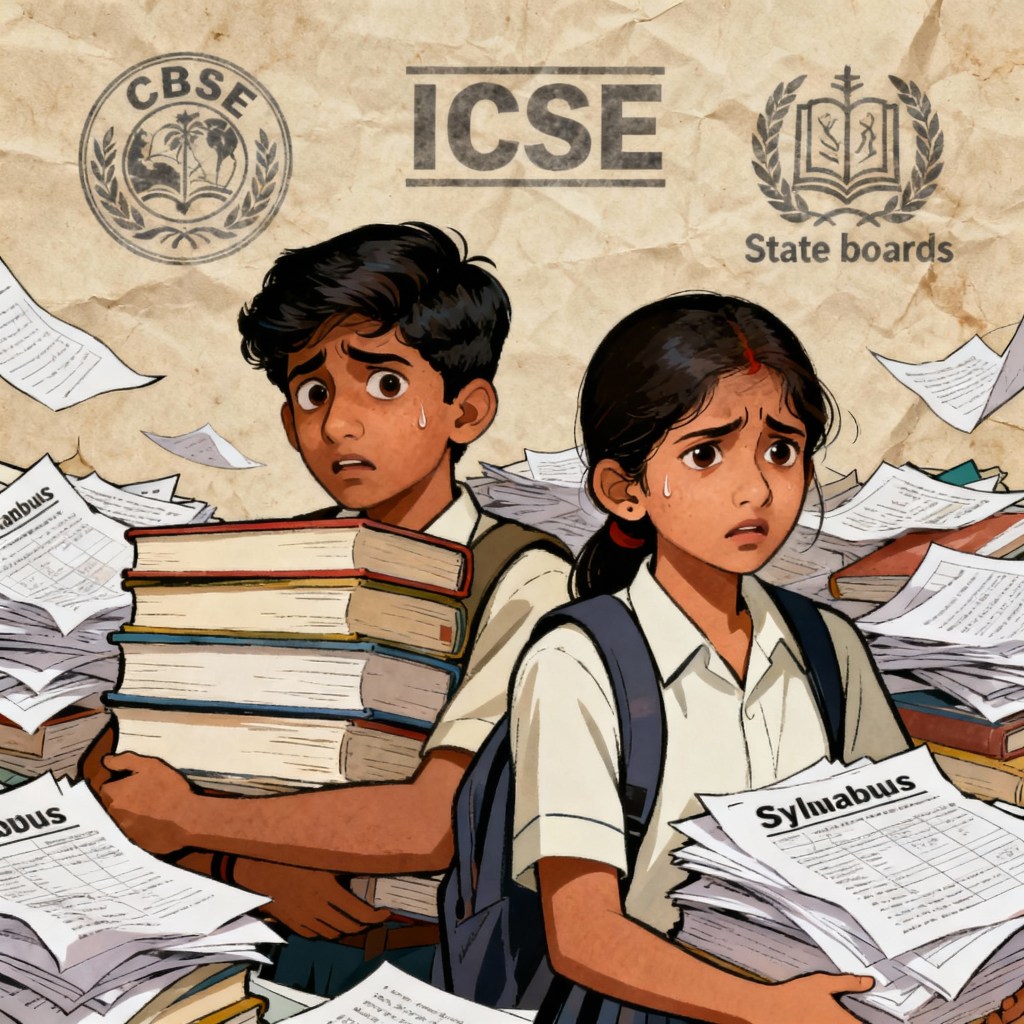
The Indian education system, particularly boards like CBSE, ICSE, and various state boards, often requires students to adopt a “hard study” approach due to heavy syllabus loads, which leads to high levels of burnout and stress. This intense academic pressure results from a combination of large syllabi, memorization demands, and the high stakes of board exams and competitive entrance tests. The pressure to perform consistently can cause anxiety, sleep disturbances, feelings of self-doubt, depression, and even suicidal tendencies among students.
Differences in Boards:
CBSE: Focuses on core subjects; syllabus aligned with national competitive exams like JEE and NEET. It encourages application-based learning but still places considerable pressure on students for exam performance, leading to stress and burnout.
ICSE: Has a more detailed and language-intensive syllabus with heavy emphasis on English and creative projects. The depth can cause students to spend long hours on assignments, adding to stress.
State Boards: Vary widely but often lack uniformity, which can be challenging for students preparing for national-level exams, sometimes contributing to dual preparation stress.
Causes of Burnout and Stress:
Large syllabi with vast content to cover.High parental and societal expectations.Competitive exams preparation increasing study hours often beyond healthy limits.Lack of balance between study and extracurricular activities, leading to isolation and emotional distress.The culture of rote learning and fear of failure dominating over conceptual understanding.
Effects on Students: Increased anxiety, depression, and loss of self-worth among students.Sleep disturbances and other physical symptoms related to stress.Academic burnout causing disengagement and dropping performance despite heavy study.In extreme cases, mental health crises including suicidal tendencies.
Conclusion:The educational pressure embedded in these boards’ heavy syllabi and high expectations often leads to serious mental health challenges for students. This indicates a need for systemic reforms focusing on mental health support, balanced curricula, and holistic education approaches to reduce burnout and stress in Indian students ����������.

Leave a comment