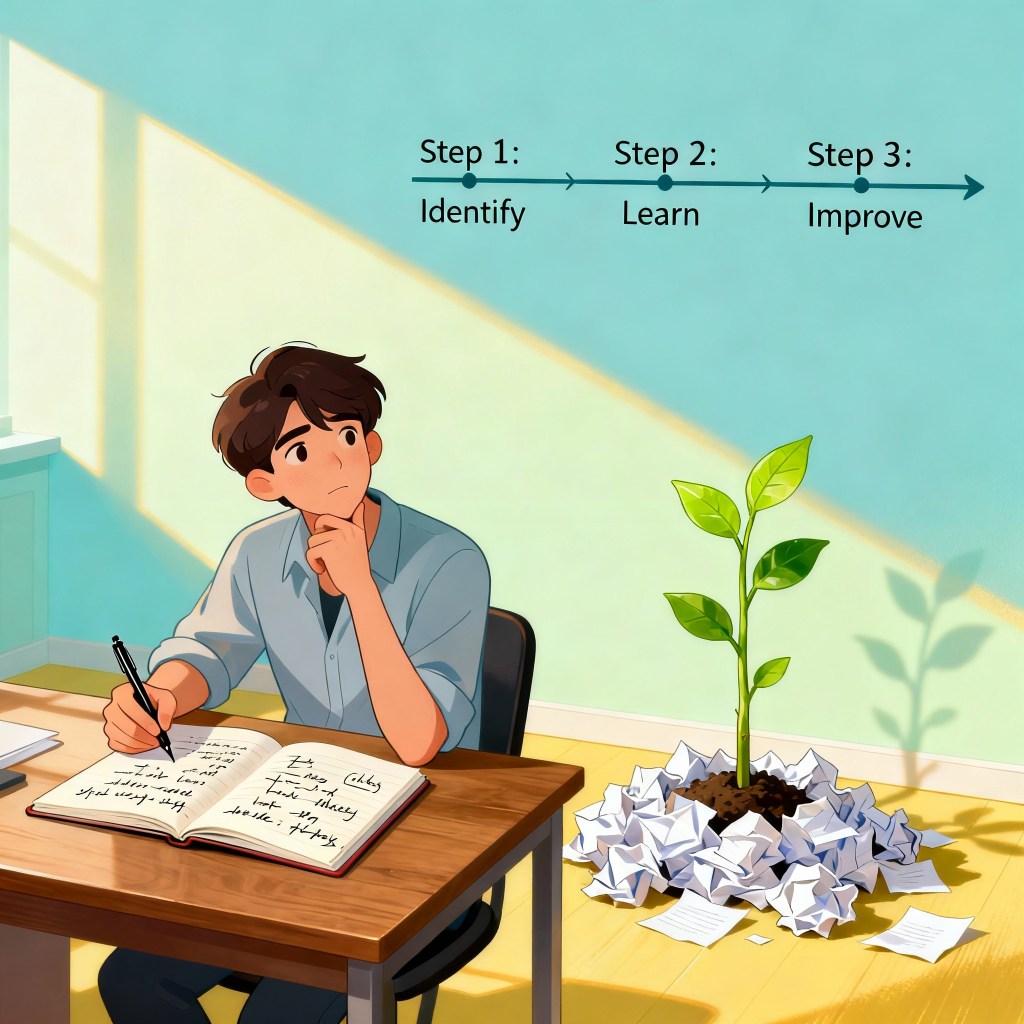
Learning from failure and improving continuously require cultivating specific mindsets, habits, and systems that transform mistakes into growth opportunities.
Adopt a Growth Mindset Growth-minded individuals see failures as temporary and instructive. Instead of labeling themselves as incapable, they ask, “What can this teach me?” This mindset reduces fear of failure and encourages experimentation, innovation, and resilience ��.
Practice Failing Forward The “failing forward” philosophy views failure as a stepping stone rather than a setback. The focus is on analyzing what went wrong, recalibrating strategies, and making informed adjustments to improve future outcomes. Early mistakes are seen as data for faster learning and success �.
Analyze Failures Objectively Detach emotion from evaluation. Ask reflective questions such as “What did we miss?”, “What worked well?”, and “Was the goal realistic?” This disciplined analysis generates concrete learning rather than dwelling on blame. Regular “failure reviews” or retrospectives help teams improve systematically ��.
Build a Learning Culture Create safe spaces where individuals can openly share their failures without fear of punishment. Organizations that emphasize learning over blame become more innovative and adaptable, as openness enables collective learning and faster problem resolution ��.
Foster Self-Awareness Self-awareness allows for honest reflection on errors without defensiveness. A useful framework is “Stop, Challenge, Choose”: pause before reacting, question emotional responses, then choose a helpful perspective. This supports balanced learning rather than emotional avoidance �.Embrace Continuous Improvement (Kaizen Mindset)Continuous improvement emphasizes making small, consistent enhancements over time. Key tactics include open communication, regular skill training, data-driven reviews, and celebrating incremental wins. This mindset cultivates flexibility, ownership, and sustained motivation ��.
Empower and Reward ExperimentationEncouraging innovation involves accepting that some experiments will fail. Reward attempts and learning efforts, not just perfect results. Recognizing risk-takers helps embed resilience and curiosity deep within a team’s culture �.
Summary
Developing these strategies transforms failure from a source of fear into a foundation for continuous growth and excellence.

Leave a comment