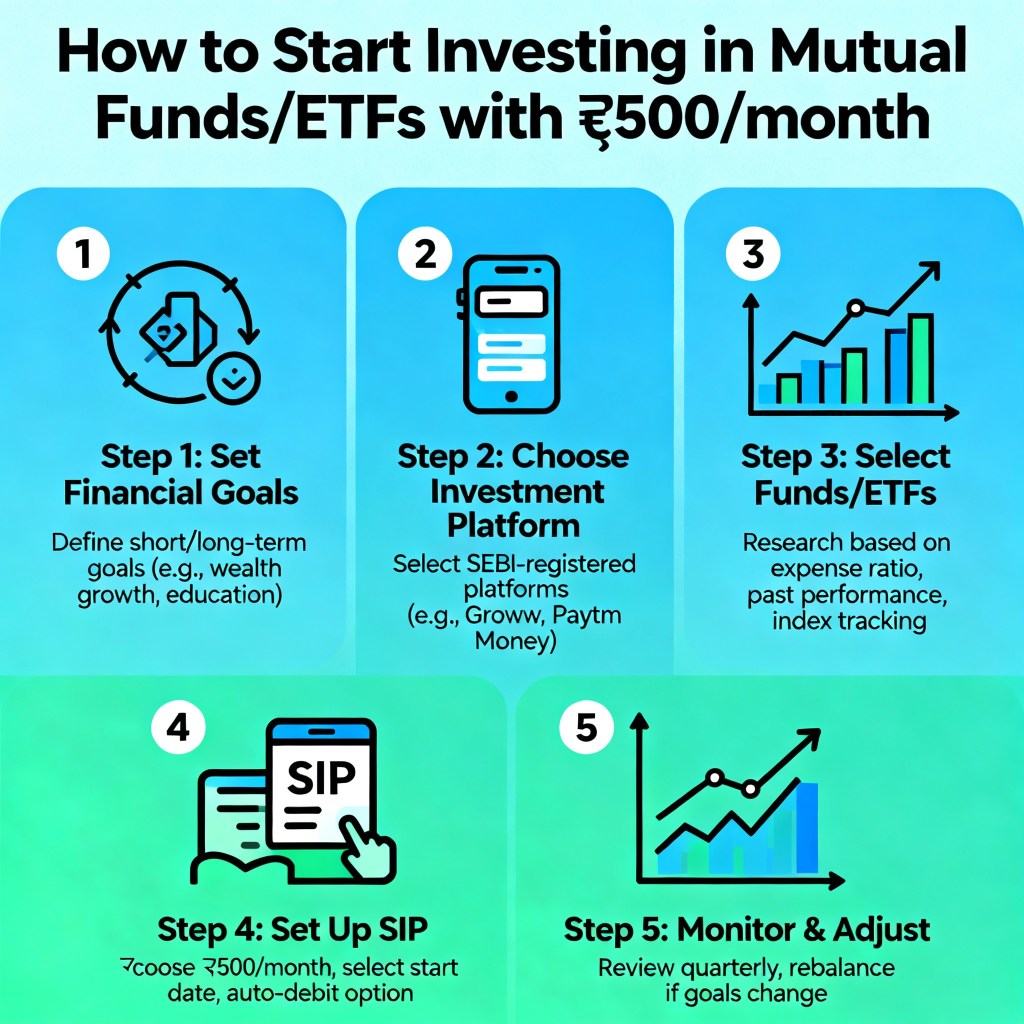
You can start investing in mutual funds or ETFs in India with as little as ₹500 per month through a Systematic Investment Plan (SIP). This small, consistent investment can grow significantly over time thanks to compounding and rupee cost averaging ���.
Starting with Mutual Funds (SIP) Define your goal
Decide why you’re investing: retirement, education, wealth building, or short-term savings �.
This determines whether to pick equity, hybrid, or debt funds based on your risk level.
Complete KYC
You need PAN, Aadhaar, and a linked bank account.Complete e-KYC easily through portals like Groww, Zerodha Coin, ET Money, Paytm Money, or directly via an AMC website �.Choose a suitable fund For beginners, index funds or large-cap SIPs are ideal because of their stability and lower expenses ��.
Example beginner SIPs (minimum ₹500):Axis Bluechip Fund HDFC Index Sensex Fund Parag Parikh Flexi Cap Fund ��.
Set up a SIP
Platforms let you automate monthly ₹500+ transfers.The system buys mutual fund units automatically each month based on NAV price, ensuring rupee cost averaging �.Monitor and increase
Review fund performance every 6–12 months and gradually raise your SIP as your income grows �.
Starting with ETFs
Exchange-Traded Funds (ETFs) can also be started with small amounts, though they work differently from SIPs.
Open a Demat + Trading account
Use Zerodha, Upstox, Groww, or ICICI Direct �.
Choose an ETF
Options include Nippon India Nifty 50 ETF, Motilal Oswal NASDAQ 100 ETF, or SBI Gold ETF ��.
ETFs track an index or sector (e.g., Nifty 50, IT, or gold).Buy and hold
long-term ETFs are traded like stocks, so you can buy even 1 unit (typically ₹100–₹200 per unit).Some brokers like Zerodha offer ETF SIP options for fixed monthly auto-investments �.
Key Tips for Both Start small but be consistent: Even ₹500/month compounds significantly over 10–15 years.Keep expense ratios low:
Prefer direct plans over regular ones.
Stay disciplined: Avoid withdrawing prematurely to let compounding work.Starting early, even with ₹500, is often more powerful than waiting to invest larger sums later.

Leave a comment