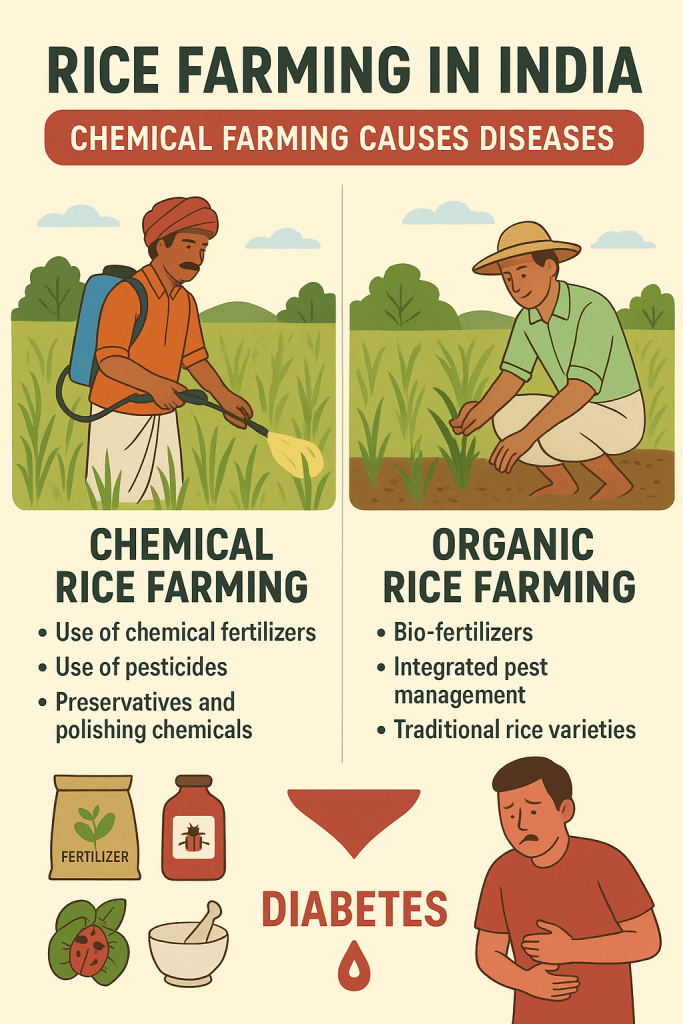
India has seen a major increase in rice farming and exports, especially after becoming one of the world’s largest rice exporters (both basmati and non-basmati varieties). However, this growth comes with serious health and environmental concerns, mainly due to excessive chemical fertilizer and pesticide use.
Here’s a brief analysis 👇
🌾 Rise of Rice Farming in India
- India produces over 130 million tonnes of rice annually.
- Major rice-exporting states: Punjab, Haryana, Uttar Pradesh, Andhra Pradesh, Tamil Nadu, and West Bengal.
- High global demand, especially from Africa and the Middle East, has encouraged large-scale production.
⚠️ Problem: Chemical Use in Rice Farming
To meet export standards and boost yields, many farmers use:
- Urea and DAP (chemical fertilizers) for faster growth.
- Pesticides and insecticides to protect crops from pests.
- Preservatives and polishing chemicals during processing to improve appearance.
🧬 Health Impact on Indians
Excessive chemical residues from rice can enter the food chain and may cause:
- Diabetes – refined, chemical-treated rice can raise glycemic index and disrupt insulin function.
- Kidney and liver damage from pesticide residues.
- Cancer risks (especially from arsenic and heavy metals found in chemically treated fields).
- Hormonal imbalance and digestive issues from long-term chemical exposure.
🌱 The Healthier Alternative
India is now promoting organic and natural rice farming methods such as:
- Bio-fertilizers (cow dung, compost, green manure).
- Integrated Pest Management (IPM) instead of chemical pesticides.
- Traditional rice varieties (like Navara, Mappillai Samba, and Black Rice) — rich in nutrients and lower glycemic index.
- Government schemes under Paramparagat Krishi Vikas Yojana (PKVY) to support chemical-free cultivation.
🌍 Conclusion
While rice exports strengthen India’s economy, chemical farming threatens public health and soil fertility. Moving toward organic and sustainable rice production can protect both people and the planet — ensuring that India remains the world’s rice bowl without harming its own population.

Leave a comment