Here is a brief analytical sketch of the situation:
What’s happening now
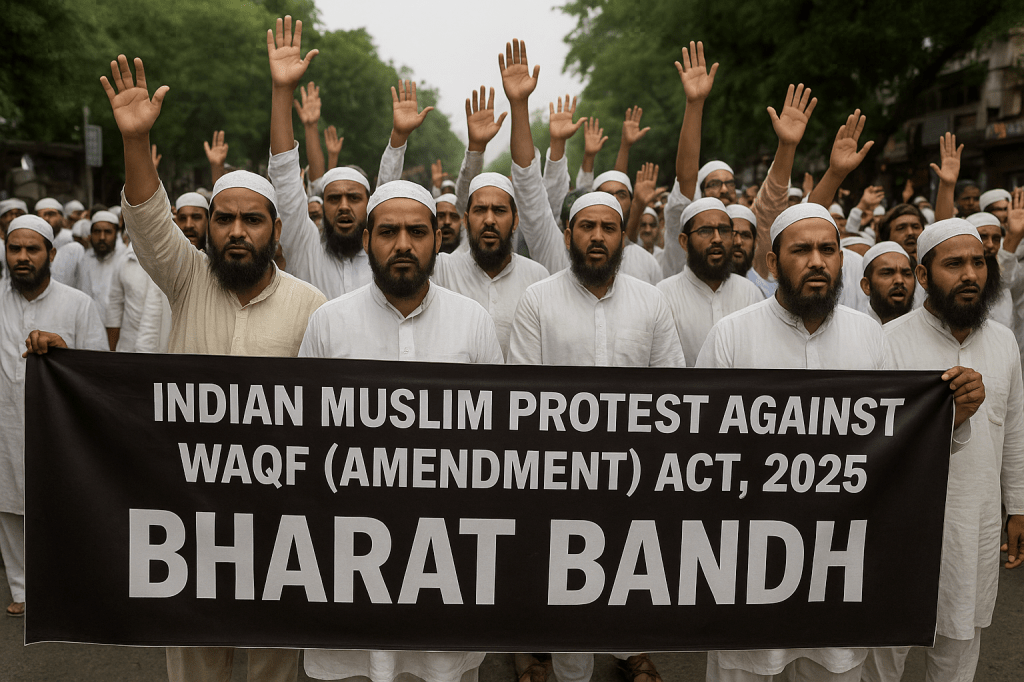
- The All India Muslim Personal Law Board (AIMPLB) had called a Bharat Bandh (nationwide shutdown) on 3 October to protest the Waqf (Amendment) Act, 2025.
- As of the latest reports, the AIMPLB has postponed the bandh, citing that religious festivals in several states coincide with that date.
- However, the protest movement is said to continue via other means — local demonstrations, programs, etc.
Why Muslims oppose the amendment
Some of the major concerns raised by critics include:
- Autonomy & religious freedom
The inclusion of non-Muslims in Waqf boards and enhanced state oversight are seen as intrusions into the autonomy of Muslim endowments. - Risk to property rights
Applying the Limitation Act to waqf properties could bar claims over older waqf lands. Also shifting the decision power in disputed waqf ownership to administrative officers (like district collectors) could lead to misuse. - Constitutional & minority institution arguments
Protesters argue the Act violates the constitutional protection for minority religious institutions (Articles 25, 26), and may amount to discriminatory state interference. - Implementation, data gaps, risks of misuse
There are critiques about the digitization (WAMSI portal) showing large data gaps and mismatches, raising doubts whether the reforms are well-designed.
Recent flashpoints & stakes
- In Murshidabad, West Bengal, protests against the Waqf amendment turned violent, resulting in casualties, arrests, property damage, and large law & order interventions.
- The Waqf law is under challenge in the Supreme Court. The Court has stayed only certain clauses, not the entire Act.
- The postponement of the Bharat Bandh suggests protest leaders are trying to balance symbolic action with caution about communal sensitivities and backlash.

Leave a comment