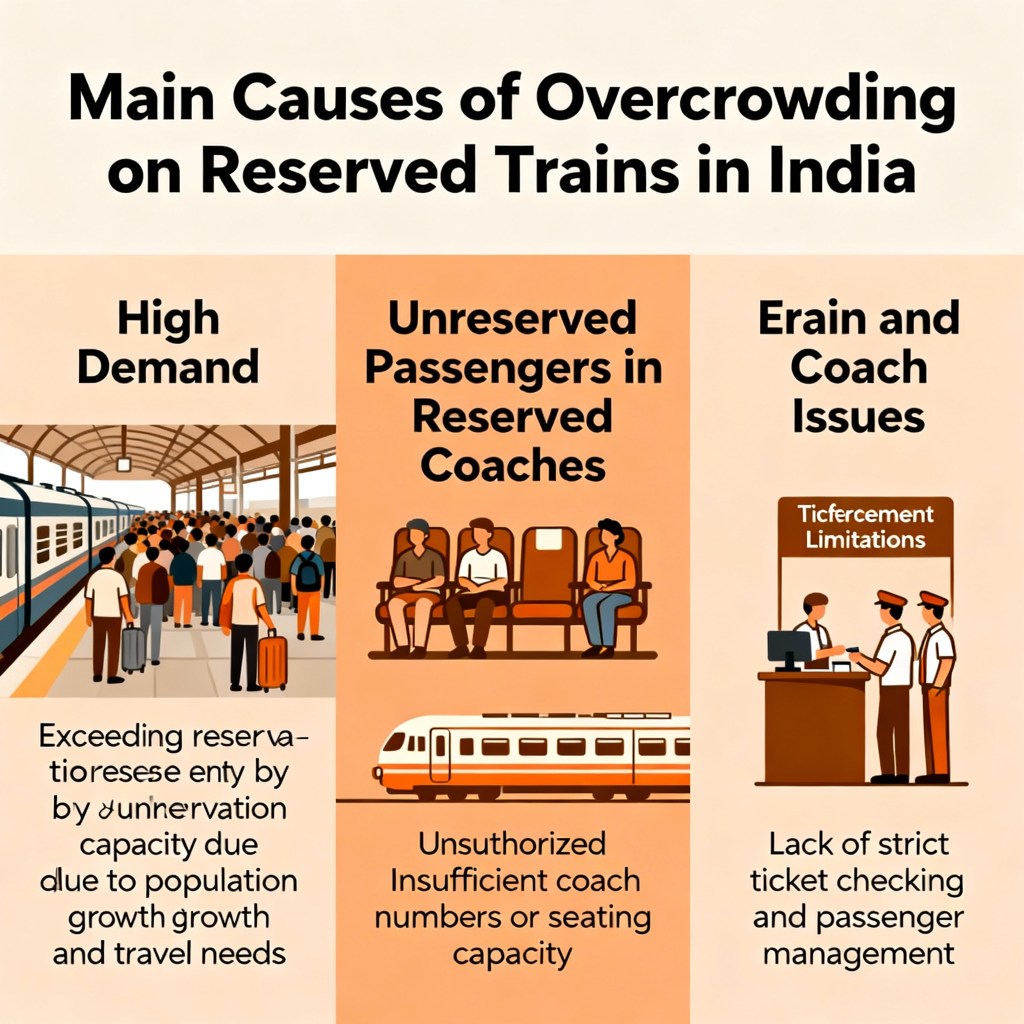
The main causes of overcrowding on reserved trains in India are:High Demand vs Limited Capacity: Passenger demand for train travel far exceeds the available seating capacity on many popular routes. The number of coaches is often limited due to platform length restrictions and infrastructure constraints, leading to insufficient seating for reserved passengers �.
Unreserved Passengers in Reserved Coaches: A significant cause of overcrowding is unreserved ticket holders illegally boarding reserved compartments, including sleeper and AC coaches. This occurs especially when general compartments are overcrowded, driving unreserved passengers to spill into reserved areas, inconveniencing confirmed ticket holders ���.
Reduction in Trains and Coaches Post-Pandemic: The total number of running trains has decreased from over 12,000 pre-pandemic to around 10,000, reducing overall capacity. Additionally, the number of coaches per train is constrained by operational and platform limitations �.
Overuse of Waiting Lists: Excessive issuance of waiting list tickets causes uncertainty and overcrowding, as many waiting list passengers board trains hoping for last-minute confirmations. Indian Railways has capped waiting lists to 25% of capacity to address this ��.Insufficient Enforcement: Limited action by ticket checking staff and security allows unauthorized travel and overcrowding to persist in reserved coaches. Passengers report that enforcement is often lax despite complaints ��
.Infrastructure Constraints: Platform length restrictions limit train length, preventing adding more coaches. Station congestion and delays also contribute to crowding during boarding �
.Peak Travel Seasons: Overcrowding worsens during holidays, festivals, and peak hours when travel demand surges significantly beyond regular capacity �.In summary, overcrowding in reserved train compartments in India stems mainly from demand exceeding supply, unauthorized occupancy by unreserved passengers, fewer trains and coaches, over-reliance on waiting lists, weak enforcement, and infrastructure limitations.

Leave a comment