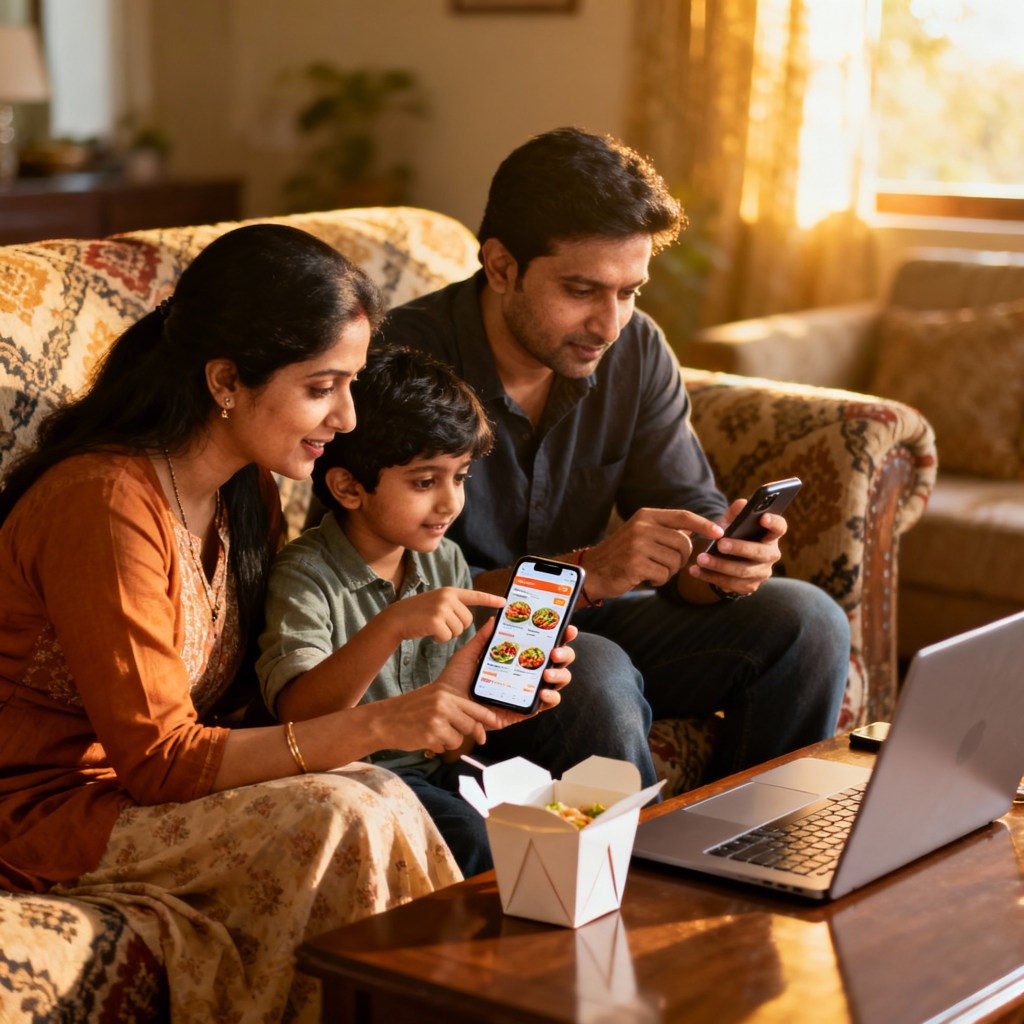
Online food delivery app usage among Indians shows major regional differences, with South Indian states currently leading in adoption, while usage is rapidly expanding in Tier 2 and Tier 3 cities across the country��.
The growth is driven by increasing smartphone and internet penetration, greater convenience needs, and emerging tech-enabled models like cloud kitchens��.
South India Leads, Tier 2/3 Catch Up South India—especially states like Karnataka (Bangalore), Telangana (Hyderabad), and Tamil Nadu (Chennai)—accounted for the highest market share in 2024, making up around 39.6% of India’s online food delivery usage�.
Urbanization, long working hours in IT and service hubs, and a high density of students and young professionals have contributed to this lead. Food delivery apps offer diverse local and international cuisine, catering to nuanced, region-specific tastes�.
While metro cities remain primary drivers, recent years have seen explosive growth in Tier 2 and Tier 3 cities such as Ajmer, Cuttack, Ujjain, Sikar, and Tirupati. These non-metro regions now contribute nearly 60% of all new e-retail shoppers and over 45% of new orders��.
Key Drivers and Usage Trends Mobile applications account for over 85% of all food delivery orders, supported by easy interfaces, local language options, and widespread digital payments�.
Quick commerce and hyperlocal delivery networks are expanding to smaller towns and semi-urban areas, breaking the previous urban monopoly and addressing localized preferences�.
The rise of cloud kitchens is lowering costs and broadening menu options, making delivery more accessible and affordable outside of major metros��.
Generational differences are marked—Gen Z and Millennials are the most frequent users, with app orders averaging 2.3 times weekly for Gen Z��.
State-by-State and Regional Differences (2025)Broad Patterns Quick commerce and fast delivery slots are in high demand everywhere, but especially in metros and larger towns��.
Regional preferences matter: South India apps often feature local specialties, while North India sees higher preference for North Indian and Chinese fast food�.
Online ordering is now routine for many urban and semi-urban Indians, with 63% using apps at least weekly�.
This dynamic market is expected to see its most sustained growth in non-metro and semi-urban areas, with language localization, local cuisine integration, and AI-driven personalization further bridging regional gaps over the next five years���.

Leave a comment