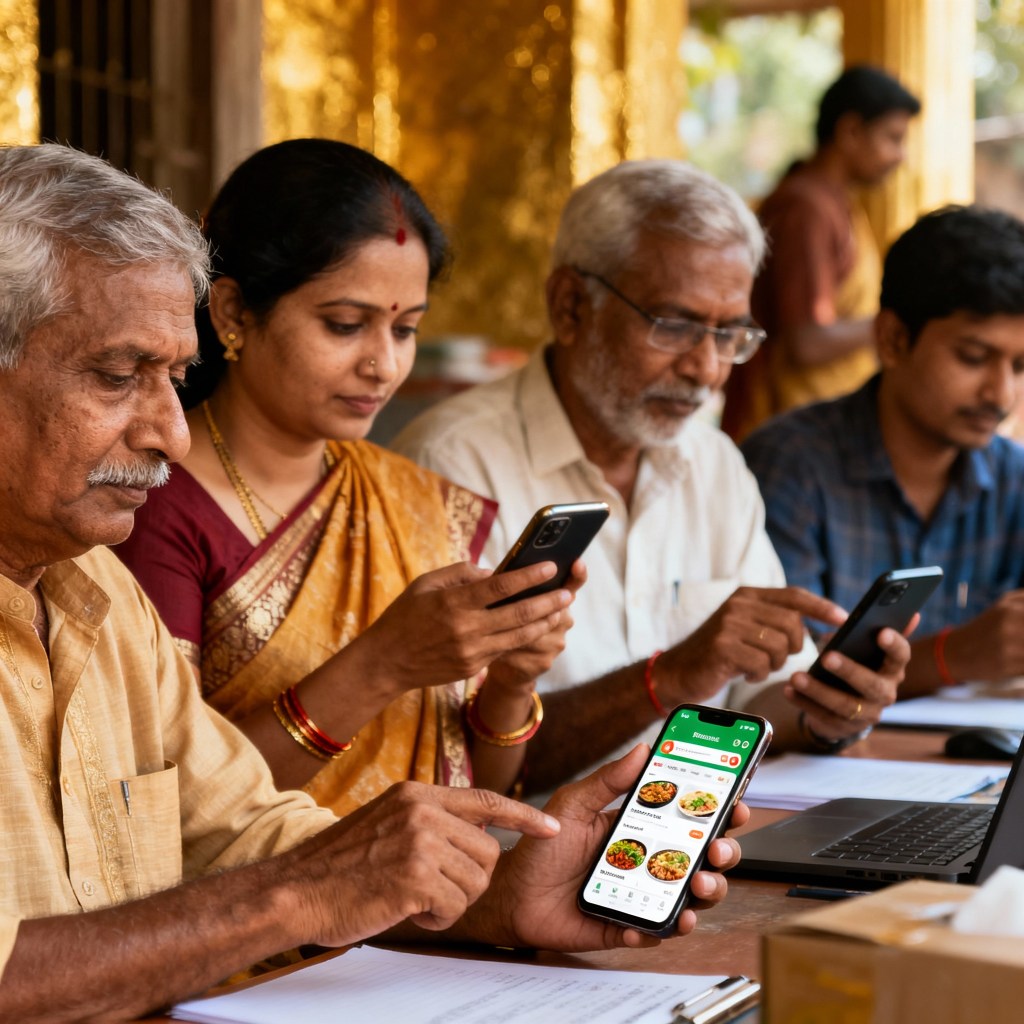
Indians order food via delivery apps primarily through mobile platforms, with South India leading the statewise usage and Tier II/III cities rapidly catching up, driven by smartphone penetration and digital payments���.
The market is defined by high mobile app adoption (85.4%), AI-powered personalization, and innovative models like cloud kitchens, supporting a fast, efficient, and data-driven food ordering ecosystem����.
Statewise Food Delivery
Trends South India—including Bengaluru, Hyderabad, and Chennai—topped the list, accounting for nearly 39.6% of total food delivery orders nationally in 2024��.
This region benefits from tech-savvy populations and dense IT and student communities with a robust appetite for convenience.Metros like Delhi and Mumbai in North India lead in absolute revenue but are being matched by Tier II and III cities in total order volumes due to expanding digital reach and last-mile logistics��.
Tier II/III cities collectively contribute more than 48% of all food delivery orders�, a phenomenon fueled by affordable smartphones, low-cost data plans, and vernacular technology platforms��.
Key Drivers of Regional Variation High smartphone and internet penetration, especially in South and Western India, underpin rapid platform adoption��.
Digital payments, with UPI and wallets accounting for 91.7% of all orders, enable frictionless transactions across states and are heavily adopted in urban centers and tech hubs��.
Urbanization, busy lifestyles, and a growing working professional base drive recurring meal orders in metros and large state capitals, while digital expansion and cloud kitchen innovation are fueling growth in previously under-served rural and semi-urban locations���.
Market Share and User BehaviorApps like Zomato (81%) and Swiggy (74%) dominate across states, offering quick meals along with highly localized and diverse menus, appealing to India’s cultural and culinary variety��.
Chicken biryani remains the most ordered item nationwide, followed by pizza, indicating both regional and Western influences in consumer choices�.
Food delivery use peaks around tech hubs for breakfast orders (Bengaluru) and in large metro cities for late-night demand (Delhi)�.
Emerging TrendsQ-commerce models promising 15-minute deliveries are being piloted in cities like Bengaluru, signaling the next frontier in speed and convenience��.
Cloud kitchens and virtual brands now account for a significant share of total deliveries, allowing wider menu choices and lower price points across states���.
AI and personalization are increasingly used both for consumer-facing suggestions and backend logistics, boosting order profitability and efficiency��.
Summary Indian across all regions increasingly rely on food delivery apps for convenience, variety, and time-savings, with the fastest growth now appearing in smaller cities and towns thanks to digital infrastructure and targeted platform expansion���.

Leave a comment