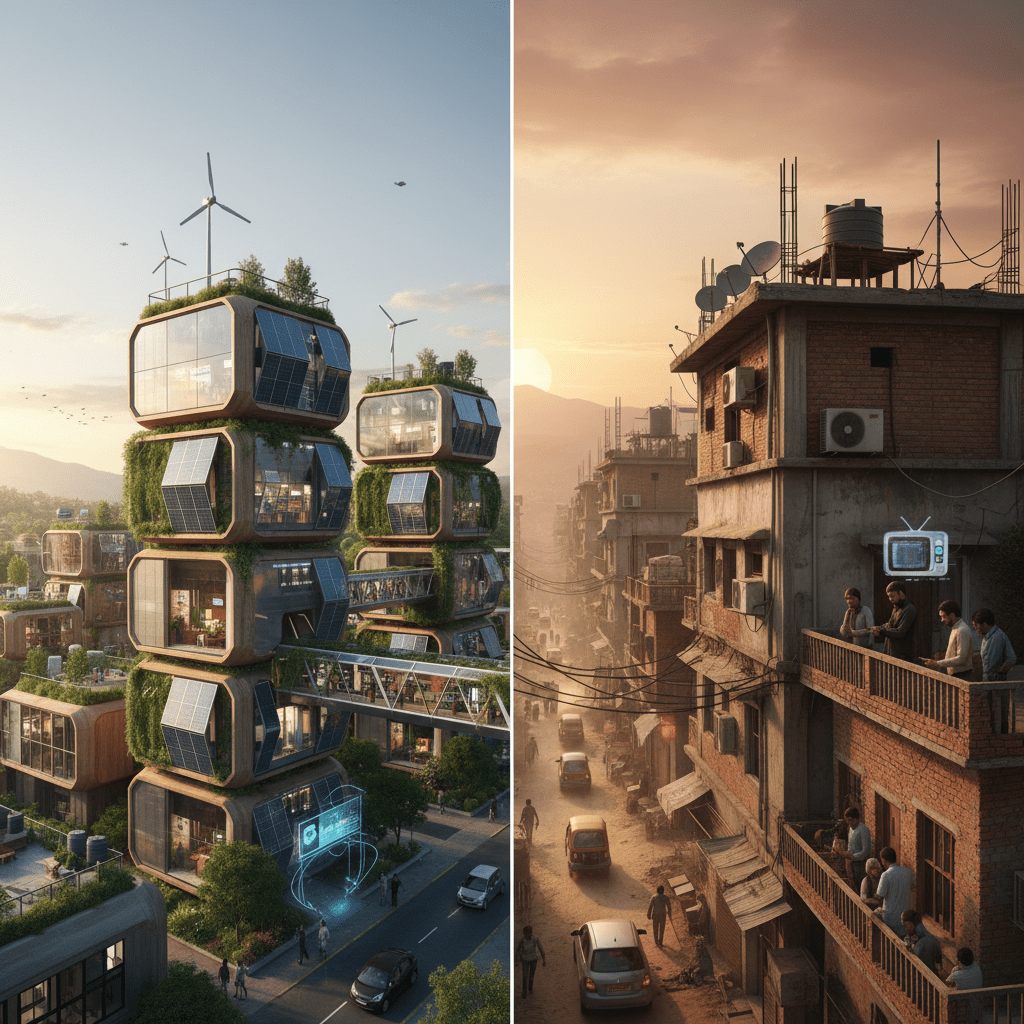
Next generation real estate in India is rapidly adopting smart technologies, sustainable practices, modular construction, and advanced customer-centric models—whereas current building stock primarily relies on conventional materials, manual labor, slower construction workflows, and less tech-driven transparency.
Key Differences
Technology & Automation
Next-gen real estate leverages AI-driven analytics, IoT-enabled smart homes, and blockchain for secure transactions. Virtual tours and digital twin models are becoming mainstream in project development, enabling faster, more transparent property search and management. Current buildings view physical site visits and paperwork as default, with limited use of automation for operations and transactions.
Sustainability & Materials
Modern projects emphasize eco-friendly construction—bamboo, recycled steel, compressed earth blocks, and energy-efficient glass are standard in next-gen buildings. These projects often aim for green certifications like IGBC or LEED and promote net-zero energy buildings using solar panels, rainwater harvesting, and smart climate controls.
In contrast, older buildings are mainly constructed with concrete, brick, and steel, having less focus on energy efficiency or green building standards.
Design & Flexibility Modular construction methods (prefabricated walls, floors, etc.) are popular in new developments, reducing construction time by 20–30% and allowing flexible design changes. Co-living and co-working spaces are upscaling to meet urban millennial and Gen Z demands. Existing housing stock offers limited flexibility and is mostly characterized by fixed layouts and traditional apartment blocks.
Urban Planning & Community Living Next-gen real estate emphasizes integrated townships with enhanced amenities, community spaces, and digital services, supported by big data-driven city planning. Current developments are less holistic, often focusing on isolated, single-use buildings with fewer communal facilities.
Comparison Table
Outlook
By 2030, most new buyers will prefer next-generation projects oriented toward sustainable community living and technology-driven experiences, while current buildings may require retrofits to keep pace.

Leave a comment