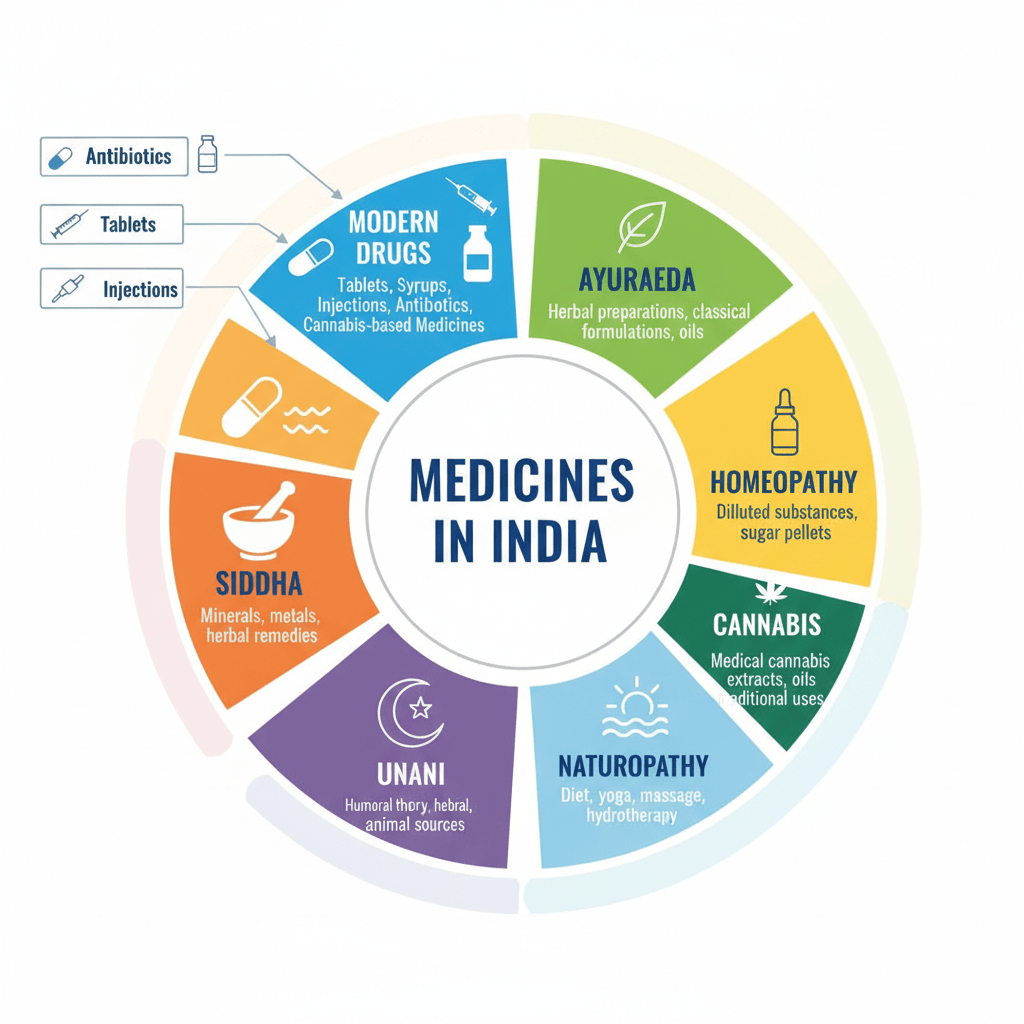
India has a diverse range of medicines, broadly classified into modern pharmaceutical drugs, traditional Indian systems (Ayurveda, Siddha, Unani, Homeopathy, Naturopathy, and Yoga), and controlled substances.
Modern medicines are further grouped by chemical structure, therapeutic use, and pharmacological action, while traditional medicines focus on holistic approaches and natural ingredients.
Main Categories of Medicines
Modern Pharmaceutical Medicines: Includes allopathic drugs classified into groups like antibiotics, analgesics, antipyretics, antihistamines, antidiabetics, and more.
Classification can be chemical (such as alkaloids, steroids), therapeutic (pain relievers, fever reducers, anti-inflammatory), or by pharmacological effect (mechanism of action).
Traditional/Systemic Indian Medicines: Six major recognized systems: Ayurveda, Siddha, Unani, Homeopathy, Naturopathy, and Yoga. Each has unique philosophies, herbal and mineral preparations, and offers therapies for different diseases and lifestyle conditions.Controlled and Psychotropic
Substances: Includes drugs regulated under the Narcotic Drugs and Psychotropic Substances Act (NDPS), such as opium, cannabis, cocaine, and their derivatives. These are strictly controlled for medical and scientific uses.Examples of Key Medicine Types
Antibiotics: Azithromycin, Penicillin, Streptomycin.Analgesics and Antipyretics: Paracetamol, Ibuprofen.
Anti-inflammatory Drugs: Diclofenac, Steroids.Antihistamines: Pheniramine, Chlorpheniramine.Antidiabetics: Metformin, Insulin preparations.
Anticancer Agents: Alectinib, Enzalutamide.
Ayurvedic Preparations: Asava, Arishta, herbal tablets, oils, powders for specific therapies and organ systems.
Homeopathic Remedies: Diluted tinctures of minerals, plants, and animal substances.
Psychiatric Medicines: Alprazolam, Amitriptyline, antipsychotics.
Legal/Regulatory Classifications Schedules under Drugs and Cosmetics Act: Medicines are categorized under various Schedules (G, H, X, etc.), indicating levels of control, prescription requirements, and abuse potential.
Essential Medicines Lists: Issued by both national regulators and states, identifying drugs crucial for primary and secondary health care.
Indian System Therapies
Ayurveda: Uses herbal medicines, diets, massage, Panchakarma purification, and adaptogens for rejuvenation.
Siddha & Unani: Focus on balancing elements in the body, toxicology, and both preventive and curative remedies.
Naturopathy & Yoga: Emphasize lifestyle, diet, and natural therapies.
India’s medical landscape is a blend of modern pharmaceutical products and indigenous systems, providing both synthetic and natural remedies across legal, therapeutic, and holistic categories.

Leave a comment