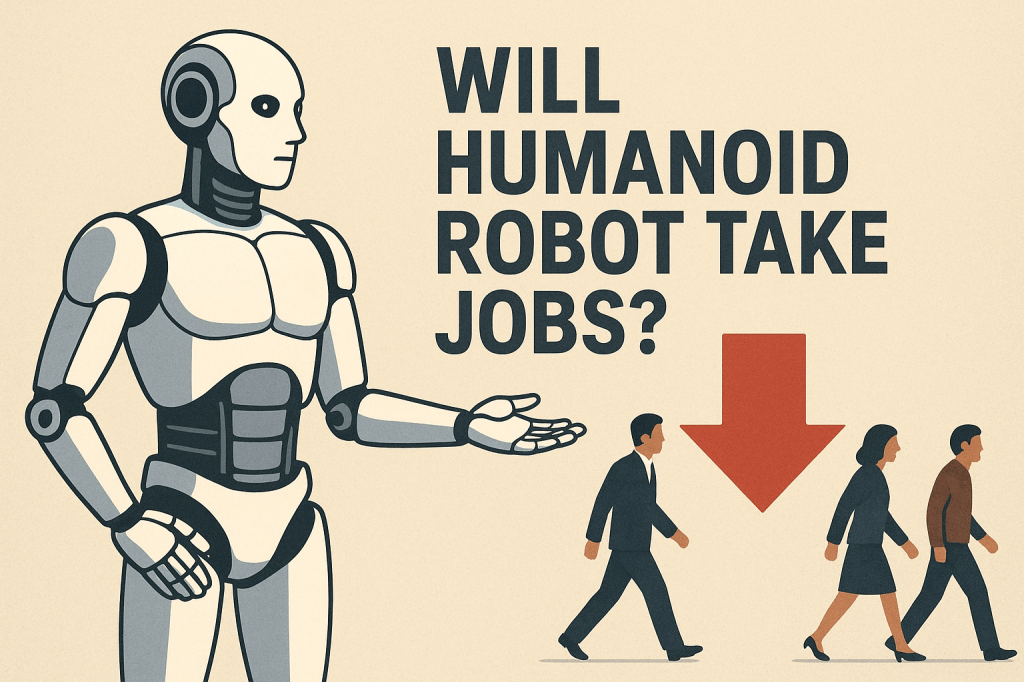
Humanoid robots and AI will replace some human jobs, but not all.
Here’s a breakdown:
✅ Jobs at Higher Risk of Replacement
Humanoid robots (combined with AI) are best at repetitive, physical, and predictable tasks. These areas are most at risk:
- Manufacturing & assembly line work – robots can work nonstop, reduce error, and improve efficiency.
- Logistics & delivery – warehouse sorting, packaging, and last-mile delivery.
- Retail & customer service – self-checkout, reception, and basic inquiries.
- Cleaning & maintenance – hotels, hospitals, offices.
- Healthcare assistance – basic patient care, elder care, lifting patients, routine monitoring.
⚖️ Jobs Less Likely to Be Fully Replaced
Robots struggle where creativity, deep human judgment, and emotional intelligence matter:
- Creative fields (art, design, strategy, writing).
- Leadership & decision-making (managers, policymakers).
- Complex healthcare (doctors, surgeons, therapists).
- Education (teachers, mentors, trainers).
- Relationship-driven work (counseling, law, diplomacy).
📈 Jobs That May Be Transformed, Not Replaced
Many roles won’t disappear but will evolve to work alongside robots:
- Technicians (robot maintenance, programming).
- Supervisors (managing robot-human teams).
- Data specialists (handling robot-generated data).
- Human-robot interaction designers (making robots more useful).
🌍 Bigger Picture
- In the short term (next 10–15 years), robots will mostly replace repetitive low-skill labor.
- In the long term, many jobs will change rather than vanish, and entirely new jobs will be created (like how the internet created jobs that didn’t exist before).
- The biggest challenge will be reskilling workers to adapt to this shift.
👉 In other words: humanoid robots will take some jobs, but they’ll also create new opportunities—if humans adapt.

Leave a comment