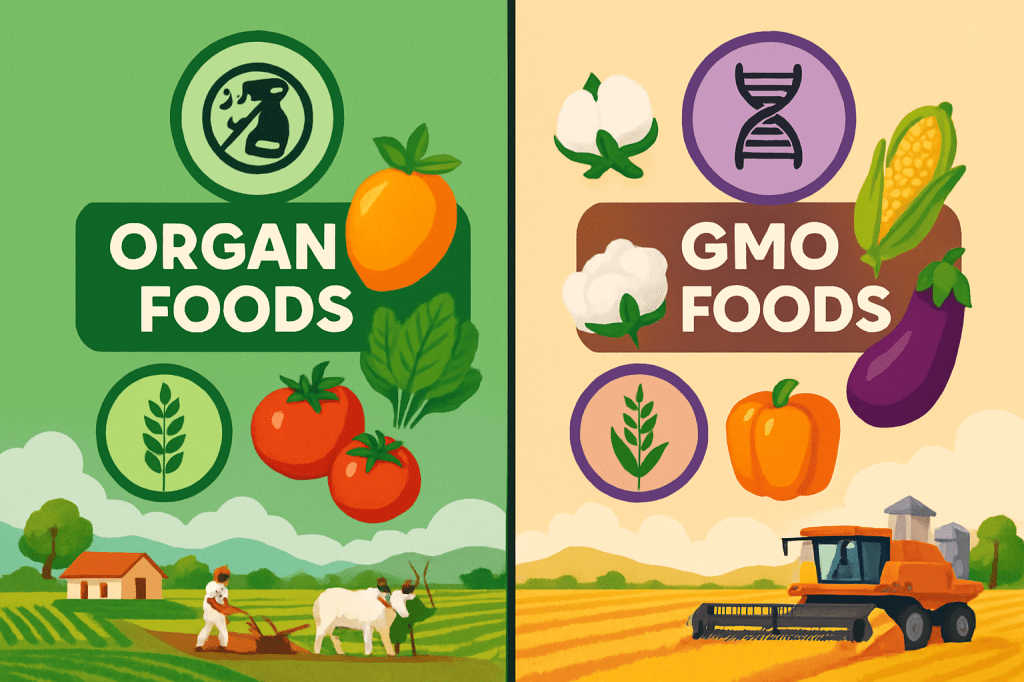
Organic foods and GMO foods represent two distinct approaches to agriculture and food consumption in India, each with unique benefits and drawbacks for health, environment, and sustainability.
Key Differences in India
Organic foods are produced without synthetic chemicals, pesticides, or genetically modified organisms (GMOs). They appeal to health-conscious consumers because of the reduced chemical exposure and often support the preservation of indigenous Indian crops.
GMO foods involve crops genetically engineered for traits like pest resistance, higher yield, and stress tolerance, and are designed to address food security, improve farm productivity, and lower production costs.
Benefits of Organic Foods
Lower exposure to pesticides and harmful chemicals, mitigating health risks prevalent in Indian farming communities.Often higher in antioxidants and sometimes vitamins and minerals, though differences with conventional foods may be modest.Promotes environmental sustainability, preserving biodiversity and soil health, important for the Indian ecosystem.Supports a diverse gut microbiome and aligns with traditional Ayurvedic philosophies.However, organic foods are more expensive and have a shorter shelf life, making accessibility a challenge for many Indians.
Benefits of GMO Foods
Increased crop yield and resilience, important in feeding India’s large population and supporting farmer incomes.Reduced need for chemical pesticides, exemplified by Bt cotton’s success in India, which helped reduce farmer suicides by making agriculture more profitable.Can have longer shelf life and withstand logistics problems prevalent in India’s supply chains.Though generally considered safe by regulatory authorities, GMOs continue to be debated for long-term health effects and ecological impact.
Drawbacks and Controversies
Organic foods: High price, quick spoilage, and lack of large-scale production limit their widespread adoption in India.
GMO foods: Risk of ecosystem disruption, the possibility of pests developing resistance, and ongoing debates over health safety. The introduction of GM crops can also increase cultivation costs and commercialization concerns.
India-specific Trends
Organic foods are more popular among Indian consumers who seek pesticide-free and traditional produce, and there is significant support for growing organic to avoid GMO contamination.
GMO adoption in India remains limited, with key crops like Bt cotton being widely used, but genetically modified food crops are tightly regulated and still face public resistance.
Summary Table
Summary Table
| Aspect | Organic Foods (India) | GMO Foods (India) |
|---|---|---|
| Chemicals | Avoid synthetic pesticides | Often require fewer pesticides |
| Nutrition | May be higher in some cases | Comparable or engineered nutrients |
| Cost | More expensive | Lower cost, higher yields |
| Shelf life | Shorter | Usually longer |
| Environmental | Promotes biodiversity | May disrupt gene flow/ecosystem |
| Popularity | Growing in cities, niche | Bt cotton is major crop; food GMOs limited |
Both organic and GMO foods serve different needs—organic aligns with health and traditional values, while GMO targets food security and farm economics.

Leave a comment