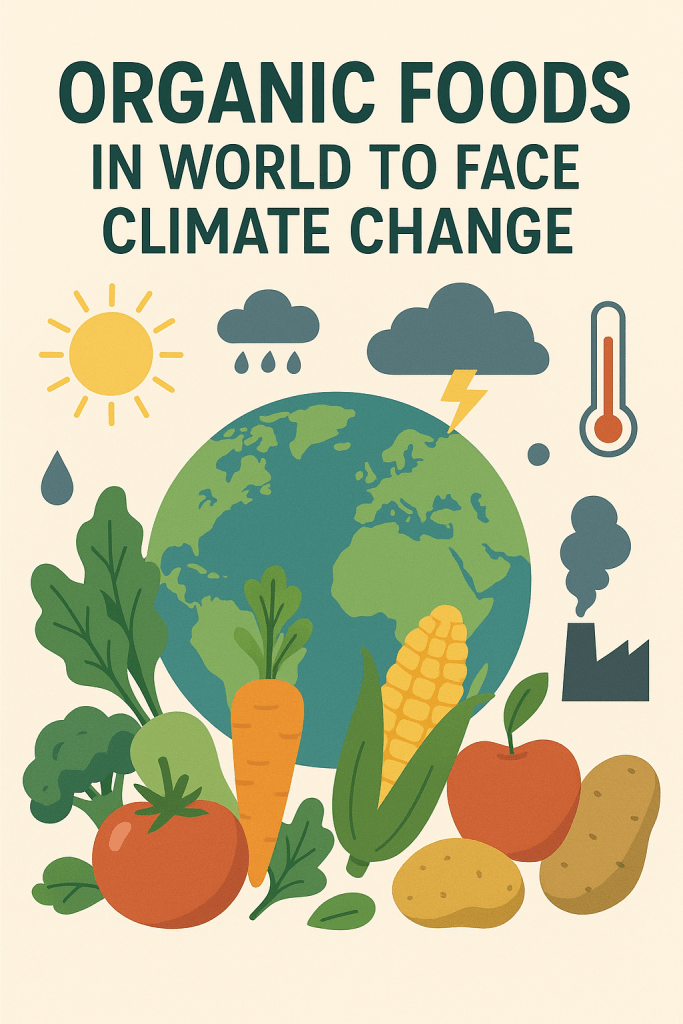
Organic foods are increasingly seen as part of the solution to climate change challenges worldwide. Here’s how they relate:
🌍 Role of Organic Foods in Facing Climate Change
1. Sustainable Farming Practices Organic farming avoids synthetic fertilizers and pesticides, reducing greenhouse gas emissions.Practices like crop rotation, composting, and cover cropping improve soil health and fertility.
2. Carbon Sequestration Healthy organic soils can store more carbon, helping to offset CO₂ emissions.Organic farms usually promote agroforestry and biodiversity, which act as natural carbon sinks.
3. Water Conservation & Flood Resistance Organic soil retains water better, reducing drought stress and flood damage.Helps farming communities adapt to unpredictable rainfall due to climate change.
4. Biodiversity Protection Encourages diverse crops and native pollinators, making ecosystems more resilient to climate stress.
5. Reduced Energy Dependency Organic farming relies less on fossil-fuel-based fertilizers and chemicals, lowering the carbon footprint.
6. Resilient Food Systems
Localized organic food systems reduce transport emissions and help communities remain food secure during climate disruptions.
⚖️ Challenges
Lower yields compared to conventional farming may pressure land use.Organic food often costs more, limiting accessibility.Scaling up globally requires strong policies, subsidies, and consumer support.
✅ In short: Organic foods contribute to climate resilience by building healthier soils, conserving water, and reducing emissions, but widespread adoption needs balancing productivity with sustainability.

Leave a comment