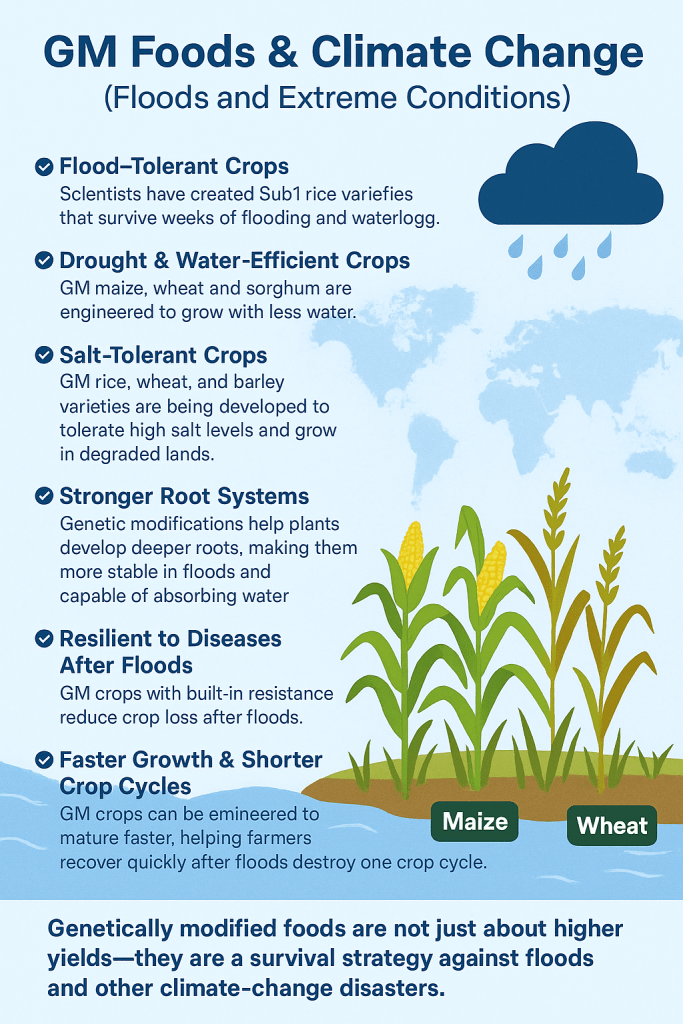
Genetically Modified (GM) foods are also being developed as climate-smart crops to help the world face challenges like floods, droughts, salinity, and other extreme weather conditions caused by climate change. 🌍🌱🌊 GM Foods & Climate Change (Floods and Extreme Conditions)
1. Flood-Tolerant Crops Scientists have created rice varieties (e.g., Sub1 rice in Asia) that survive weeks of flooding and waterlogging.Helps farmers in flood-prone regions (India, Bangladesh, Philippines) avoid crop failure.
2. Drought & Water-Efficient CropsGM maize, wheat, and sorghum are engineered to grow with less water.Important in areas facing water scarcity due to climate change.
3. Salt-Tolerant Crops Floods often increase soil salinity.GM rice, wheat, and barley varieties are being developed to tolerate high salt levels and grow in degraded lands.
4. Stronger Root SystemsGenetic modifications help plants develop deeper roots, making them more stable in floods and capable of absorbing water in droughts.
5. Resilient to Diseases After Floods Floodwaters spread fungi, bacteria, and pests. GM crops with built-in resistance reduce crop loss after floods.
6. Faster Growth & Shorter Crop CyclesGM crops can be engineered to mature faster, helping farmers recover quickly after floods destroy one crop cycle.
7. Securing Global Food SupplyAs floods and storms destroy farmland, GM crops ensure continuous production of staple foods like rice, maize, and soybeans.—
✅ In short: Genetically modified foods are not just about higher yields—they are a survival strategy against floods and other climate-change disasters.

Leave a comment