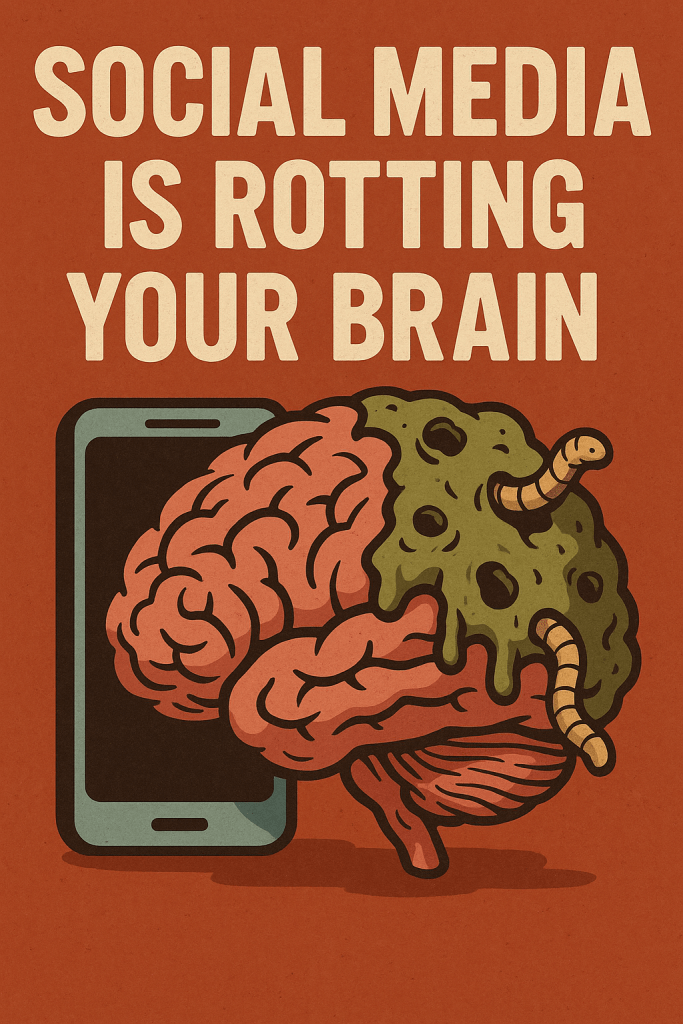
The statement “Social media is rotting your brain” is a strong and provocative way of summarizing some real concerns—but it oversimplifies a complex issue. Let’s break it down with evidence-based insights:
🧠 How Social Media Can Harm Your Brain
| Effect | Explanation |
|---|---|
| Reduced Attention Span | Constant scrolling trains the brain for short bursts of information, weakening the ability to focus deeply. |
| Dopamine Overload | Likes, shares, and notifications create addictive dopamine spikes, similar to junk food or gambling. |
| Mental Fatigue | Endless feeds and multitasking lead to cognitive overload and decision fatigue. |
| Increased Anxiety/Depression | Excessive comparison, FOMO (fear of missing out), and cyberbullying have been linked to worsening mental health. |
| Sleep Disruption | Screen time—especially before bed—reduces melatonin, harming sleep quality. |
🌱 But It’s Not All Bad
| Potential Benefits | Explanation |
|---|---|
| Access to Information | Exposure to ideas, news, and educational content can enhance learning. |
| Social Connection | Helps people stay in touch, especially across distances. |
| Creative Expression | Platforms allow for art, humor, and advocacy to flourish. |
🔑 Key Takeaway:
Social media isn’t inherently bad, but overuse, mindless scrolling, and algorithmic manipulation can lead to real cognitive and emotional consequences.
✅ What You Can Do:
- Set daily limits (e.g., 30–60 minutes).
- Use social media mindfully (follow valuable content).
- Turn off non-essential notifications.
- Take “dopamine detox” breaks.
- Replace scroll time with books, walks, or face-to-face talks.


Leave a comment