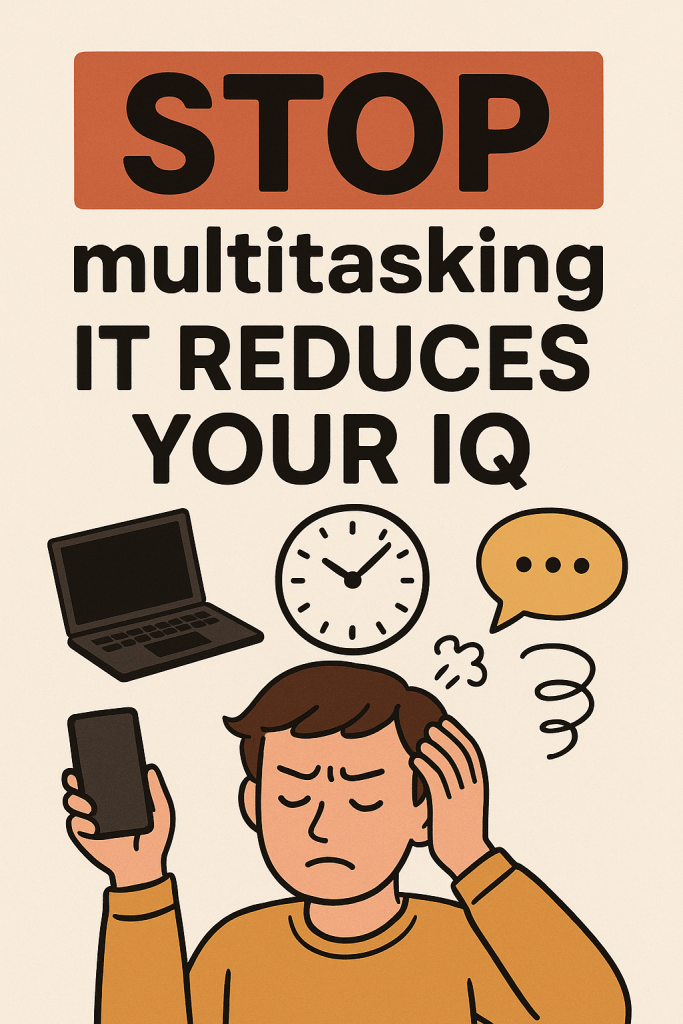
You’re right to be cautious — multitasking can reduce cognitive performance in certain situations. Here’s what the research shows:
🧠 How Multitasking Affects IQ and Brain Function:
- Temporary IQ Drop: A study by the University of London found that people who multitasked during cognitive tasks experienced IQ drops similar to losing a night’s sleep — up to 15 points.
- Reduced Efficiency: Your brain can’t actually do two high-focus tasks at once. Instead, it switches between them, leading to slower performance and more errors.
- Long-Term Impact: Regular multitasking (especially with digital media) is linked to reduced grey matter in areas of the brain responsible for emotional control and decision-making (Stanford studies).
🔍 Common Myths:
- ❌ “I’m good at multitasking.” — Most people think they are, but studies show only a small percentage of people (2%) can multitask without performance loss.
- ❌ “It saves time.” — Multitasking often makes tasks take longer than doing them one at a time.
✅ Better Approach:
- Try “single-tasking” or deep work: Focus on one task for a set time (e.g., 25-minute Pomodoro sessions).
- Turn off notifications and reduce distractions.
- Practice mindfulness or meditation to improve focus.

Leave a comment