Here’s a clear breakdown of the newspaper article you shared:
📰 Main Headline
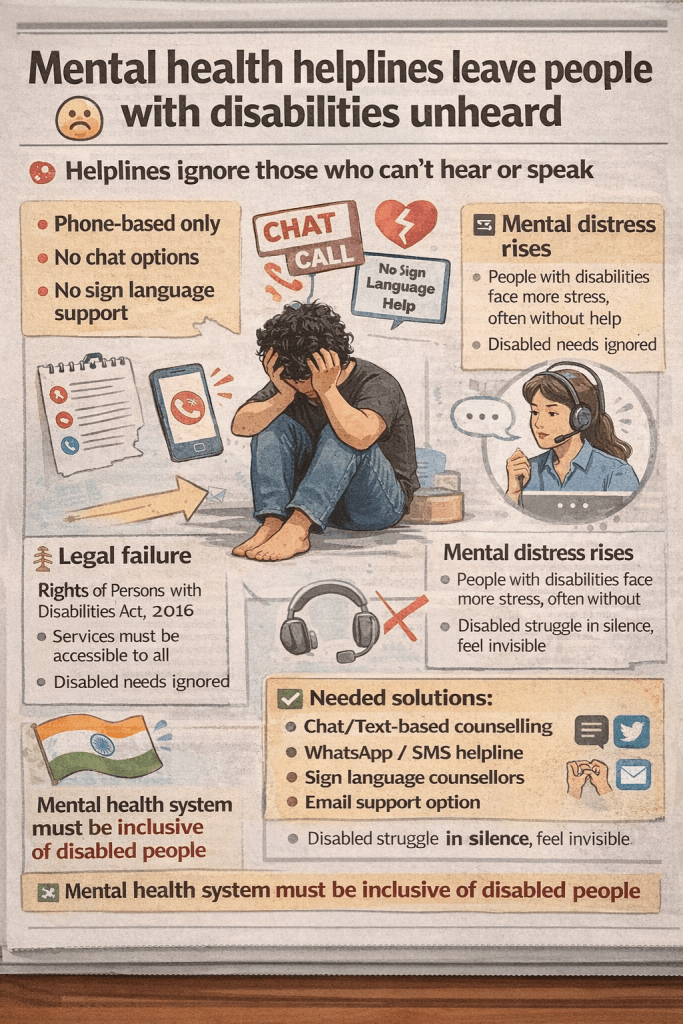
“Mental health: Calls by people with disability fall on deaf ears”
👉 Meaning:
People with disabilities—especially those with hearing or speech impairments—are not getting proper support from mental health helplines.
🔍 Core Problem Explained
- 📞 Helplines are not accessible
Most mental health helplines in India work only via phone calls
People who cannot hear or speak cannot use them
There are no alternatives like:
Chat support ❌
WhatsApp ❌
Email support ❌
👉 So, they are effectively excluded from help systems
🧑 Example Case (Real Story)
A person with hearing impairment tried to find help
Downloaded government mental health apps
But:
No chat option
No sign language support
Result: Frustration and no support
🏥 Institutional Gap
Even top institutes like NIMHANS (Bengaluru):
Do not have dedicated sign language counselling
Only limited support from staff who know sign language
👉 This shows a system-wide accessibility failure
⚖️ Legal vs Reality
India has a law: Rights of Persons with Disabilities Act, 2016
It says services should be accessible
👉 But in reality:
Guidelines are ignored or poorly implemented
📊 Bigger Issue
Mental health helplines claim large numbers of users helped
But:
Disabled people are not included in these numbers
Their needs are invisible in the system
🧠 Why this matters
People with disabilities:
Face higher mental stress
Often feel isolated
But they cannot access help when needed most
👉 This creates a serious social and health gap
🛠️ Suggested Solutions (from article context)
To fix this, systems should include:
💬 Chat-based counselling
📱 WhatsApp / text support
🤟 Sign language specialists
📧 Email-based help
♿ Inclusive design in all government apps
🧾 Bottom Line
👉 The system exists, but is not inclusive
👉 Help is available—but not for everyone
👉 People with disabilities are being left behind

Leave a comment