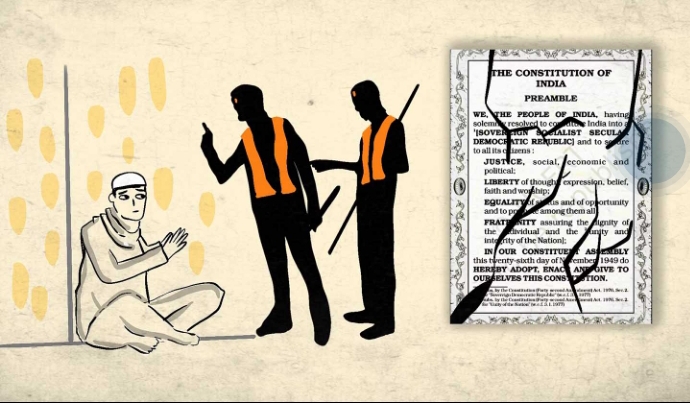
Analysis: Problems Faced by Indian Minorities
India is constitutionally a secular and pluralistic nation, recognizing religious, linguistic, and cultural minorities. Despite legal safeguards, many minorities continue to face systemic, social, and economic challenges.
- Who Are Minorities in India?
Under Indian law, minorities include:
Religious minorities: Muslims, Christians, Sikhs, Buddhists, Jains, Parsis
Linguistic minorities: Speakers of non-dominant regional languages
Cultural & ethnic minorities: Tribal groups and smaller ethnic communities - Key Problems Faced by Indian Minorities
2.1 Social Discrimination & Prejudice
Stereotyping and communal bias in housing, employment, and education
Social exclusion in urban and rural spaces
Rise of hate speech on social media affecting communal harmony
Impact: Reduced social mobility and psychological stress
2.2 Economic Marginalization
Higher poverty and unemployment rates among some minority groups
Overrepresentation in informal and low-paying jobs
Limited access to credit, business capital, and markets
Impact: Intergenerational poverty and economic insecurity
2.3 Educational Backwardness
Lower school enrollment and higher dropout rates in certain minority communities
Lack of quality schools in minority-dominated areas
Language barriers for linguistic minorities
Impact: Skill gap and reduced competitiveness in the job market
2.4 Political Underrepresentation
Inadequate representation in legislatures, bureaucracy, and judiciary
Weak participation in policy-making processes
Minority concerns often marginalized in mainstream politics
Impact: Policies may not reflect minority needs
2.5 Communal Violence & Insecurity
Periodic communal riots and targeted violence
Fear-driven migration and ghettoization
Inadequate or delayed justice in some cases
Impact: Loss of life, property, trust, and long-term trauma
2.6 Legal & Institutional Challenges
Poor awareness of constitutional rights and welfare schemes
Difficulties in accessing justice due to cost, delay, or bias
Weak implementation of minority welfare programs
Impact: Rights exist on paper but not fully in practice
2.7 Media Representation Issues
Biased or sensational portrayal of minorities
Underrepresentation of minority voices in mainstream media
Spread of misinformation leading to polarization
Impact: Reinforcement of negative public perceptions - Constitutional & Policy Framework (Safeguards)
India provides protections through:
Articles 14–16: Equality before law
Articles 25–30: Freedom of religion and minority educational rights
Minority scholarships, skill development, and educational schemes
Challenge: Implementation gaps and uneven outreach - Way Forward – Solutions & Recommendations
Policy & Governance
Strengthen implementation of minority welfare schemes
Ensure fair representation in public institutions
Education & Economy
Improve quality schooling in minority areas
Promote entrepreneurship and skill development
Social Harmony
Encourage interfaith dialogue and community programs
Strict action against hate crimes and hate speech
Media & Awareness
Promote responsible journalism
Increase minority participation in media and digital platforms - Conclusion
Indian minorities face multi-dimensional challenges—social, economic, political, and institutional. While India’s Constitution provides strong safeguards, effective implementation, social inclusion, and unbiased governance are crucial to ensure equality and dignity for all communities.

Leave a comment