For kids, school dropouts, or migrant children in India, there is no formal “unschooling board”, but you can combine very flexible open‑school options (like NIOS) with community/NGO programmes and child‑led learning resources to effectively unschool them while keeping future certification possible.���
Key formal option: NIOS & open schooling For dropouts or highly mobile children, NIOS is the most practical backbone because it is flexible, recognised, and can be blended with unschooling.NIOS Open Basic Education (OBE): Provides elementary‑level education at three stages for school dropouts, neo‑literates, and out‑of‑school learners through accredited centres; very suitable for working or migrant children.��
NIOS Secondary/Sr. Secondary: Lets students choose subjects, study at their own pace through online/offline material, and sit for Class 10/12 exams recognised like CBSE/other boards.��
The Union education ministry is now pushing NIOS and state open boards block‑level and exploring covering NIOS fees via Samagra Shiksha, specifically to bring dropouts back.�
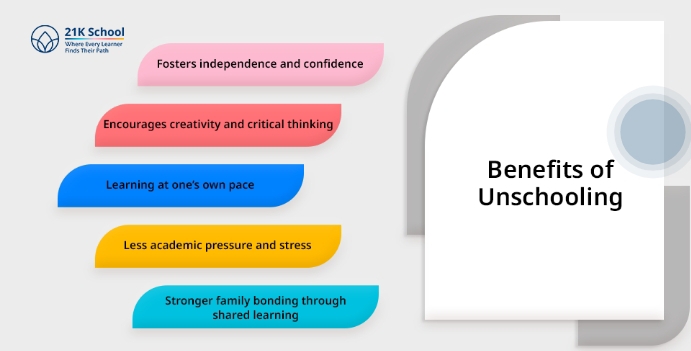
Unschooling style: how to use this You can keep the child out of daily formal school, but still align with NIOS/open schooling and use unschooling methods for learning.Use NIOS/OBE only as exam framework, and let day‑to‑day learning be project‑based, interest‑led (YouTube EDU, Khan Academy, hands‑on work, community learning, etc.).��
Under‑resourced kids can use free digital platforms like SWAYAM, DIKSHA, e‑Pathshala for content in multiple Indian languages, which NGOs already use with underprivileged children.�
For migrant and underprivileged kids Most migrant‑child programmes focus on continuity of education, but they can be made more unschooling‑friendly by emphasising flexible, contextual learning.Government and NGOs run seasonal hostels, residential camps, and special training centres so children of seasonal migrants can continue education near their villages or work sites.��
NGOs like Door Step School (School on Wheels) and others set up mobile or community classrooms for street/slum children; these already use flexible, real‑life‑linked teaching that fits unschooling philosophy.��
In Bengaluru and elsewhere, organisations like Gubbachi support migrant workers’ children with bridge schooling and mainstreaming; such centres can register kids to NIOS while learning is more informal and child‑centred.��
If you specifically want “unschooling” (mindset + practice)There are no big India‑wide “unschooling courses for migrant/dropout kids” yet, but you can combine:Parent/mentor unschooling courses (online unschooling courses and communities) to get the philosophy and methods.NIOS/OBE or state open board for certification plus local NGO/community learning centres for safe spaces and basic facilitation.���
Concrete path you can use For a 10–14‑year‑old dropout or migrant child:Enrol in NIOS Open Basic (Level B/C) or Secondary through a nearby accredited centre or NGO partner.��
Use free platforms (SWAYAM, DIKSHA, Khan Academy) and local language resources for actual learning, guided by the child’s interests and context (work, migration, neighbourhood).��
Partner with or model from NGOs like Door Step School, Gubbachi, Pratham‑type community centres to create a low‑cost, flexible learning space.���

Leave a comment