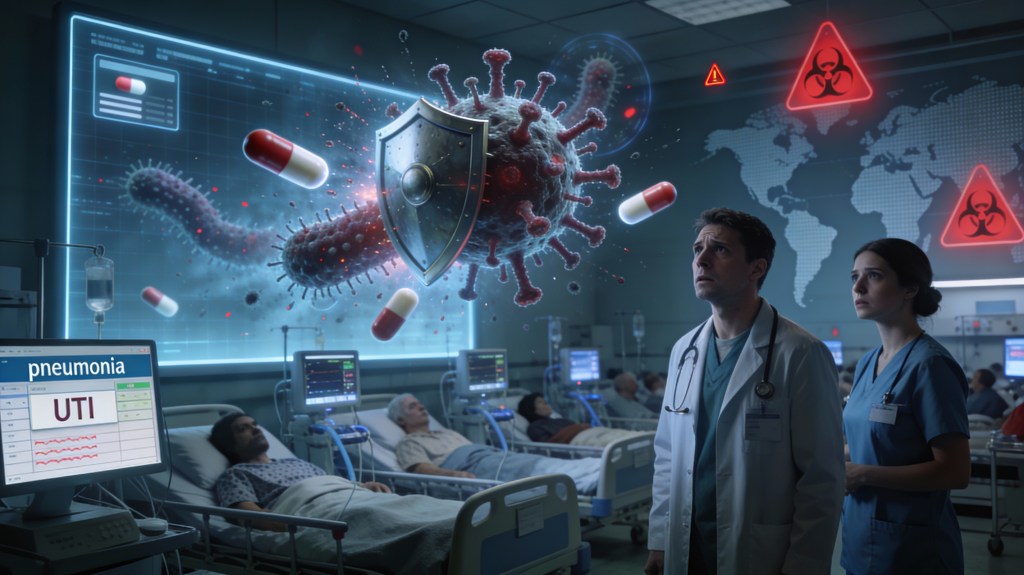
Antibiotic resistance is already causing a major human health crisis and, if not controlled, will make many common infections and routine surgeries far more deadly worldwide.��
It is unlikely to make humans extinct, but it can reverse many modern medical advances and cause millions of deaths and huge economic damage.��
What antibiotic resistance is Antibiotic resistance happens when bacteria change so that antibiotics no longer kill them or stop their growth, making infections harder or impossible to treat.��
This is part of broader antimicrobial resistance (AMR), which also includes resistance in viruses, fungi, and parasites, but resistant bacteria are currently the biggest problem.��
Why it is a global crisis
In 2019, antibiotic-resistant bacterial infections directly caused about 1.27 million deaths and were associated with nearly 5 million deaths worldwide, making AMR one of the top global killers.��
New modeling suggests AMR could be linked with around 169 million cumulative deaths between 2025 and 2050 if trends continue, with yearly deaths rising by about 70% compared with 2021.�
Situation in India. India is described as one of the world’s heaviest AMR burden countries, with very high resistance in hospital ICU infections and limited effective antibiotics left for many patients.��
Over-the-counter antibiotic sales, misuse in humans and animals, overcrowded hospitals, and poor sanitation and infection control strongly accelerate resistance in India.��
Main causes of resistance Overuse and misuse of antibiotics in humans (self-medication, not completing courses, using for viral illnesses like colds) create strong selection pressure for resistant bacteria.��
Extensive use of antibiotics in livestock, poultry, and aquaculture for growth promotion and disease prevention spreads resistant bacteria through meat, water, and the environment.��
Weak regulation, poor diagnostic facilities, and delayed investment in new antibiotics mean bacteria are evolving faster than new drugs are developed.��
How this harms human society Resistant infections cause higher death rates, longer hospital stays, and much higher treatment costs, and can make routine surgeries, cancer chemotherapy, and intensive care extremely risky.��
Economic models estimate AMR could cost the world more than 2 trillion US dollars and push tens of millions into poverty by 2050 if strong action is not taken.�What needs to be done Use antibiotics only when prescribed, complete the full course, and avoid buying them without proper medical advice to slow resistance.��
Improve hygiene, sanitation, clean water, vaccination, and infection control in hospitals and communities so fewer infections happen and fewer antibiotics are needed.��
Governments must regulate antibiotic use in humans and animals, strengthen surveillance, support new antibiotic and vaccine research, and ensure affordable access to effective antibiotics where still needed.��

Leave a comment