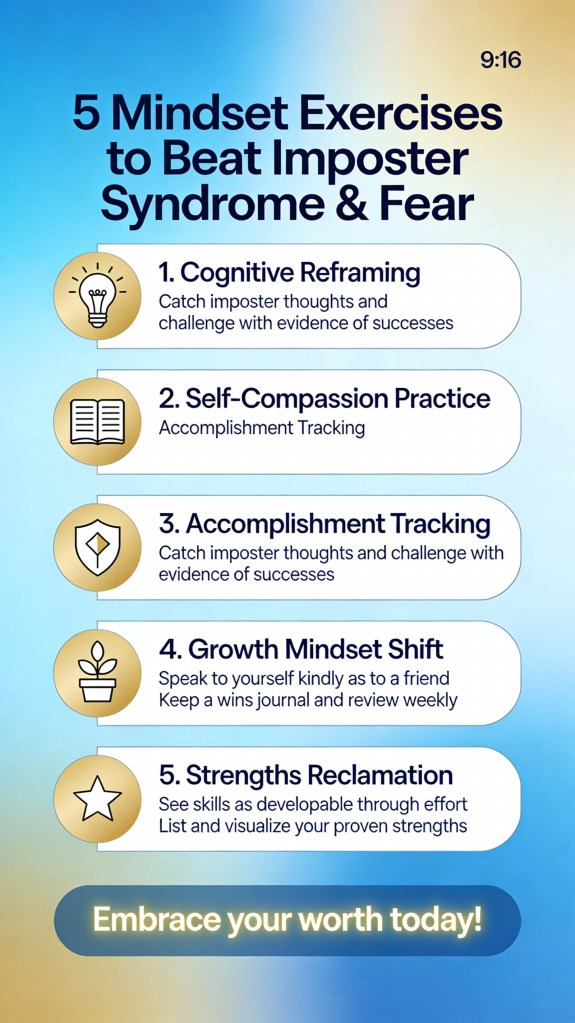
Five mindset exercises can help combat imposter syndrome and associated fears by reframing negative thoughts and building self-awareness. These draw from cognitive behavioral techniques and growth mindset principles commonly recommended by experts. ��
Cognitive Reframing Catch imposter thoughts like “I’m a fraud” and challenge them with evidence. Write down the thought, then list three facts proving your competence, such as past successes or feedback received. Repeat daily to rewire distorted thinking patterns. ��
Self-Compassion Practice Treat yourself as you would a close friend facing the same doubt. When self-criticism arises, pause and rephrase it kindly, e.g., “It’s normal to feel this way, but I’ve earned my place.” This fosters resilience against fear. ��
Accomplishment Tracking. Maintain a “wins journal” noting daily or weekly achievements, no matter how small. Review it weekly to counter the brain’s negativity bias and internalize evidence of your capabilities. ��
Growth Mindset Shift View skills as developable through effort, not fixed traits. Reframe failures as learning opportunities by asking, “What can I gain from this?” This reduces fear of exposure. ��
Strengths Reclamation List skills, experiences, and strengths others have acknowledged that qualify you for your role. Visualize using them successfully in upcoming challenges to build preemptive confidence. ��

Leave a comment